
How to Use Coloring Breaks to Slow Your Mind
The moment between one task and the next can disappear fast. You check a message, scroll for a minute, and return to your day feeling no more rested than before. Learning how to use coloring breaks offers a gentler option: a small, screen-light pause that gives your hands something simple to do while your mind has room to settle.
A coloring break does not need to be productive, impressive, or even finished. It can be ten quiet minutes with a favorite page, a few familiar pencils, and no expectation beyond enjoying the next small section of color. That is what makes it easy to return to, even on a full day.
What Is a Coloring Break?
A coloring break is a short period set aside for coloring during the natural pauses in your day. It may happen before work begins, after lunch, while dinner is in the oven, or in the calm that follows a busy household evening.
Unlike a larger creative project, a coloring break has no finish line. You are not sitting down to complete an entire page or practice advanced techniques. You are simply choosing a quiet activity that helps you step out of constant input for a little while.
The length is flexible. Five minutes can be enough to color a flower petal or a small leaf. Twenty minutes may be just right when you have more space. The value comes from giving your attention one uncomplicated place to rest.
How to Use Coloring Breaks in a Busy Day
The easiest way to begin is to attach coloring to a moment that already exists. Rather than waiting for a perfect free hour, notice the small transitions you already have. The few minutes before a meeting, the end of a workday, or the time after the kids are settled can become a gentle cue to open your book.
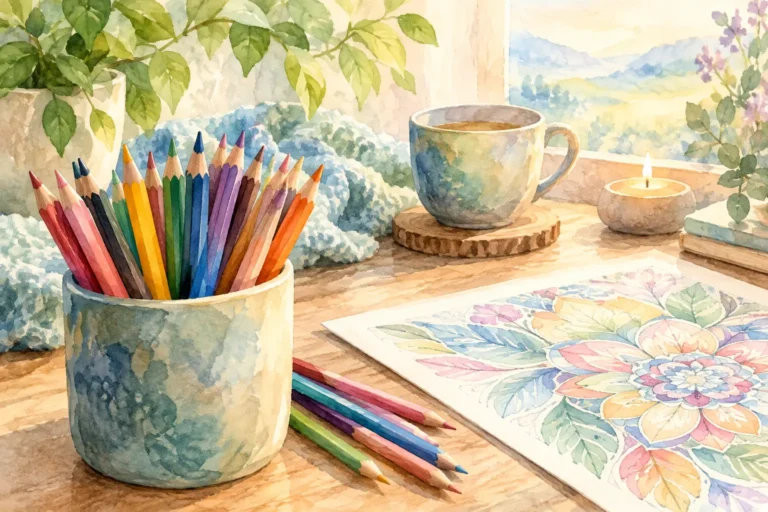
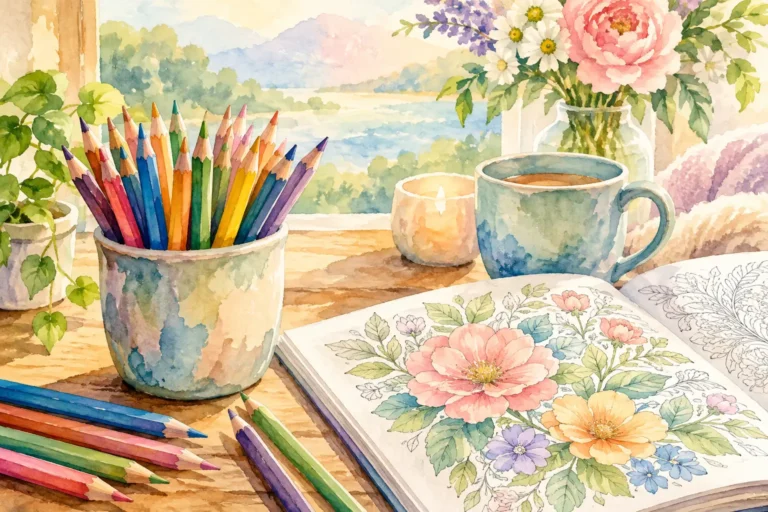
Keep the setup simple enough that it feels inviting. Place your coloring book and a small selection of pencils or markers where you naturally sit. A basket near the sofa, a tray on a desk, or a spot by the kitchen table removes the need to search for supplies when you need a pause most.
Choose one page and let it stay open across several sessions. This is especially helpful if you tend to think, “I do not have enough time.” A page does not need to be completed in one sitting. Adding color little by little can make the activity feel more comforting, not less. Over time, the page becomes a quiet record of the moments you gave yourself.
Start with a clear, small boundary
A short timer can help when your mind is still racing through your to-do list. Set it for five or ten minutes, then color until it rings. Knowing there is a clear stopping point makes the break easier to take, particularly when responsibilities are waiting.
You may find that you want to continue, and that is fine. But try not to turn every coloring session into another item to complete. The goal is not to maximize the time. It is to make room for quiet enjoyment.
Let the page match your energy
Some days call for detailed floral patterns and slow, careful shading. Other days, a simpler animal design or a page with larger spaces may feel better. There is no single right kind of coloring page for relaxation.
When you feel mentally crowded, choose a design that looks easy to enter. Begin with one small area instead of surveying the whole page. A leaf, a wing, or the center of one flower is enough. Starting small helps soften the pressure to make decisions all at once.
Create a Screen-Light Reset
Coloring breaks can be particularly helpful when your usual break involves another screen. A phone may offer distraction, but it can also bring fresh information, messages, and choices. Coloring asks much less of you.
Try leaving your phone in another room, turning it face down, or placing it just outside reach while you color. You do not need to make a rule about never using screens. The point is simply to give your attention a different kind of rest now and then.
Notice the physical details as you work: the pencil moving across the paper, the texture of the page, the gradual change from blank space to color. These small sensory moments can help slow the mind without requiring you to follow a complicated routine.
If silence feels especially calming, let the room be quiet. If you prefer a little background sound, choose soft music, rainfall, or an open window. Keep the atmosphere easy. A coloring break should feel like a welcome pause, not a carefully managed event.
Release the Pressure to Make It Perfect
Many adults hesitate to color because they believe they need an eye for color, a polished result, or the “right” supplies. None of those are required. Coloring can be a place to choose the shades you like, even if a purple leaf or a blue fox would never appear that way in nature.
Use the colors that feel good to you that day. You might stay within soft greens and pinks, reach for warm autumn tones, or fill a whole pattern with variations of one color. There is no need to plan every section before you begin.
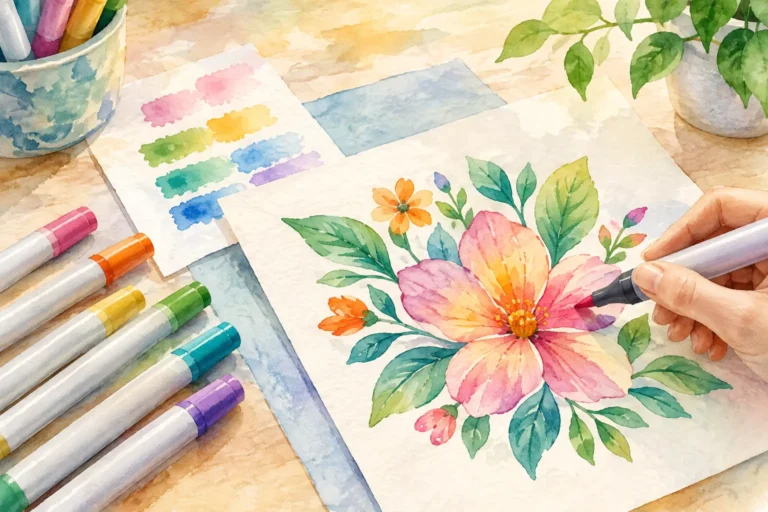
It also helps to use supplies that feel comfortable rather than complicated. Colored pencils are easy to control and pleasant for small details. Markers can create a bolder, quicker look, though they may show through some paper. Gel pens can add brightness to small accents, but they are not necessary. A few tools you enjoy are more useful than a large collection that makes choosing feel harder.
If you color outside a line, leave it. If two shades do not work together as you expected, keep going. The page is not a test. It is a few minutes reserved for yourself.
Make Coloring Breaks a Gentle Habit
Consistency does not mean coloring every day without fail. It means making the option visible and easy to choose. You may color three times one week and not at all the next. Your routine can change with the seasons, your schedule, and your energy.
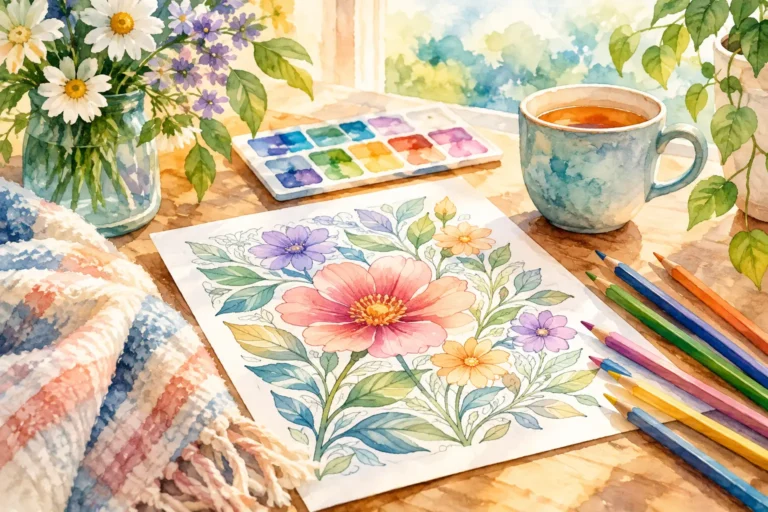
A small ritual can make the habit feel more natural. Perhaps you make tea, clear one corner of the table, and color for a few minutes before bed. Perhaps you keep a nature-inspired coloring book beside your morning coffee and fill in one section before opening your laptop. These repeated cues can turn a brief pause into something you look forward to.
It can also be helpful to protect coloring from the urge to multitask. You do not need to answer emails between colors or watch a show at the same time. Sometimes pairing activities is enjoyable, but when the goal is a true reset, fewer inputs often feel better.
AmBizi coloring books are designed with this kind of low-pressure creative time in mind. Floral scenes, gentle animals, and nature-inspired pages offer a welcoming place to begin, whether you have five minutes or a slower afternoon ahead.
When a Coloring Break May Need to Be Different
Not every break will feel restful in the same way. If you are tired, a highly detailed page may feel like too much. Choose broader shapes, use fewer colors, or simply color one small part of the page. If you are restless, a more detailed pattern may give your attention enough structure to settle.
If a break is interrupted, it still counts. Close the book, leave your pencils where they are, and return when you can. A peaceful routine does not have to be perfectly protected to be worthwhile.
There may be days when coloring is not what you want, too. A walk, a cup of tea, or a few minutes looking out the window can be the better choice. Coloring breaks work best when they remain an invitation, not an obligation.
The next time you feel pulled in several directions, try coloring one small corner of a page before reaching for your phone. Let the colors be simple, let the time be brief, and let a few quiet minutes belong only to you.