A Guide to Relaxing Evening Hobbies at Home
The hour after dinner can disappear quickly: a few messages, one more episode, a little scrolling, and suddenly it is time for bed without much sense of rest. This guide to relaxing evening hobbies is for making that small stretch of time feel softer. The goal is not to fill every minute or become better at something. It is simply to choose an activity that gives your mind one gentle place to land.
A calming hobby can create a welcome shift between the demands of the day and the quiet of the night. It asks for just enough attention to move you away from unfinished tasks, without adding pressure, noise, or another thing to accomplish.
What Makes an Evening Hobby Feel Restful?
The best evening hobbies tend to be low-stakes, easy to begin, and pleasant to pause. You should not need a large setup, a long lesson, or a burst of motivation at 8:30 p.m. A basket of supplies, a comfortable chair, and a little open space on the table are often enough.
It also helps to choose something with a natural pace. Repetitive motions, quiet concentration, and simple materials can slow the mind more easily than activities that ask you to compare, perform, or make lots of decisions. That does not mean every relaxing hobby must be silent or solitary. Some people feel most settled while baking with a partner or working on a puzzle beside family. The right fit depends on what your evenings already hold.
If your workday is full of screens, meetings, and fast choices, a tactile hobby may feel especially refreshing. If your days are physically busy, reading or gentle writing may be the better kind of pause. Let the activity balance your day rather than compete with it.
A Guide to Relaxing Evening Hobbies to Try
Color a page without a plan
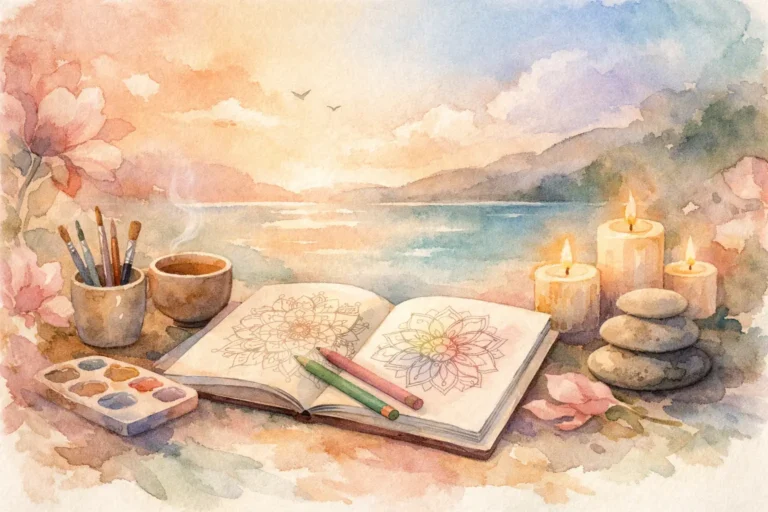
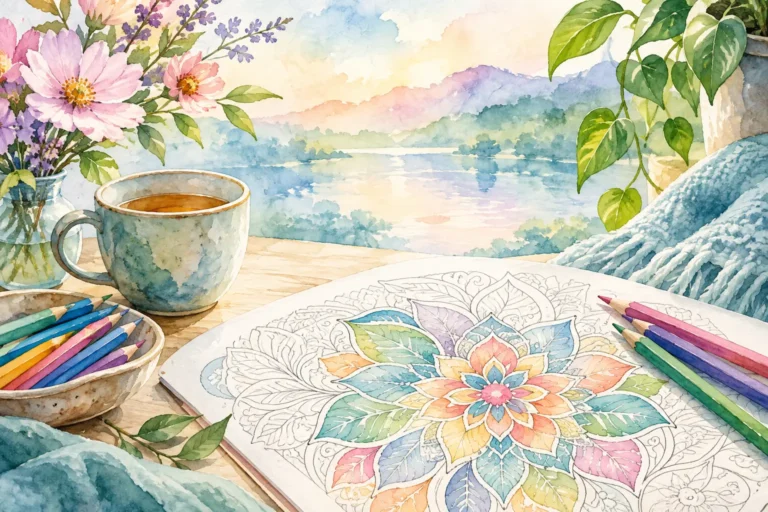
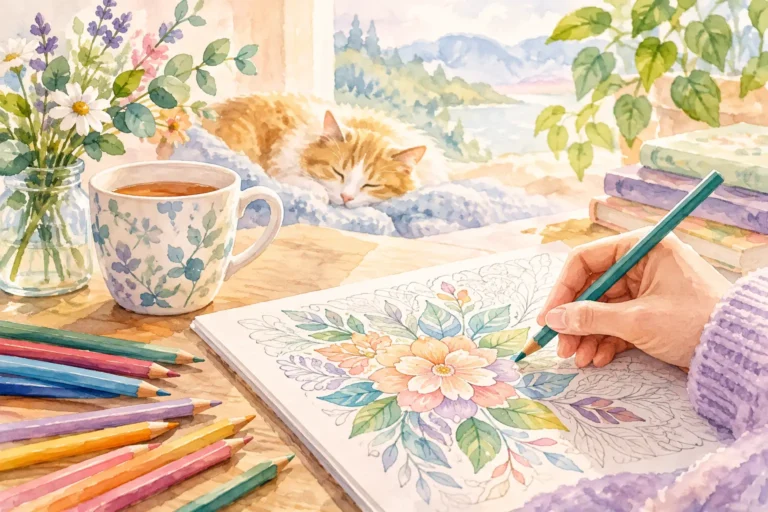
Coloring is a simple way to enjoy creativity without facing a blank page. There is no need to know color theory, create a finished masterpiece, or use every pencil in the box. Choose a design that feels inviting, settle on a few colors, and let the page develop slowly.
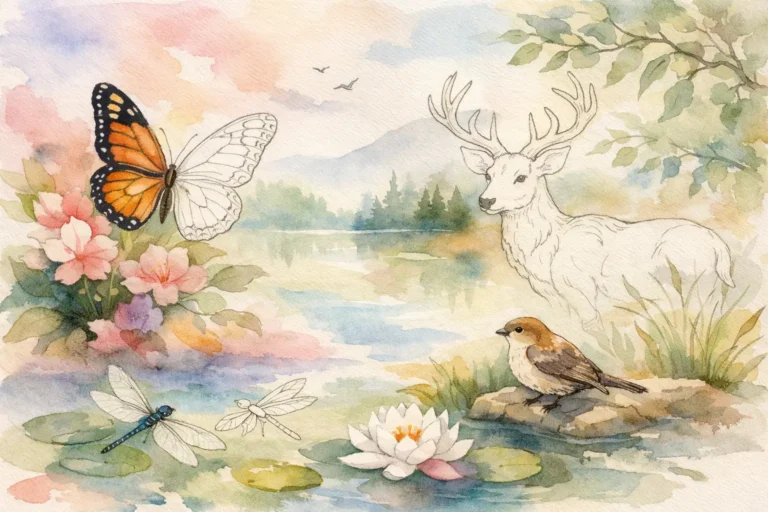
Floral patterns, leafy scenes, and gentle animal illustrations can make the experience feel especially cozy. A thoughtfully designed coloring book, such as one from AmBizi, offers a calm starting point when you want a creative pause but do not want to plan one. Some nights, ten minutes of coloring is plenty. Other nights, you may want to stay with one page longer.
Read something that does not ask too much of you
Evening reading does not have to mean tackling a serious book you feel obligated to finish. A comforting novel, a collection of essays, poetry, a gardening book, or a favorite story read for the second time can all be lovely choices.
The key is to match the book to your energy. If you are tired, a dense or suspenseful story may keep your thoughts racing. Try a chapter that feels warm and absorbing but not demanding. Keep a bookmark nearby and give yourself permission to stop mid-chapter when sleepiness arrives.
Put together a small puzzle
A puzzle offers quiet focus with a clear, satisfying rhythm: look, sort, test, and place. It can be especially helpful when your thoughts feel scattered because your attention has one simple job. You do not need a thousand-piece puzzle spread across the dining table to enjoy the effect. A compact puzzle, a puzzle book, or even a small sorting challenge can bring the same sense of steady engagement.
Choose an image you genuinely like looking at. Soft landscapes, flowers, birds, and familiar places make the time feel more pleasant than a puzzle selected only for difficulty. Leave it set up on a tray or side table if possible, so returning to it feels easy.
Make something simple with your hands
Handwork can create a peaceful rhythm at the end of a busy day. Knitting a basic scarf, mending a loose button, folding paper stars, arranging pressed flowers, or winding yarn into a neat ball can all be satisfying. The point is not to produce something impressive. It is to give your hands a gentle task while your attention settles.
Beginners may enjoy projects with a short learning curve. Complicated patterns can be rewarding, but they are not always relaxing when you are already tired. Keep a simple project for weeknights and save the more involved ideas for a slower weekend afternoon.
Keep a quiet notebook
Writing can be a private way to close the day, especially if your mind tends to replay conversations or tomorrow’s to-do list at bedtime. You do not need to journal perfectly or write pages at a time. A few lines are enough: what felt good today, what you noticed outside, what you would like to leave behind until morning.
Some people prefer a gratitude practice, while others find it more natural to make a short “done for today” list. You might write down three tasks that can wait, then close the notebook. This small boundary can make the evening feel less crowded.
Tend to a windowsill garden
A few minutes with plants can become a calming evening ritual. Check the soil, trim a dry leaf, mist a fern, or simply notice new growth. Houseplants, herbs, and small indoor flowers offer a quiet connection to the natural world without requiring a full garden.
This hobby works best when you keep it light. Most plants do not need daily attention, and overwatering can become its own source of worry. Think of the routine as a moment of noticing rather than another chore. If you do have outdoor space, a brief walk through the yard at dusk can offer the same gentle pause.
Make the Hobby Easy to Return To
A relaxing hobby is much more likely to become part of your evening when the first step is simple. Put colored pencils in a small cup, leave your current book on the nightstand, or keep a notebook and pen in the place where you usually sit. Reducing setup matters, particularly on nights when your energy is low.
It can also help to give the hobby a small container of time. Try twenty minutes after the kitchen is cleaned, or one chapter before bed. A time limit is not meant to make relaxation feel scheduled. It simply protects the activity from being pushed aside by the next notification or household task.
Consider the atmosphere, too. A warm lamp, a cup of herbal tea, comfortable clothes, and a cleared corner of the table can signal that the day is changing pace. You do not need to create a perfect ritual. One or two comforting details are enough to make an ordinary evening feel more intentional.
Let Your Energy Choose the Activity
There will be nights when coloring a detailed page sounds wonderful and nights when even choosing colors feels like too much. A helpful approach is to keep a few hobby options at different energy levels. Reading a few pages or watering plants may suit a very tired evening. A puzzle or simple handwork may feel right when you have a little more focus. Save larger creative projects for the nights when you truly want them.
This flexibility keeps a hobby from turning into another expectation. The value is not in consistency for its own sake, nor in how much you complete. It is in recognizing what would feel kind and settling in the moment.
Tonight, choose the activity with the gentlest beginning. Open the book, pick up one pencil, turn one puzzle piece over, or write one honest sentence. A quiet evening does not need much to feel like your own.