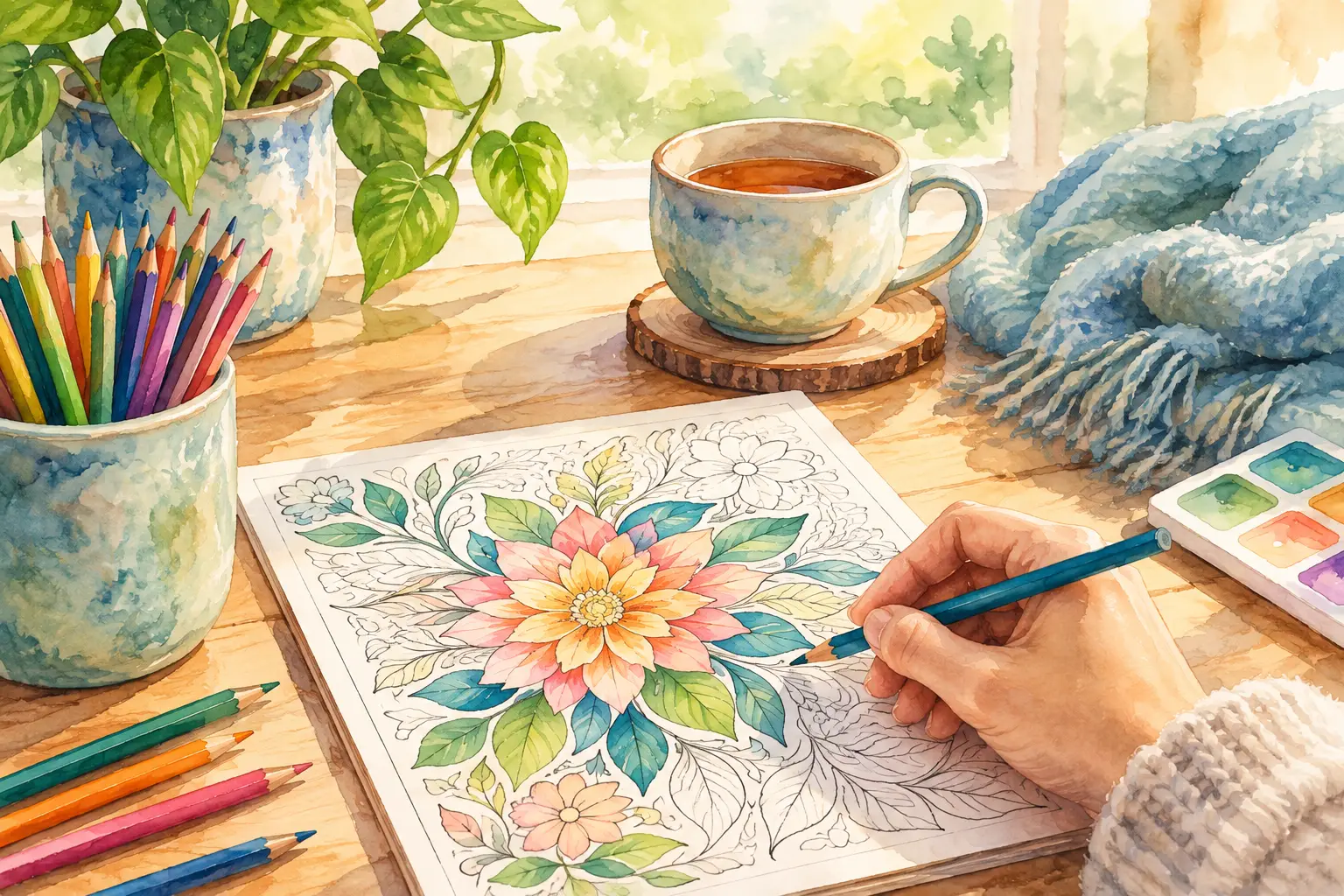
Adult Coloring for a Calmer, Screen-Light Break
The appeal of adult coloring is wonderfully simple: a page, a few colors, and a small pocket of time that belongs only to you. There is no need to make anything perfect, share a finished page, or learn a new skill. You can simply choose a shade, follow a line, and let the steady motion create a quieter kind of break.
For busy professionals, parents, caregivers, and anyone who spends much of the day moving from one demand to the next, that simplicity matters. Coloring offers a tactile, screen-light activity that feels easy to begin and easy to set down. A single flower petal or leaf can be enough to shift the pace of an afternoon.
Why adult coloring feels so restorative
Many leisure activities come with invisible pressure. A new hobby can require supplies, instruction, planning, or a level of energy you may not have at the end of a long day. Scrolling can fill a spare moment, but it can also leave the mind feeling scattered. Adult coloring asks for very little by comparison.
The repeated movement of pencil or marker across the page gives your attention one gentle place to rest. Instead of holding a long list of thoughts at once, you are deciding whether this bloom should be coral, lavender, or soft green. Those small choices can invite calm without turning creativity into another task to complete.
It is also an activity with a natural sense of progress. A blank page slowly becomes your page, one section at a time. You may finish it in one sitting, return to it over several evenings, or leave it half-colored because that was all the quiet enjoyment you needed. Each approach is valid.
There is a practical benefit, too: coloring does not depend on perfect conditions. You do not need an entire free afternoon, a special workspace, or a spotless house. Ten minutes at the kitchen table can be enough. A book and a small pencil case can travel to a waiting room, a porch, or the peaceful corner of a busy home.
Adult coloring is not a test of artistic skill
One reason people hesitate to begin is the idea that they must be “good at art.” Coloring pages offer a kinder starting point. The lines are already there. You are not responsible for inventing the composition or getting perspective right. Your role is simply to respond to what is on the page.
That freedom makes it easier to experiment. A realistic palette can be lovely, but it is never required. Leaves can be blue. A fox can have a purple tail. A garden can hold every color you happen to enjoy that day. There are no judges, and there is no single correct result.
Try to release a few common expectations before you start. You do not have to fill every tiny space. You do not have to use every color in your set. You do not have to finish the page. Let the design be an invitation rather than an assignment.
For some people, detailed patterns are absorbing and satisfying. For others, small, open designs with wider spaces feel more relaxing. It depends on your mood, your eyesight, the time you have, and the tools you prefer. A book that feels welcoming is usually the one you will reach for most often.
Choose themes that match the mood you want
The subject of a coloring page changes the experience. Floral designs can feel soft and cheerful, especially when you want a little brightness on a gray day. Nature scenes offer a gentle sense of space. Animal pages can bring warmth and personality, while simple botanical patterns may suit an evening when you want to slow the mind without making many decisions.
When choosing a coloring book, look first for imagery that makes you pause in a pleasant way. A cover does not need to promise challenge or mastery. It only needs to make you think, “I would like to spend time with these pages.” That is often a better guide than complexity.
AmBizi coloring books are created with this kind of calm, approachable creativity in mind: inviting floral, nature, and animal designs that make it easy to begin where you are.
Create a small coloring ritual
Adult coloring works well as a flexible activity, but a little routine can make it easier to choose over your phone or another distraction. Keep your book somewhere visible, such as beside your favorite chair or near the place where you enjoy a cup of tea. If it is tucked away in a drawer, it is easy to forget when you need a pause most.
Set out only the supplies you enjoy using. Colored pencils offer soft layering and a quiet feel. Markers create bolder color and can be satisfying for larger spaces, though it is wise to test them on a back page first if paper bleed-through is a concern. Gel pens add small, bright details, but they may feel less relaxing if you find yourself waiting for ink to dry.
Then make the ritual pleasantly modest. Put on a familiar instrumental playlist, open a window, or sit with a warm drink. Give yourself a short amount of time, perhaps 15 or 20 minutes, rather than waiting for the mythical perfectly free evening. A small promise is often easier to keep.
If your mind wanders, that is fine. Notice the color in your hand and return to the next shape. The goal is not intense concentration. It is a gentler rhythm, with enough focus to create distance from the noise of the day.
Let your supplies stay simple
It is easy to believe that a relaxing hobby requires a large collection of premium materials. It does not. A basic set of colored pencils and a book with paper you enjoy are enough to begin. Starting simply also keeps the experience low-pressure.
As you color more often, you may learn what suits you. Some people prefer a limited palette of six or seven shades because fewer choices feel peaceful. Others enjoy opening a larger set and building rich layers of color. Neither is better. The best tools are the ones that help you want to sit down again.
A few small habits can make your pages feel more enjoyable. Work from light colors to darker ones if you like gentle shading. Rotate the page instead of twisting your wrist around awkward angles. Keep a scrap of paper nearby to test a color before placing it on the design. These are options, not rules.
If a marker goes outside a line or a pencil color looks different than you expected, leave it be when you can. Imperfections often disappear once the whole page has color. More importantly, correcting every tiny detail can pull you away from the reason you picked up the book in the first place.
Make room for creativity in ordinary moments
A coloring practice does not have to become a formal part of your routine to be meaningful. It can live in the in-between moments: after lunch, before bed, during a quiet weekend morning, or while waiting for dinner to cook. Keeping expectations light helps it remain a source of comfort rather than another item on a checklist.
You might color alone as a private reset, or leave a few pages and pencils on the table for a calm shared activity. Coloring alongside a friend or family member can create easy conversation without the need to fill every silence. It is a simple way to be together while each person has something peaceful to do.
Over time, your finished pages can become a small record of slower moments. You may notice favorite color combinations, themes you return to, or pages that remind you of a particular season. You do not need to frame them or post them anywhere. They can remain exactly what they were meant to be: a quiet place where you gave yourself permission to pause.
The next time your thoughts feel crowded, choose one page, one color, and one small section to begin. You do not need to create a masterpiece. You only need to make a little room for calm.