Best Large Print Coloring Books for Calm
A coloring book can be beautiful and still feel tiring to use. Tiny petals, crowded patterns, and narrow spaces may look impressive on the page, but they can turn a quiet break into a frustrating task. The best large print coloring books make room for a different kind of creativity: slower, simpler, and easier on the eyes.
Large print designs are especially inviting when your mind is already full. You do not need to search for a perfect shade or carefully guide a pencil through dozens of miniature details. You can choose a color, settle into a page, and let the gentle repetition create a little breathing room in your day.
What makes a coloring book truly large print?
Large print coloring is not only about bigger pictures. It is about how a page feels when you sit down to use it. Clear outlines, open areas, and thoughtful spacing all help make coloring more comfortable and approachable.
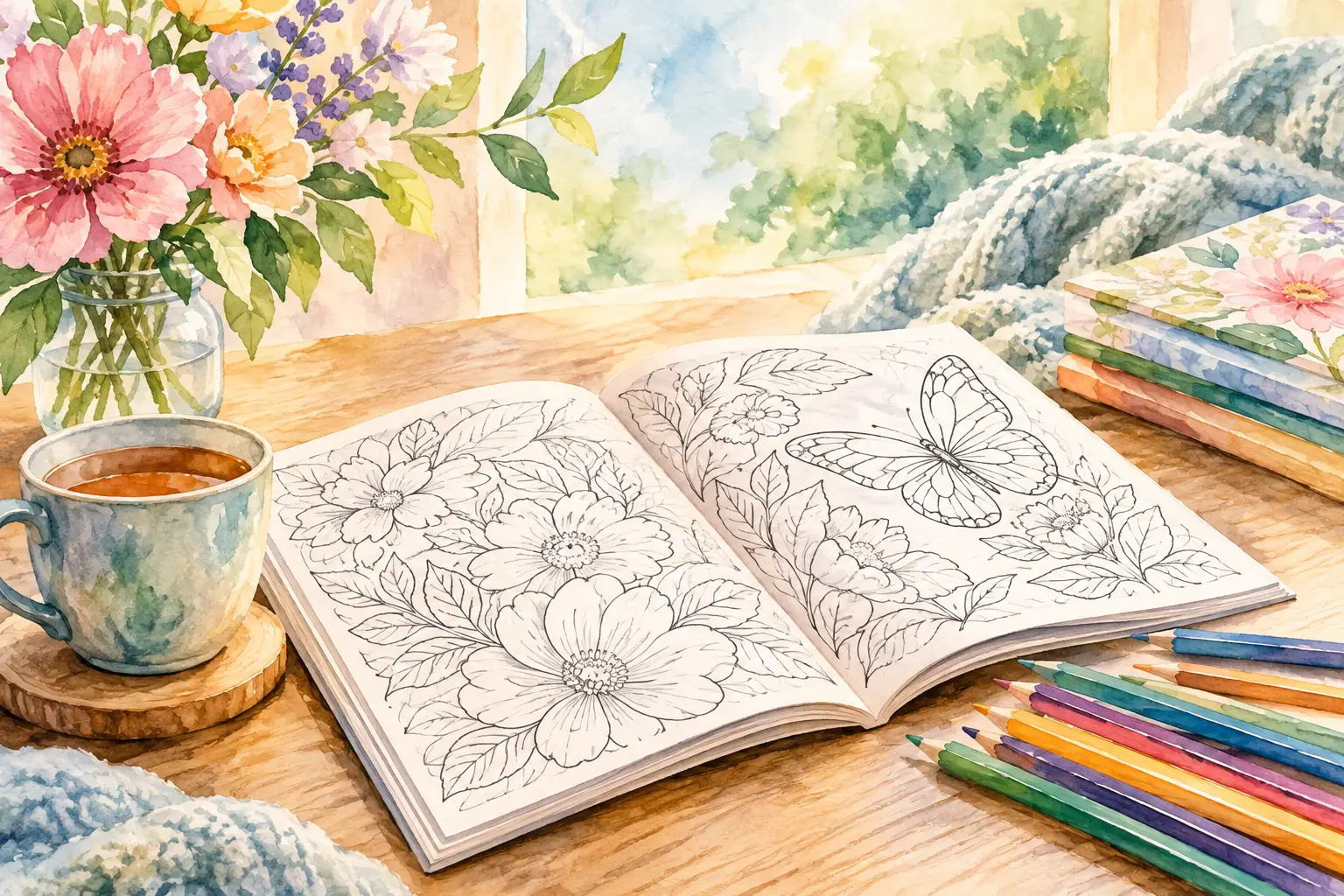
A well-designed large print book gives each element enough room to stand on its own. A flower may have broad petals rather than tiny overlapping shapes. A woodland animal may be drawn with simple features and an open background. Even detailed subjects can feel calm when the lines are clear and the composition is not crowded.
This matters for many kinds of colorists. Some people prefer a larger format because it is easier to see. Others simply want an activity that feels restful after a long day of screens, errands, work, or caregiving. Larger spaces also work well with a wider range of coloring tools, including colored pencils, gel pens, markers, and crayons.
The goal is not to finish a complicated masterpiece. It is to enjoy a few peaceful minutes with color.
How to choose the best large print coloring books
The right book depends on what helps you feel most at ease. Before choosing a theme, look at the page design. A relaxing book should feel welcoming the moment you open it, not like another project waiting to be completed.
Look for clear, confident outlines
Strong, easy-to-follow lines make a noticeable difference. They give each color area a gentle boundary without making the image feel stiff. If you often color in the evening or during a short break, bold outlines can help you begin without extra effort.
Very faint lines can be lovely for experienced artists who enjoy subtle shading. But for a low-pressure coloring session, clearer artwork is often the kinder choice. You can focus on the color itself rather than worrying about staying perfectly inside every edge.
Choose open spaces over crowded detail
More detail is not always more relaxing. A page filled from edge to edge with miniature shapes may take hours to complete, which can be satisfying for some people but draining for others.
Open designs offer a softer pace. You may finish one flower, one bird, or one leaf-filled branch in a single sitting. That small sense of completion can be especially comforting when life feels busy. It also leaves room for simple color choices, gentle blending, and easy experimentation.
Consider the paper and one-sided pages
Paper quality shapes the experience, particularly if you enjoy markers. Thick paper can help colors look smoother and may reduce show-through, though marker performance also depends on the ink and pressure you use. Placing a spare sheet of paper behind the page is still a simple habit worth keeping.
One-sided designs are helpful for another reason: they let you remove and display a finished page if you wish. You can tuck a favorite floral design into a frame, add it to a journal, or simply keep it as a small reminder that you made time for yourself.
Pick themes that create the mood you want
The best theme is the one you are naturally drawn to. For a gentle creative pause, nature-based subjects are often an easy place to begin. Flowers, garden scenes, birds, butterflies, forest animals, and peaceful landscapes bring familiar shapes to the page without asking too much from you.
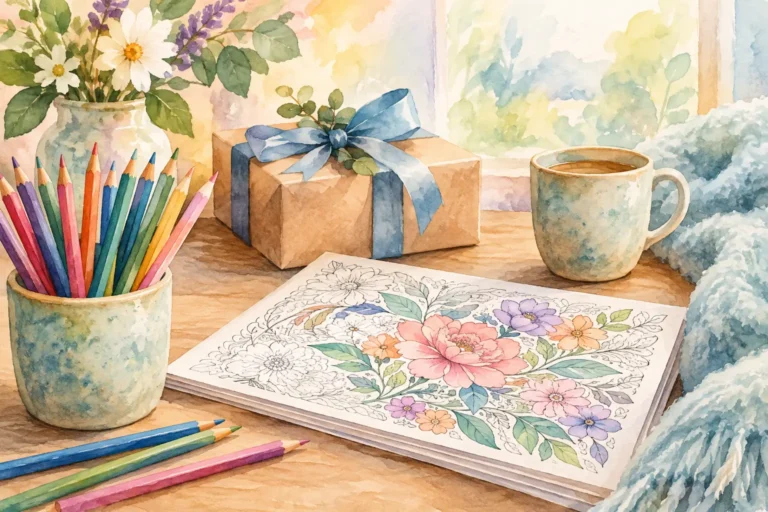
Floral coloring books can feel especially versatile. You can keep a page soft with pale pinks, greens, and warm yellows, or make it bright and expressive with deep purples and vivid blues. There is no correct palette. A simple daisy can become cheerful, elegant, muted, or playful depending on what you need that day.
Animal themes offer a similar kind of comfort. A sleepy cat, a songbird on a branch, or a deer among leaves can give your attention a quiet place to rest. The image does not need to be realistic. It only needs to feel pleasant enough to return to.
Large print coloring books are made for real life
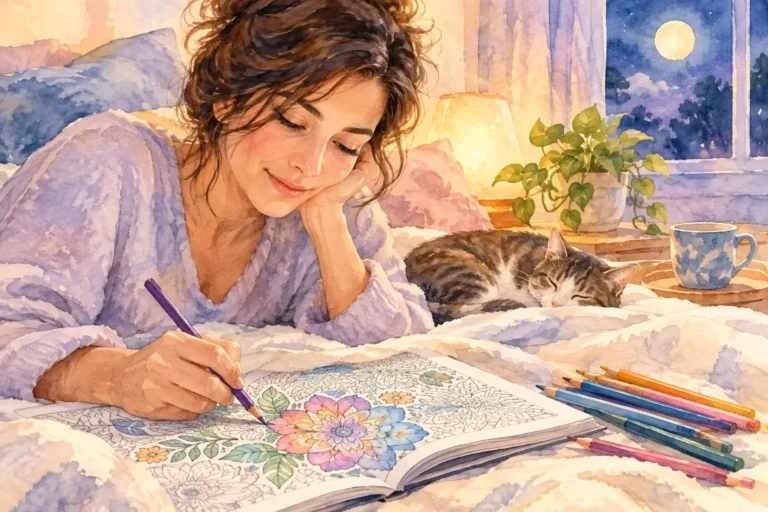
A calming activity should fit into your day without demanding that you rearrange it. Large print coloring is easy to pick up for ten minutes before bed, while waiting for dinner to cook, or during a quiet afternoon at home.
Because the spaces are more generous, you can make visible progress quickly. That can be useful when you want to step away from scrolling but do not have an entire hour to spare. A few colored leaves or a finished butterfly wing may be enough to shift the pace of the moment.
This is also why simple designs can be a thoughtful choice for shared time. A parent and teen, friends at a kitchen table, or family members visiting one another can color side by side without needing special skills or complicated instructions. Conversation can come naturally, or the room can stay quiet. Both are perfectly fine.
Matching your tools to the page
Large print books give you more freedom with supplies, but you do not need a full collection to enjoy them. A small set of colored pencils is enough for soft, gentle color. Crayons can create a nostalgic, relaxed look. Markers bring bolder coverage and are especially satisfying on wide petals, leaves, and backgrounds.
If you are choosing between pencils and markers, think about the mood you want. Pencils tend to encourage a slower approach, with room for layering and light shading. Markers offer a quick wash of color and can make a page feel finished sooner. Neither is better. Some days call for careful pencil strokes; other days call for a bright marker and an uncomplicated choice.
Try keeping your supplies visible but simple. A small basket with a book, a handful of favorite colors, and a protective sheet of paper can make it easier to begin. When everything is ready, a quiet creative break feels less like planning and more like a natural part of the day.
Give yourself permission to color simply
Many adults stop before they start because they worry about choosing the wrong colors or making a page look uneven. Large print designs are a gentle answer to that pressure. Their open spaces invite an easy, forgiving style.
You can use one color for an entire flower. You can color only part of a page and return later. You can leave the background white because you like the clean look. You can use unexpected colors, too: blue leaves, pink birds, golden skies. The page belongs to your moment, not to a set of rules.
It helps to think of coloring as a small ritual rather than a performance. Put your phone aside for a few minutes. Make a warm drink. Sit near a window if you can. Let the pencil move at an unhurried pace. The finished page may be lovely, but the quiet enjoyment along the way is the real reason to return.
A gentle choice for your next creative break
When comparing the best large print coloring books, choose the one that makes you want to sit down right away. Look for generous spaces, clean artwork, and subjects that bring a little softness to your day. A floral page, a peaceful animal, or a simple garden scene can be enough to invite calm.
AmBizi creates nature-inspired coloring books with this kind of easy, comforting creativity in mind. Choose a page that feels good, pick the colors that appeal to you, and allow a few unhurried minutes to be just that: yours.