
An Adult Coloring Before Bed Example to Try
The last hour before sleep can easily fill with one more email, one more scroll, or a mind replaying the day. An adult coloring before bed example offers a softer option: a small, hands-on pause that asks for attention without asking for perfection. A page of flowers, leaves, or gentle animal shapes can give busy thoughts somewhere quiet to rest.
Coloring is not meant to turn bedtime into another task on the list. The point is simple quiet enjoyment. With a book nearby, a few familiar pencils, and a short amount of time, you can create a screen-light ritual that feels easy to return to.
A simple adult coloring before bed example
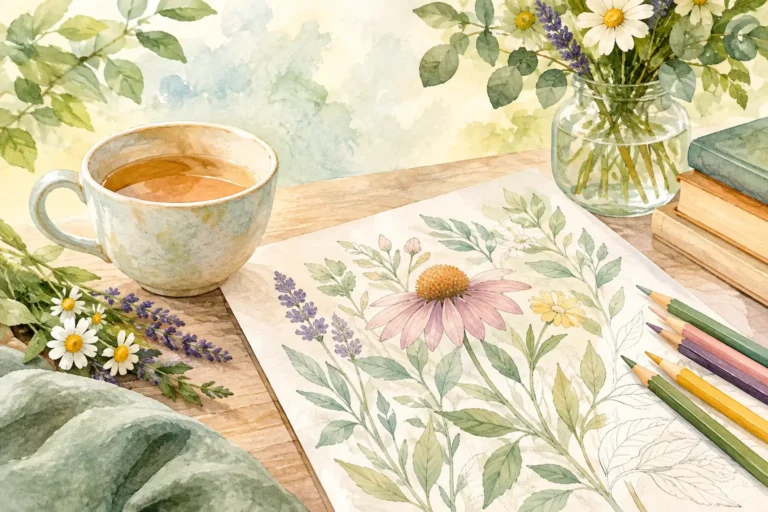
Imagine it is 9:30 p.m. The dishes are done, tomorrow’s essentials are set aside, and your phone is charging across the room. Instead of looking for something else to consume, you place a floral coloring book on the table beside a cup of caffeine-free tea.
Choose one small area of a page rather than planning to finish the whole design. Perhaps it is a cluster of daisies in one corner. Pick three or four colors that feel pleasant together: soft green for leaves, warm yellow for centers, and two shades of pink or lavender for petals. There is no need to match a photo, follow a rule, or make the colors look realistic.
Set a gentle timer for 15 minutes if that helps you keep the activity contained. Color slowly, one petal or leaf at a time. Notice the pencil moving across the paper and the small decisions in front of you. When the timer ends, pause wherever you are. Close the book, place the pencils in a small container, and continue with the rest of your bedtime routine.
That is enough. A partially colored page is not unfinished in any troubling sense. It is simply waiting for another quiet evening.
Why coloring can fit so well before sleep
Many evening activities keep the mind jumping from one thing to the next. Coloring narrows the focus. You are choosing a color, filling a shape, and seeing a page change little by little. The pace is naturally slower than a feed, a show, or a late-night search for answers.
The tactile part matters, too. Paper and pencils create a clear boundary from work screens and household demands. For people who spend much of the day answering messages, organizing schedules, or caring for others, this can be a gentle way to make a little room for themselves.
It also helps that coloring has a natural stopping point. You can finish a leaf, a section, or a few minutes of the page and put it away. Unlike a suspenseful series or an endless stream of posts, it does not pull you toward a next episode. Still, it depends on the person. If tiny, detailed patterns make you feel overly focused or frustrated at night, choose larger, more open designs instead.
Make the routine feel easy, not precious
A bedtime coloring space does not need to be elaborate. In fact, keeping it simple makes it more likely that you will use it. Store your coloring book and a small selection of pencils in a basket, drawer, or bedside box. You want the invitation to be visible, but not another surface to manage.
Lighting can shape the mood. A warm bedside lamp is often more comfortable than bright overhead light. Choose a spot where you can sit with relaxed shoulders and support your book on a table, lap desk, or firm pillow. If you tend to color in bed, keep your pencils contained so the setup still feels calm rather than cluttered.
You may enjoy quiet, or you may prefer a low-volume instrumental playlist, soft rain sounds, or the simple hum of the house settling down. There is no ideal atmosphere to create. The best routine is the one that makes you think, “I can do this again tomorrow.”
Keep the color choices small
A large pencil set can be lovely, but it can also create too many decisions at the end of a full day. Start with five to eight colors. A nature-inspired palette of greens, blues, warm browns, and a favorite flower shade is more than enough.
Limiting your choices does not limit creativity. It removes pressure. You can use the same blue in several places, color every leaf a different green, or leave parts of the design uncolored. Let the page be pleasant rather than impressive.
Choose pages for your energy level
On a calm evening, you may enjoy a full page of layered blooms or a detailed garden scene. On a tired evening, a single animal, a bold leaf pattern, or a page with wider spaces may feel better. Both kinds of pages have a place in a relaxing routine.
It can help to mark a few pages in advance: one for five quiet minutes, one for a longer weekend session, and one that simply makes you smile. Then you do not have to decide what to color when you are already winding down.
A 20-minute evening rhythm
If you would like more structure, try a short rhythm that leaves plenty of room for flexibility. Spend the first two minutes putting your phone aside and choosing a page. Color for about 15 minutes, without checking whether you are making progress quickly enough. Use the last few minutes to return your pencils, close the book, and notice how you feel.
Some nights, 20 minutes will be just right. On others, five minutes may be all you want. A coloring routine works best when it can bend around real life. Parents may color after the house is quiet. A caregiver may fit in a few leaves before turning in. Someone with an unpredictable work schedule may keep the book near the couch for any small opening in the evening.
The goal is not consistency for its own sake. It is having a calm option ready when you want a break from noise and mental clutter.
What to avoid if you want a calmer experience
Try not to turn coloring into a project that needs the perfect supplies, a finished page, or a photo worth sharing. Those expectations can take a comforting activity and make it feel like another performance.
It may also help to avoid checking messages “just for a second” while you color. Even a brief glance can pull the mind back into the day. If possible, leave the phone outside your immediate reach and let the coloring page hold your attention instead.
Finally, notice whether you are choosing designs that suit the hour. A complicated page can be satisfying in the afternoon, while a simple floral border may be more welcoming before bed. Let your energy guide the choice.
Let the page wait for you
A coloring book does not ask you to arrive inspired, skilled, or fully rested. It simply gives your hands something gentle to do while the day begins to loosen its hold. A page of soft petals or quiet woodland details can become a familiar signal that the evening is slowing down.
Keep one design ready for tomorrow night. You may color only a few small spaces, and that can still be a lovely way to make room for calm before sleep.