Colored Pencils Versus Gel Pens for Calm Coloring
A floral page can feel entirely different depending on what you hold in your hand. In the choice between colored pencils versus gel pens, there is no single winner. One offers a soft, unhurried way to build color; the other brings a smooth, bright touch that can make small details feel special. The best choice is the one that helps you settle in, slow the mind, and enjoy the page in front of you.
For many people, coloring is less about making a perfect picture and more about creating a quiet pause. Your tools shape that pause. Colored pencils invite gentle layers and subtle changes. Gel pens offer easy color and a little shine. Understanding their differences can help you choose supplies that fit your mood, your coloring book, and the amount of time you have.
Colored Pencils Versus Gel Pens: The Feel of Each
Colored pencils have a familiar, grounding quality. They make a light scratch across the paper, giving your hand a steady rhythm as you fill petals, leaves, feathers, or patterned backgrounds. You can begin softly and deepen the color little by little. That gradual process often feels especially calming when the day has been busy.
They also leave room for variation. A single green pencil can look pale and airy with a light hand, then rich and shaded when layered several times. You do not need advanced techniques to enjoy this. Even simple changes in pressure can give a nature-inspired page a pleasing sense of depth.
Gel pens feel more immediate. Their ink glides onto the paper with little pressure, laying down a clear line of color right away. Many people enjoy them for tiny details, decorative borders, stars, small flower centers, and accents that deserve a brighter finish. Glitter, metallic, and pastel gel pens can bring a playful lift to a page without asking much of you.
The trade-off is that gel pens can feel less forgiving. Ink may take a moment to dry, and a pen that skips can interrupt a peaceful flow. Some colors may also show through thinner paper more easily than pencil. Still, if you want a simple, vivid mark without layering, gel pens can be a lovely choice.
When Colored Pencils Bring More Calm
Colored pencils are often the gentler option for longer coloring sessions. Their softer visual effect works beautifully with floral scenes, woodland animals, garden paths, and other designs where you want colors to feel natural rather than bold. They are also easy to pause and return to later. Put the pencil down, close the book, and continue when you have another quiet ten minutes.
They can be especially comforting if you enjoy repetition. Coloring a group of leaves in slightly different greens or slowly shading a cluster of petals can create a soothing focus. There is no rush to fill an area in one pass. The page develops at its own pace.
Pencils are also a practical starting point for adults who have not colored in years. A basic set gives you plenty to work with, and the learning curve is low. Keep a sharpener nearby, choose two or three colors that feel good together, and begin with one small area. The goal is quiet enjoyment, not technical precision.
A few pencil qualities can make your experience more comfortable. Softer-core pencils usually lay down color more easily, while harder pencils are useful for fine lines and small spaces. If a page has delicate details, a well-sharpened pencil gives you control without making the process feel fussy. It helps to test a small corner or an extra page first, especially if you plan to layer colors.
When Gel Pens Are the Better Fit
Gel pens are wonderful for moments when you want color to arrive quickly. If you only have a short break between responsibilities, the smooth flow can make coloring feel easy from the first mark. There is no need to build layers unless you want to. Choose a shade, fill a small section, and watch the page brighten.
They are particularly appealing for designs with plenty of small, enclosed shapes. Think of tiny blossoms, butterfly wings, patterned animal coats, or decorative motifs around a frame. A fine-tip gel pen can help you stay inside close lines with less effort than a broad pencil point.
Gel pens can also make a gentle coloring routine feel more celebratory. A few metallic touches on a moon, a vase, or a field of wildflowers can add a quiet glow. Glitter ink works best in small doses, where it feels like an accent rather than a demand for attention. If your usual palette is soft and natural, try using one shimmering pen only for highlights.
Before committing to a full page, let the ink dry and turn the page over. If the paper is light, place a spare sheet behind the page to protect the next design. This small step can help you color with less worry, especially in a favorite book.
Choose by Page, Mood, and Time
The simplest way to decide is to let the page tell you what it needs. A detailed botanical illustration may invite colored pencils because they can create soft transitions across petals and leaves. A cheerful page with geometric patterns or tiny decorative elements may be more fun with gel pens. Neither approach has to be all or nothing.
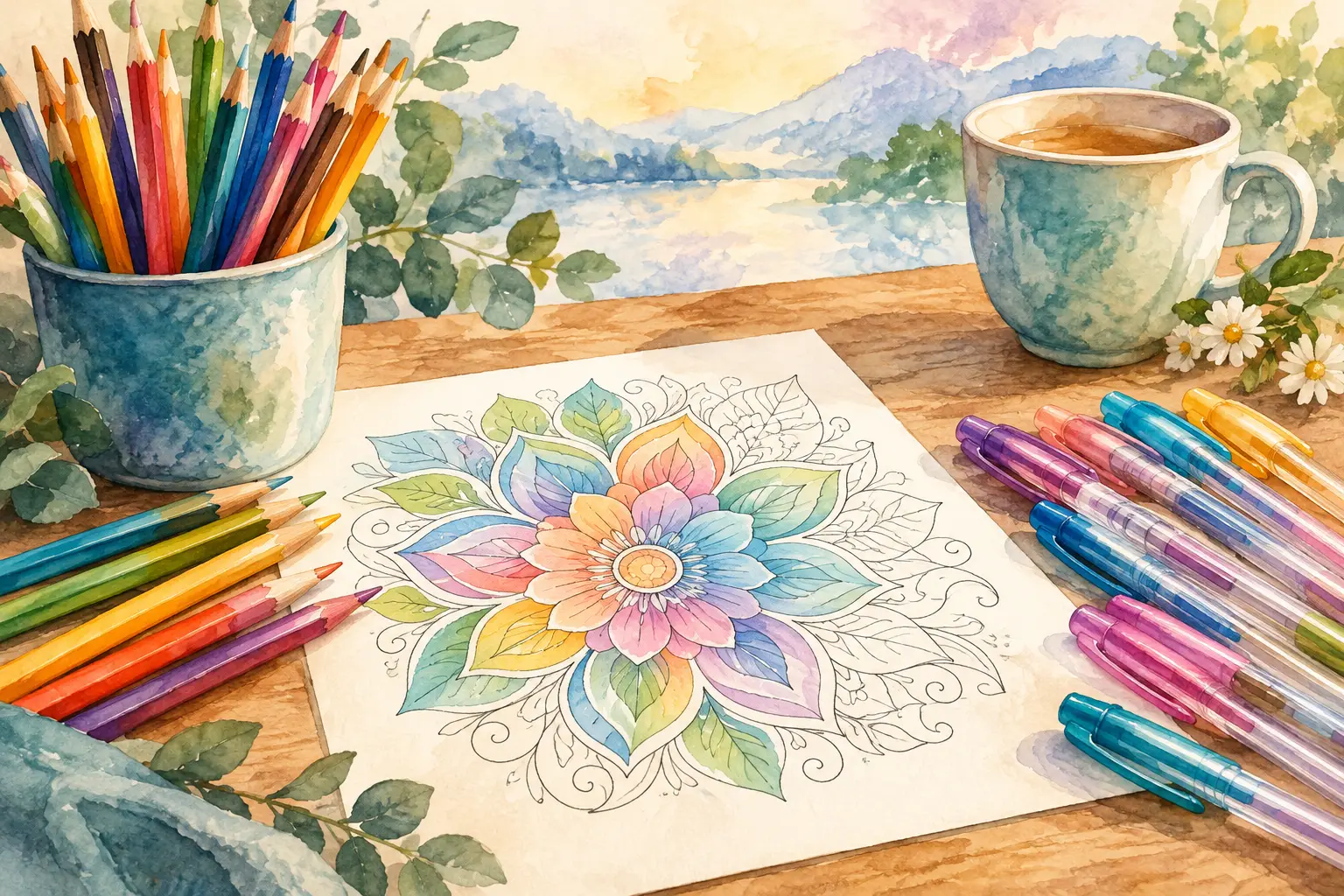
Combining the two can be especially satisfying. Use colored pencils for large backgrounds, animal fur, or softly shaded flowers. Then add gel pen to the smallest details: a few dots in a flower center, a delicate outline, or a touch of gold on a leaf. This keeps the overall page peaceful while giving it a little sparkle.
Your mood matters just as much. Reach for pencils when you want to linger and ease into the process. Choose gel pens when you want smooth, bright color with very little setup. On a tired evening, it may be comforting to select only one tool and a few favorite shades rather than opening every supply you own.
There is also the question of hand comfort. Pencils require a little more pressure and occasional sharpening, which some people find pleasantly tactile. Gel pens need less pressure, but narrow barrels can feel tiring during a long session. If your hand starts to feel strained, take a small pause, stretch your fingers, and switch tools or areas of the page.
A Simple Way to Build a Relaxing Set
You do not need a large collection to create a peaceful coloring corner. Start with a modest set of colored pencils in colors you naturally enjoy, such as leafy greens, warm pinks, sky blues, and earthy browns. Add a few reliable gel pens for fine details or moments when you want something brighter.
Keep your supplies easy to reach. A small pencil case, a sharpener, and a sheet of scrap paper are enough to make the beginning feel inviting instead of complicated. If choosing colors feels overwhelming, limit yourself to three or four shades for one page. A smaller palette often creates a more restful experience and a surprisingly cohesive result.
AmBizi coloring books are made for this kind of low-pressure creativity. Whether you prefer the quiet shading of pencils or the smooth brightness of pens, allow the page to be a small place where nothing needs to be rushed.
The next time you sit down to color, choose the tool that feels easiest to pick up. A soft pencil layer or one bright gel pen mark can be enough to begin a calmer moment.