What Paper Suits Alcohol Markers for Coloring?
Alcohol markers can turn a quiet coloring session into something richly colorful and absorbing. But the wrong page can leave you with blotchy patches, feathered edges, and ink that travels farther than you intended. If you are wondering what paper suits alcohol markers, the short answer is smooth, heavyweight paper made to handle wet ink – with a few important choices depending on how you like to color.
The best paper is not always the thickest paper. It is the paper that lets your markers move gently, blend without a struggle, and keep your favorite designs looking clean. A little understanding of paper can make your creative pause feel more relaxed from the very first stroke.
What paper suits alcohol markers best?
For most coloring projects, smooth Bristol paper or marker paper is the best match for alcohol markers. Both have a smooth surface, often called low tooth, which helps ink glide evenly instead of catching on visible fibers.
Smooth Bristol is a lovely choice when you want a substantial page that feels satisfying in your hands. Look for smooth or plate Bristol rather than vellum Bristol. It supports even color, fine details, and soft layering, making it especially pleasant for florals, leaves, animal fur, and small patterned areas. A paper weight around 100 lb cover, or roughly 250 to 300 gsm, is a dependable place to start.
Marker paper is designed specifically for alcohol-based ink. It is usually lighter than Bristol and has a coated or treated surface that keeps ink sitting near the top of the sheet a little longer. This gives you time to blend colors and create soft transitions. It can feel almost silky, which makes coloring broad background areas calm and easy.
There is a trade-off: marker paper often allows ink to show through the back. That is normal, even with quality paper. It is best for single-sided sheets, loose coloring pages, or artwork you plan to display.
Why alcohol markers need the right surface
Alcohol markers use dye ink carried by alcohol. The ink dries quickly, which helps create smooth layers and blended shadows, but it also moves through absorbent paper with ease. On thin copy paper or ordinary book paper, it can spread outward along the fibers. This is called feathering.
A smooth surface gives the ink fewer tiny channels to wander through. That is why your lines tend to stay cleaner on Bristol or marker paper than on textured watercolor paper. Less texture also means less streaking, especially when you color a larger petal or leaf with one shade.
Paper affects the pace of coloring, too. Highly absorbent paper grabs ink quickly. It may be useful when you want simple, flat color, but it gives you less time to soften an edge before it dries. A less absorbent marker-friendly sheet leaves a brief window for blending. You do not need advanced techniques to enjoy that benefit. Even a light second pass can look more even and settled.
Paper weight helps, but it does not stop bleed-through
It is easy to assume that heavier paper solves every alcohol-marker concern. Weight does help the page feel sturdier and reduces buckling, but bleed-through and feathering are not exactly the same problem.
Bleed-through happens when ink passes through the sheet. Feathering happens when ink spreads sideways across it. A thick but very absorbent sheet may still let color travel outward. A thin marker paper may resist feathering beautifully yet allow color to pass through to the reverse side.
For coloring books, this distinction matters. If artwork is printed on both sides of the page, alcohol markers can damage the design behind the one you are coloring, regardless of how carefully you work. A protective sheet placed underneath will shield the next page and your table, but it cannot save the reverse side of the page itself.
If you love alcohol markers, choose single-sided coloring pages whenever possible. If your book is double-sided, colored pencils, gel pens, or a light hand with water-based markers may be a more comfortable choice. This is not about limiting your creativity. It is about choosing the tool that lets you relax instead of worrying about what is happening on the other side.
Smooth Bristol paper for detailed, slower coloring
Smooth Bristol paper is often the most versatile option for people who enjoy taking their time. It works well with alcohol markers because it handles several gentle layers without immediately becoming rough or uneven.
Its firm weight is especially helpful when you like to add darker edges, lighter centers, or simple shadows to your coloring. You can build color gradually rather than pressing hard to get a bold result. Pressing lightly also protects the marker nib and gives your hands a softer, more unhurried rhythm.
Bristol does have limits. Very heavy saturation in one small spot can still bleed through, particularly with dark colors. It can also make blending feel slightly different from marker paper because it absorbs more readily. For many relaxing coloring pages, though, that bit of control is a welcome thing. You can work in small sections and see the image come together without chasing perfect effects.
Choose smooth, not textured, Bristol
Bristol is sold in smooth and vellum finishes. Vellum Bristol has more tooth, which is useful for some dry media, but it may leave alcohol marker color looking grainy. Smooth Bristol creates a cleaner finish and is generally the easier choice for coloring-book details.
Marker paper for easy blends and broad color
Marker paper is a good fit when you enjoy soft gradients, large skies, wide leaves, or bold backgrounds. Because the ink stays workable on the surface briefly, colors can meet and mingle with less effort.
This paper can be especially forgiving if you are new to blending. Try laying down your lighter color first, then add a darker shade where you want depth. Return with the lighter shade to soften the meeting point. There is no need to make every area perfectly smooth. Gentle variations in color can give flowers, feathers, and natural scenes a warm handmade feeling.
The main consideration is that marker paper is typically thin. Always slide a scrap sheet of cardstock, plastic, or several pages of plain paper beneath your work. This protects the pages below and lets you color freely without guarding every stroke.
Can cardstock and mixed-media paper work?
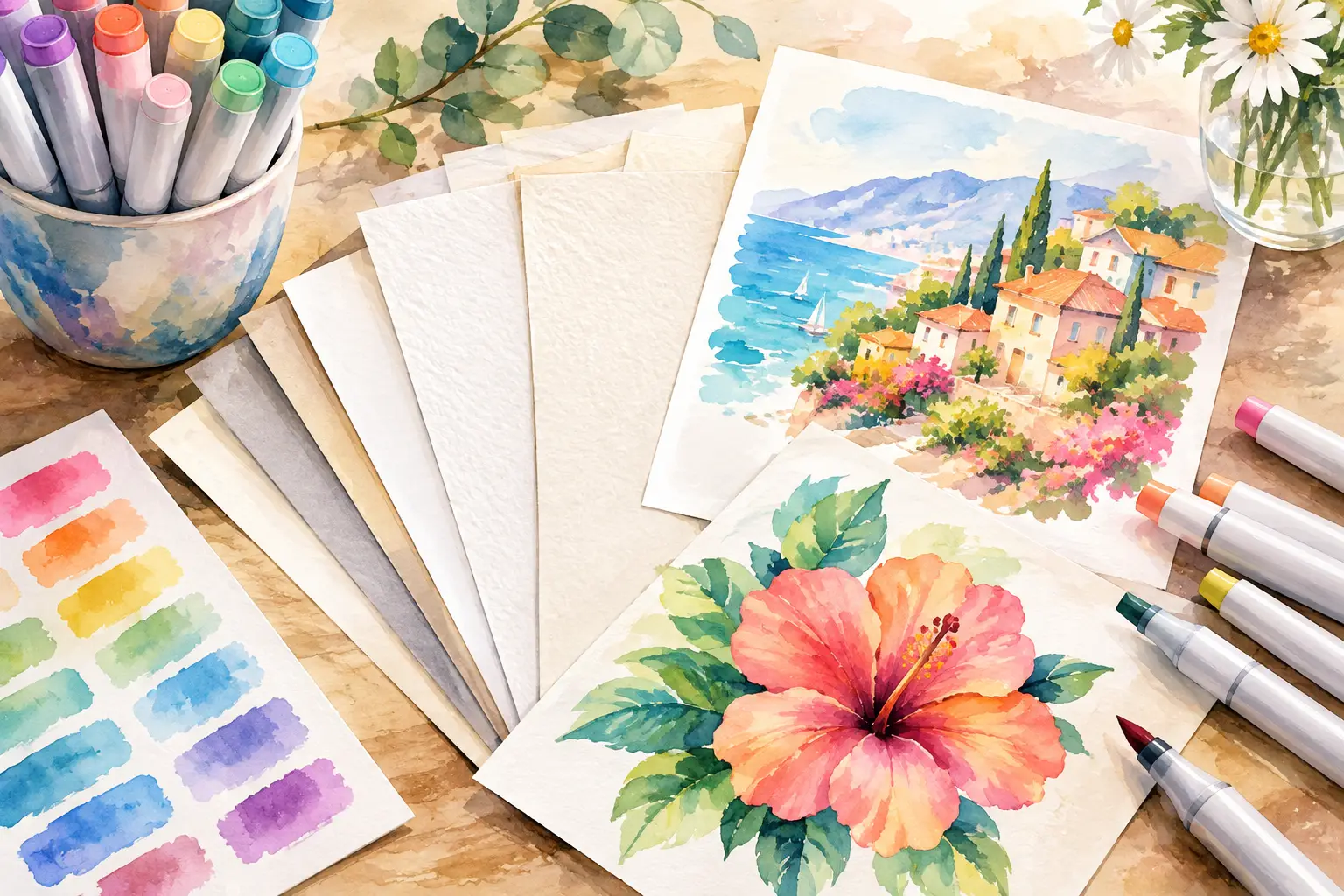
Yes, but results vary. Smooth white cardstock can be a practical option for simple coloring pages, handmade cards, and printed designs. Choose cardstock that is smooth rather than textured, ideally around 80 to 110 lb cover weight. Test a small corner first, since some cardstock absorbs ink quickly and may show streaks.
Mixed-media paper can work when it has a smooth finish and a weight of at least 140 lb, but it is not the first choice for alcohol markers. Many mixed-media sheets have enough texture to interrupt clean blends. They are more useful when you want to combine markers with colored pencil details or other dry materials.
Watercolor paper is usually not ideal for alcohol markers. Its textured surface can make fine details harder to control, and its absorbent fibers use up more ink. If you enjoy its soft, natural look, it can still be worth experimenting with, especially for loose, simple color. Just do not expect the polished blending you would see on marker paper.
A simple way to test paper before you begin
A small test can spare you disappointment on a favorite page. Use the same colors you plan to use in your design. Draw a line, fill a small shape, add a second layer, and try blending two shades together. Then turn the paper over.
Notice whether the line has feathered, whether the color looks even, and whether the ink has traveled through. Also pay attention to how the paper feels as you work. If it makes you slow down in a good way, rather than tense up, it is probably a good match.
Keep a spare sheet beneath every coloring page, even when the paper seems thick. It is a small habit that makes it easier to focus on the pleasant part: choosing colors, following the shape of a petal, and letting the rest of the day become a little quieter.
For a peaceful alcohol-marker session, start with smooth Bristol when you want sturdy pages and clear detail, or choose marker paper when easy blending is your priority. Then let the page guide you. A few simple colors, a protected surface, and an unhurried hour can be more than enough.