
Coloring Books for Bedtime and Calmer Nights
The hour before bed can feel surprisingly loud. A phone keeps offering one more thing to read, a busy day replays itself, and even a quiet room may not feel quiet in the mind. Coloring books for bedtime offer a softer transition: a few familiar tools, a page waiting without demands, and a small pocket of creative focus before sleep.
This is not about finishing a masterpiece or choosing perfect colors. It is about giving your hands something calm to do while the rest of you begins to slow down. A floral stem, a sleepy woodland scene, or a page of gentle patterns can turn the end of the day into a moment of quiet enjoyment.
Why coloring belongs in an evening routine
Bedtime routines work best when they signal that the day is changing pace. Brushing your teeth, making tea, dimming a lamp, and putting on comfortable clothes are all simple cues. Coloring can become one more cue – one that invites your attention away from notifications, to-do lists, and the pressure to be productive.
Unlike many evening activities, coloring asks very little of you. You do not need to learn a new skill, follow a plot, make decisions for work, or keep up with a conversation. You simply choose a color and fill a small space. That gentle repetition can help the mind feel less scattered after a full day.
There is also a comforting physical side to it. Turning paper pages, arranging pencils, and making soft marks on a printed design creates a screen-light experience that feels different from scrolling. For people whose days are spent in front of computers, this small change of texture can be especially welcome.
Choosing coloring books for bedtime
Not every coloring book creates the same evening mood. A highly detailed page can be absorbing and satisfying, but it may feel like too much when you are tired. For bedtime, the best choice is often the one that feels inviting at a glance rather than intimidating.
Nature-based designs are a natural fit. Flowers, leaves, gardens, birds, butterflies, and gentle animal scenes bring a sense of ease without asking you to think too hard about what comes next. Their shapes can be simple enough for a short session, while still giving you plenty of room to linger when you have more time.
Look for designs with clear lines and a comfortable amount of open space. You may enjoy intricate details on a relaxed weekend afternoon, but on a weekday night, a page with broader petals or larger leaves may feel more restful. It depends on your energy. The right page is the one you genuinely want to begin.
A book with varied designs can also make the habit easier to keep. Some nights may call for a full-page floral arrangement. Other nights, a smaller motif or repeating pattern may be enough. Having options removes the feeling that you need to commit to a long creative session.
Keep the setup simple and close by
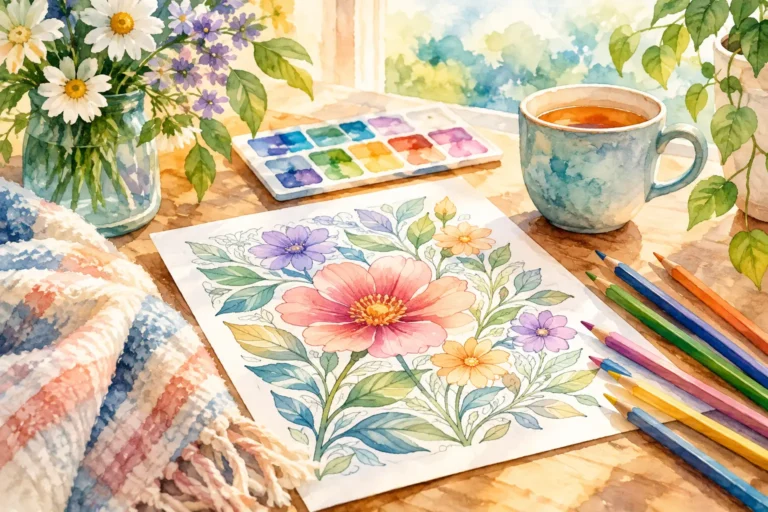
An evening coloring ritual should be easy to start. If your supplies are tucked away in a crowded closet, the effort of setting up may win out over the desire to color. A small basket, drawer, or bedside box can hold a coloring book, a modest set of colored pencils, a sharpener, and a soft cloth for the surface beneath your page.
You do not need a large collection of supplies. In fact, too many choices can make a calming activity feel like another decision. Start with colors you are naturally drawn to: soft greens, warm browns, muted blues, gentle pinks, or whatever shades feel pleasant to you. A limited palette can create a lovely page and a quieter experience.
Consider the lighting, too. A harsh overhead light may make the room feel alert and busy. A warm lamp near a chair or bedside table can make the coloring area feel settled. Just be sure there is enough light to color comfortably without straining your eyes.
If you share your space with a partner, family, or roommate, coloring can still fit. Ten minutes at the kitchen table after the house is quiet may be all you need. Parents and caregivers may find that the best moment comes after everyone else is settled. The ritual does not have to look picture-perfect to be meaningful.
A gentle way to begin
The easiest bedtime routine is one with a clear beginning and a natural stopping point. Choose one page before you sit down, put your phone out of reach, and decide on a small amount of time. Fifteen or twenty minutes is often enough to create a pause without turning the activity into a late-night project.
Begin with one simple area of the page. Color a single flower, one cluster of leaves, or the border of a design. There is no need to plan the whole composition first. Let your color choices develop slowly. If you want every petal to match, let them match. If you want a purple leaf because it makes you smile, that works too.
Try to release the urge to judge the page as you go. Bedtime coloring is not a test of patience or talent. It is a low-pressure creative pause. Uneven shading, unfinished sections, and unexpected combinations all belong on the page because they belong to your evening.
When your chosen time is up, stop even if the design is unfinished. Mark the page with a pencil or simply remember where you left off. Knowing that you can return tomorrow creates a pleasant sense of continuity. The book becomes a place you can revisit, one quiet section at a time.
Small details that help the mind slow down
A few gentle boundaries can make coloring feel more calming. Keep the phone face down or in another room, especially if you tend to check messages between colors. You might play soft instrumental music, or you may prefer the ordinary sounds of your home. There is no ideal background noise – only what helps you feel less pulled in different directions.
It can also help to choose colors by feeling rather than by rules. A garden scene does not need realistic green leaves and red flowers. Perhaps cool colors suit a hot, hectic day. Perhaps warm gold and peach feel comforting when the weather turns gray. The page can reflect the mood you want to make space for, not the mood you think you should have.
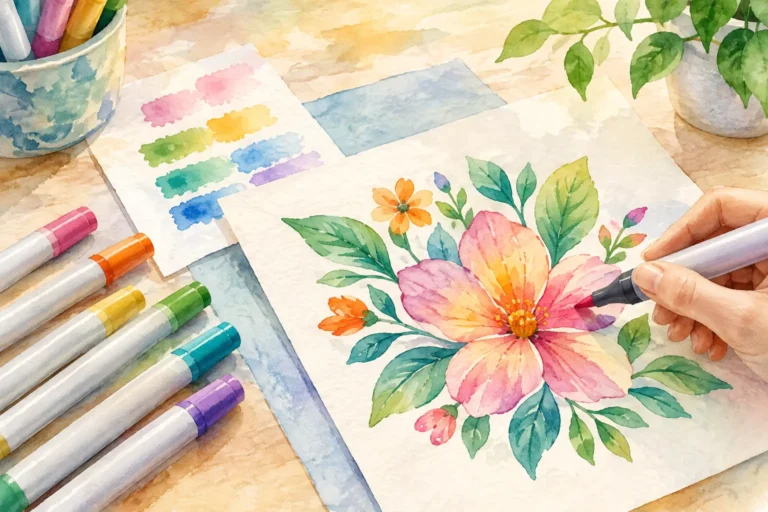
For a slower experience, use colored pencils and light pressure. Building color gradually gives your hands a steady rhythm. For a more immediate, bold look, markers may be enjoyable, though they can sometimes bleed through thinner paper. If you use markers, place a spare sheet behind the page and test one small area first. The best tool is the one that feels easy and pleasant in your hand.
When bedtime coloring does not feel relaxing
Even a gentle habit can feel frustrating sometimes. If you are too tired to choose colors, use just one or two. If a detailed page feels overwhelming, switch to a simpler one. If you miss several nights, there is nothing to catch up on.
The purpose is not to build a perfect streak. It is to have a peaceful option ready when you need a break from the noise of the day. Some people color every night; others reach for their book on especially busy evenings or slow Sunday afternoons. Both approaches can be satisfying.
If you notice that coloring makes you want to keep going long past your intended bedtime, set a softer limit. Finish one section, put the pencils back in their basket, and leave the book open to the next area. A visible invitation to return can make it easier to stop without feeling unfinished in a negative way.
AmBizi coloring books are designed with this kind of unhurried creativity in mind: approachable nature-inspired pages that leave room for comfort, focus, and your own color choices.
Make room for a quieter last hour
A bedtime ritual does not need to be elaborate to feel restorative. One colored leaf can be enough. One page can wait for weeks. What matters is the small decision to trade a little stimulation for something slower, tactile, and kind.
Tonight, choose a page that feels easy, pick the colors that appeal to you, and let the unfinished parts wait patiently for tomorrow.