7 Gentle Coloring Benefits for Calm Moments
A page of flowers, leaves, or peaceful animals can offer more than a pleasant way to pass the time. The coloring benefits many adults notice begin with something wonderfully simple: choosing a color, following a line, and giving the mind one quiet thing to do. There is no need to make a masterpiece. A few unhurried minutes can be enough to create a small, welcome pause.
For people balancing busy workdays, family needs, full calendars, and constant notifications, coloring is easy to return to. It asks very little of you. Open the book, pick up a pencil or marker, and begin where you are. That low-pressure quality is part of what makes it so comforting.
Coloring Benefits Start With a Slower Pace
Coloring naturally narrows your attention. Instead of moving between messages, errands, headlines, and unfinished tasks, your eyes follow the shape in front of you. Your hands repeat a gentle motion. The page gives your thoughts a soft place to land.
This does not mean every coloring session will feel perfectly peaceful. Some days, your mind may still race. You may color for only five minutes before another responsibility calls. That is still a meaningful break. A calm routine does not have to be long or flawless to be worthwhile.
Nature-inspired pages can make the experience feel especially restful. A flower does not need to be the “right” shade. A bird can be bright blue, warm gold, or a mix of colors that simply feels good to you. Without the pressure to get it right, creativity becomes more about quiet enjoyment than performance.
A Screen-Light Way to Reset
Many of us reach for a phone in every spare moment: while waiting for dinner, sitting in the carpool line, or winding down before bed. Screens can be useful, but they also keep the mind moving quickly. Coloring offers a different kind of break – tactile, still, and refreshingly offline.
The feel of paper matters. So does the gentle scratch of a colored pencil and the small decision of filling one petal before the next. These details create a slower rhythm that digital scrolling rarely provides. You are not being asked to react, compare, or keep up. You are simply making a page your own.
Try keeping a coloring book somewhere you tend to reach for your phone: beside a favorite chair, on the kitchen table, or near the bed. Making it visible lowers the effort of choosing a screen-light pause. Even one completed leaf or a small section of a pattern can shift the tone of a crowded day.
Gentle Focus Without a Big Commitment
Some creative hobbies require supplies, setup time, special skills, or a clear block of free time. Coloring can be much simpler. You can sit down with a small set of pencils and begin immediately. There is no blank page to face and no need to decide what to draw.
That structure can be a relief when mental energy is low. The design offers a starting point, while color choices leave room for personal expression. You have enough guidance to feel settled and enough freedom to enjoy the process.
This makes coloring a fitting activity for different seasons of life. A busy parent may use ten quiet minutes after bedtime. A caregiver may enjoy a page during an afternoon rest. A retiree may make coloring part of a slow morning with tea. The time available may change, but the invitation remains the same: take a small creative pause.
Why simple designs can be the most inviting
Highly detailed pages can be satisfying when you feel patient and focused. But on a tired or overstimulated day, a design with larger spaces may feel more welcoming. Floral clusters, broad leaves, friendly animals, and open nature scenes give you room to settle in without straining to stay precise.
It depends on your mood. If tiny details help you concentrate, choose them. If you want ease, choose a simpler page. The best coloring book is not the most complicated one. It is the one you genuinely want to open.
Coloring Benefits for Everyday Creativity
Creativity is often treated as something reserved for people with artistic training or lots of spare time. Coloring gently challenges that idea. It lets you make choices, explore combinations, and enjoy color without needing to start from scratch.
You might keep to natural shades one day, then choose unexpected pinks, greens, and purples the next. You may blend colors carefully or fill each section quickly and simply. Both approaches count. The value is not in producing a page that earns approval. It is in making space for a pleasant, personal activity.
Over time, you may notice preferences emerge. Perhaps soft pastels feel calming in the evening. Perhaps rich jewel tones feel cheerful on gray afternoons. Maybe you enjoy repeating a palette across a garden scene. These small discoveries can make coloring feel familiar and grounding, like returning to a favorite blanket or a well-loved recipe.
How to Make Coloring a Calmer Habit
The easiest routines are often the ones with the fewest rules. Rather than setting a goal to finish several pages each week, give yourself permission to color whenever a quiet moment appears. A little consistency can be helpful, but pressure can take away from the ease that makes the activity appealing.
Create a small, ready-to-use spot if you can. Keep your book with a handful of favorite coloring tools in a basket or tray. Choose a comfortable chair and good light. If your household is lively, a corner of the table may be all you need. The purpose is not to create a perfect creative space. It is to make calm easier to choose.
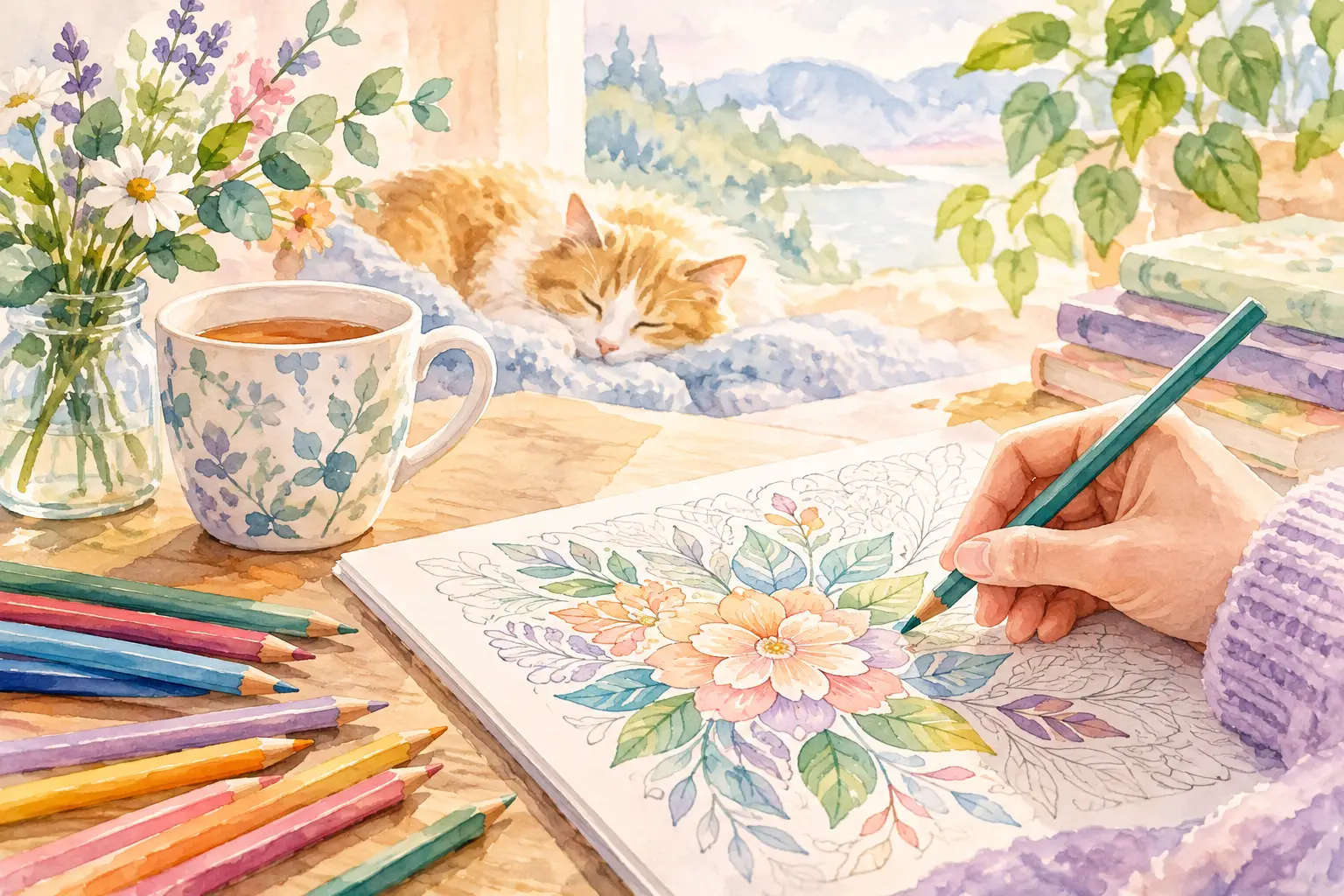
You can also use coloring to mark transitions in the day. Try it before work instead of checking notifications first thing. Use it after lunch to clear some mental clutter. Let it become part of an evening wind-down, perhaps with a warm drink and a few minutes of quiet. A familiar cue helps the mind recognize that it is time to slow down.
There is no need to finish what you start. Leaving a page half-colored is not a failure. It is an open invitation to return when you feel ready. Some people enjoy completing a design in one sitting; others like watching a page gradually take shape over several days. Both rhythms have their place.
Choosing Pages That Match Your Mood
The images you color can shape how inviting the experience feels. Floral pages offer softness and repetition, with petals and leaves that are easy to approach one section at a time. Nature scenes can bring a sense of openness when your day feels crowded. Animal designs may add warmth, playfulness, or a little companionship to a quiet afternoon.
Pay attention to what feels comforting rather than what seems impressive. If you are seeking a restful moment, choose images that make you want to linger. Books designed around gentle themes can remove one more decision from your day, offering a ready-made place for your attention to settle.
AmBizi coloring books are created with that feeling in mind: approachable pages that invite calm, focus, and a little more quiet enjoyment. Whether you color a single bloom or spend an hour with a favorite animal scene, the page is yours to enjoy at your own pace.
The next time your mind feels full, let one small section be enough. Pick a color you like, fill a simple shape, and allow the rest of the page to wait. Calm does not always arrive in a grand gesture. Sometimes it begins with one petal, one leaf, and a few peaceful minutes.