Floral Coloring for a Calmer Creative Break
A page of flowers can offer a small kind of relief when the day feels crowded. Floral coloring asks very little of you: choose a color, follow a petal, fill one small space at a time. There is no need to be especially artistic, finish quickly, or make every choice perfectly. It is simply a quiet activity that gives your attention somewhere gentle to rest.
For many people, that simplicity is the point. A floral page can create a welcome pause between work, caregiving, chores, and the constant pull of a screen. The repeated shapes of leaves, stems, and blooms bring a soft sense of order, while color adds a little personal pleasure to the moment.
Why floral coloring feels so inviting
Flowers are familiar without being demanding. A rose, daisy, wildflower, or leafy branch gives you a starting point, but it does not insist on realism. A blue rose or a purple sunflower can feel just as satisfying as a page filled with natural garden shades.
That freedom makes floral designs especially comfortable for beginners and returning colorists. You can reach for colors you already love, try a combination that matches your mood, or keep the page simple with only a few pencils. The result does not need to look like anyone else’s work to feel complete.
Floral imagery also has an easy rhythm. Petals repeat. Vines curve. Small details invite focus without requiring intense concentration. When your mind has been jumping from one task to the next, working through those shapes can help create a slower, more settled pace.
A creative pause that fits real life
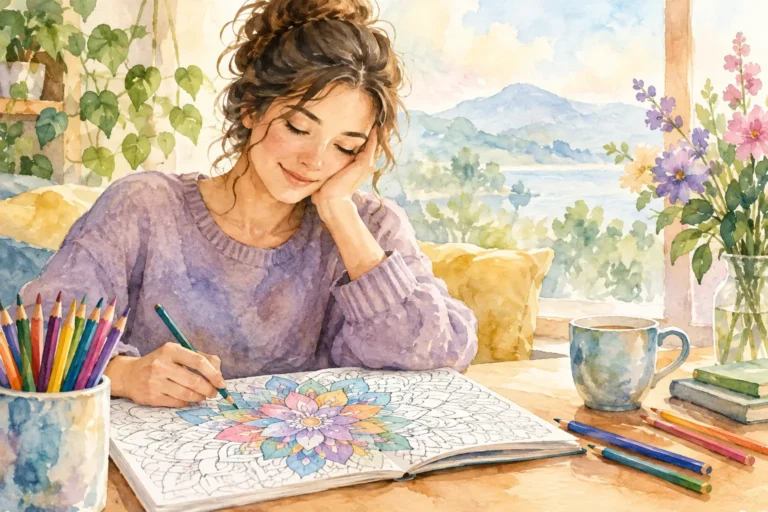
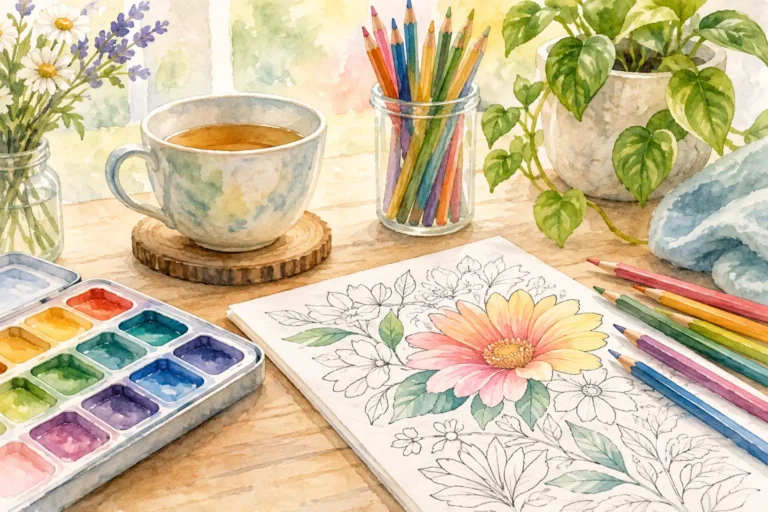
A relaxing hobby is more likely to last when it fits into ordinary moments. Floral coloring does not require setting up paints, learning a new technique, or clearing an entire afternoon. A book and a few colored pencils can be enough for ten quiet minutes before bed, during a lunch break, or while the house is still in the morning.
Some days, you may color only one flower. On others, you may settle in for an hour and finish a whole page. Both count. The value is not in productivity. It is in choosing a calm, hands-on activity that feels separate from notifications, tabs, and unfinished to-do lists.
Keeping a coloring book where you naturally pause can make the habit easier to return to. Try a side table, a reading chair, or a small basket with your pencils. When the materials are ready, the creative break feels less like another task to organize.
How to make floral coloring more relaxing
There is no single right way to color, but a few small choices can make the experience feel more comfortable and unhurried.
Begin with colors that feel good
You do not need a plan for the entire page. Pick two or three shades that appeal to you and begin there. Soft pinks, warm yellows, fresh greens, and muted blues can create a peaceful garden feeling, while brighter colors may suit a day when you want more energy.
If choosing colors feels like pressure, let the page make the decision. Start with the largest bloom, then select a green for the leaves and a neutral shade for small background details. A limited palette can look lovely and makes each next step easy.
Color one area at a time
Looking at a detailed floral page all at once can make it seem bigger than it is. Instead, choose one bloom, one cluster of leaves, or one corner. Finish that small section before moving on.
This approach is especially helpful on busy days. You can stop after a few minutes without feeling as though you have abandoned the page. When you return, there will be a clear place to begin again.
Let imperfect marks stay
A pencil line may go outside an edge. A shade may look different on paper than it did in your hand. Those moments do not spoil the experience. Floral coloring is not a test of control, and every page carries the small signs of the person who made it.
If you want a softer look, use a lighter touch and build color gradually. If you enjoy a bolder page, press a little more firmly or layer contrasting shades. Either choice is valid. The aim is quiet enjoyment, not a display-ready result.
Choosing a floral coloring book you’ll return to
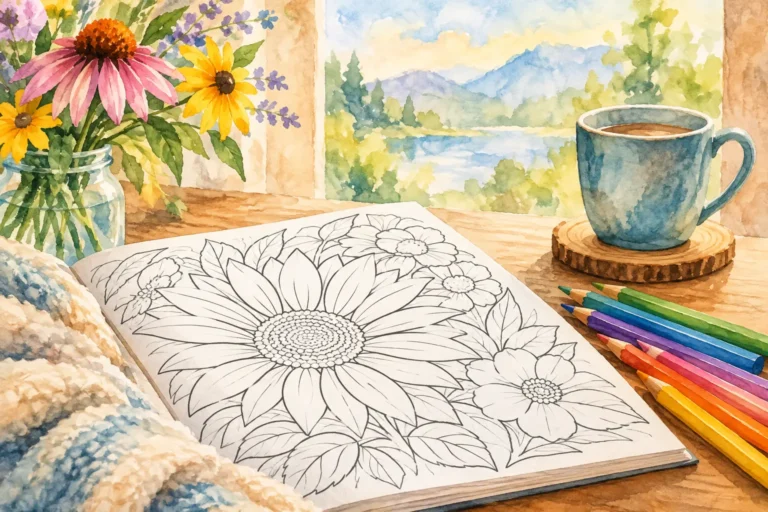
The best coloring book is not necessarily the most detailed one. It is the one that makes you want to sit down again. For a gentler experience, look for floral pages with clear outlines, inviting compositions, and a mix of larger spaces and smaller details.
Very intricate designs can be rewarding when you are in the mood for close focus. But they can also feel demanding when your energy is low or your time is limited. A book with varied page styles gives you more choice: a simple blossom for a short break, or a fuller garden scene for a slower afternoon.
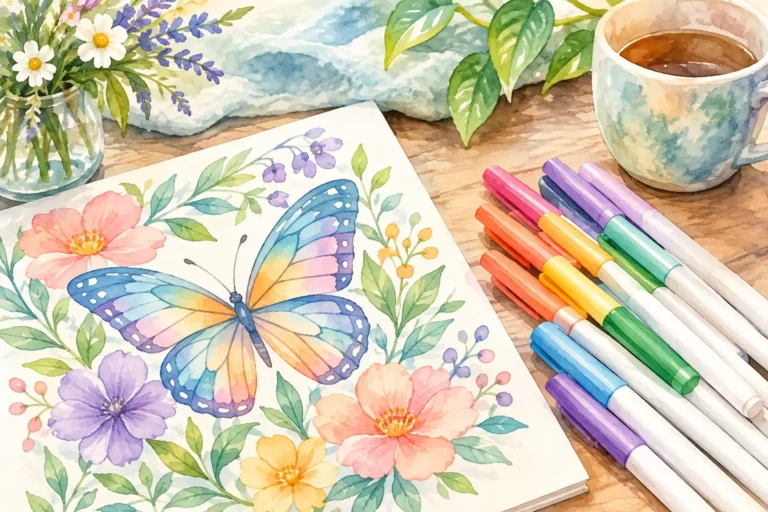
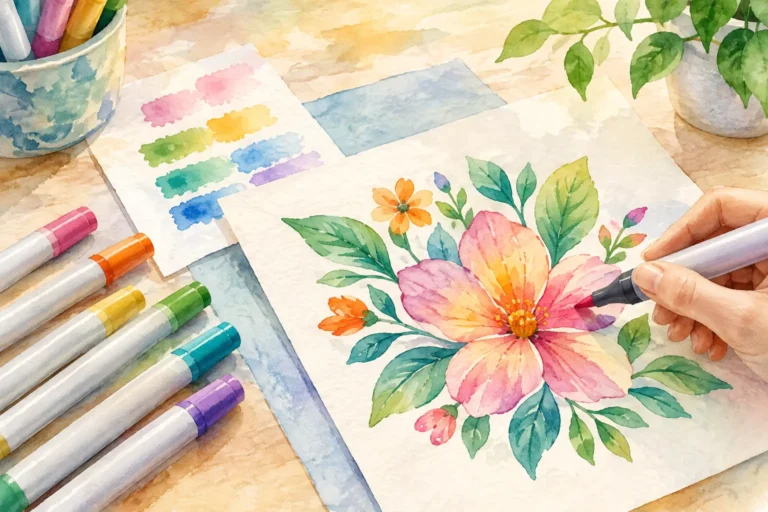
Paper and format matter, too. If you prefer colored pencils, finely detailed pages can work beautifully because pencils allow more control in small spaces. Markers can bring rich color to larger shapes, although testing them on an unused portion of the page first can help you avoid unwanted bleed-through. Crayons offer a softer, more nostalgic feel and can be especially pleasant for broad petals and leaves.
A thoughtfully made floral coloring book should feel welcoming from the first page, not like a challenge waiting to be completed. AmBizi designs are created with that gentle intention: approachable nature-inspired artwork for moments when you want to slow down and make something simply because it feels good.
Make the page your own
Flowers offer plenty of room for personal expression. You might color a single flower in several tones, add a deep green background behind pale petals, or leave parts of the page uncolored for a light, airy look. There is no rule that says every space must be filled.
You can also use color to mark a moment. Choose shades that remind you of a season, a favorite garden, or a place you would like to visit. A page colored in spring greens and butter yellow may feel different from one filled with autumn rust, plum, and moss. The same design can become something new each time you sit with it.
For a little extra calm, try putting your phone in another room or turning it face down before you begin. Make a warm drink, play quiet background music if you enjoy it, and give yourself permission to color without multitasking. Even a brief screen-light pause can change the texture of an evening.
When coloring does not feel calming right away
Sometimes a quiet activity can feel unfamiliar, especially after a fast day. You may find yourself thinking about what else needs to be done, judging your color choices, or feeling restless after only a few minutes. That does not mean floral coloring is not for you.
Start smaller. Color a single leaf, then stop. Choose a page with open shapes instead of tiny details. Use only one or two colors. A calming ritual often grows through repetition, not through getting it right on the first try.
It also helps to match the page to your energy. Detailed botanical patterns may feel satisfying when you want focus, while simple flowers may be a better fit when you are tired. Let the activity meet you where you are rather than asking yourself to meet a certain standard.
A floral page does not need to become a finished project to be worthwhile. Let it be a place to rest your eyes, keep your hands busy, and enjoy one gentle choice after another. The flowers will still be there when you are ready for the next quiet moment.