Slow Living Hobby Trends for Calmer Days
A quiet hobby can change the feeling of an ordinary evening. Instead of moving from one notification to the next, your hands have something gentle to do and your attention has somewhere softer to rest. That is why slow living hobby trends are resonating with people who want less pressure, less screen time, and more small moments that feel like their own.
These hobbies are not about becoming highly skilled or turning every free hour into a project. They are about choosing activities with an unhurried rhythm: making something simple, tending to something living, or noticing the details that usually pass by. The best one is not the most impressive. It is the one you will look forward to returning to.
Why slow hobbies feel different
Many pastimes come with hidden expectations. You may feel you need special tools, a dedicated room, a detailed plan, or a finished result worth sharing. Slow hobbies offer a kinder alternative. They make room for enjoyment without asking you to perform.
A page of coloring does not need to become wall art. A few herbs on a windowsill do not need to become a perfect garden. A loaf of bread can be slightly uneven and still make a kitchen feel warm. The value lives in the pause itself: the repeated motion, the concentration, and the simple satisfaction of seeing something take shape.
This is also why tactile activities matter. Paper, pencils, yarn, soil, dough, and fabric bring attention back to the present in a way a glowing screen rarely can. You do not need to clear an entire afternoon. Ten or twenty quiet minutes can be enough to slow the mind and create a gentle reset.
Slow living hobby trends worth bringing home
Adult coloring with nature-inspired pages
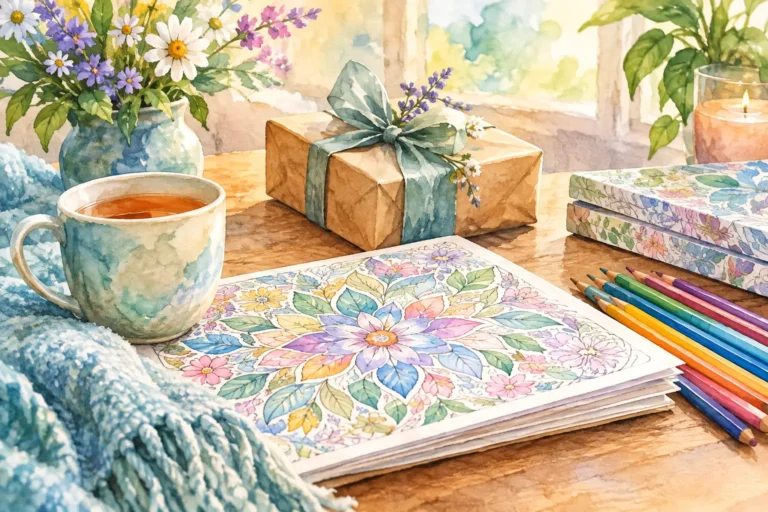
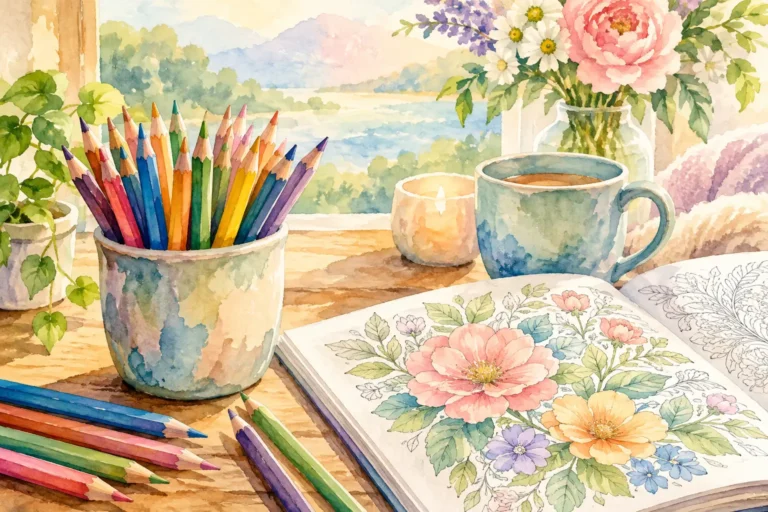
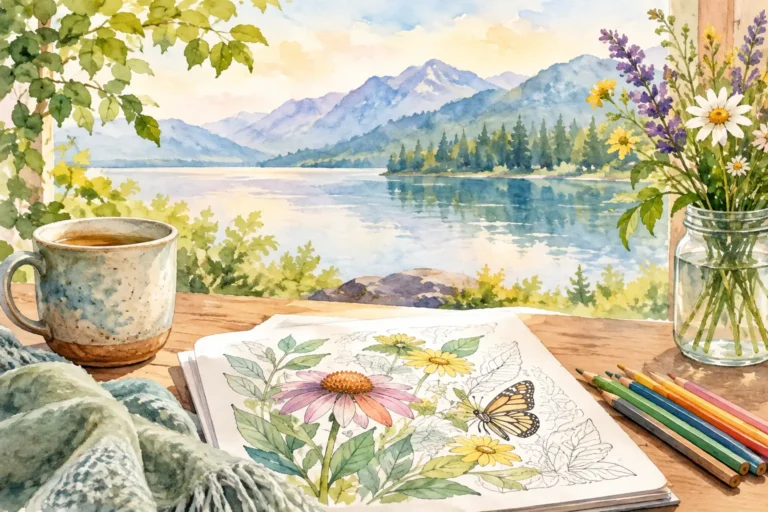
Coloring has become a favorite for good reason. It is accessible from the first page, requires no prior drawing experience, and can fit into a short break before bed or a peaceful weekend morning. Floral scenes, woodland details, gardens, birds, and gentle animal designs offer a natural sense of calm without asking you to make artistic decisions from scratch.
There is no required color palette. You might use soft greens and warm pinks one day, then choose bright, unexpected shades the next. Some people enjoy carefully filling every small detail, while others prefer larger spaces and a looser approach. Both are part of the pleasure.
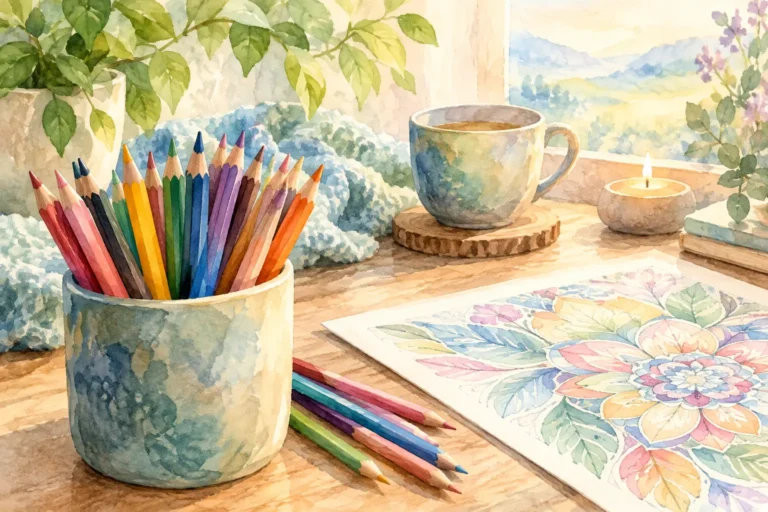
A thoughtfully designed coloring book can also create a screen-light ritual. Keep a few colored pencils in a small basket near a favorite chair, choose one page, and let the rest of the day wait for a while. AmBizi coloring books are made for this kind of easy, low-pressure creative pause.
Handwriting, journaling, and memory keeping
Writing by hand has a slower pace than typing, and that pace is part of its appeal. A notebook can hold a few observations from the day, a favorite recipe, a list of plants blooming nearby, or memories you do not want to lose. It does not need to become a daily practice to be meaningful.
For people who find a blank page intimidating, a simple prompt helps. Try describing the weather from your window, writing down three things that felt comforting, or recording the details of a meal you enjoyed. The goal is not polished writing. It is noticing your own life with a little more care.
Memory keeping can be equally simple. Save ticket stubs, pressed leaves, postcards, or small photos in a scrapbook. A few lines beside each item are enough. Over time, the pages become a quiet record of ordinary days that mattered more than you realized.
Baking and small kitchen rituals
Slow baking is less about elaborate desserts and more about familiar rhythms: measuring flour, stirring batter, waiting for something to rise, and sharing the result. Cookies, quick breads, soups, and simple jams all offer a clear beginning, middle, and end. That can feel especially satisfying after a day filled with unfinished tasks.
Choose recipes that leave room for ease. A complicated weekend project can be lovely if cooking is already a joy, but it may create more stress when time is tight. A dependable recipe you can make without checking your phone every few minutes often brings more comfort.
Even making tea can become a small kitchen ritual. Pick a mug you enjoy, steep the tea slowly, and sit down while it is still warm. Slow living is often less about adding another hobby and more about giving a familiar action your full attention.
Gardening, houseplants, and seasonal noticing
You do not need a yard to enjoy the grounding routine of caring for plants. A windowsill herb pot, a small collection of houseplants, or a container garden on a porch can offer the same gentle pattern of watering, trimming, and waiting.
Plants encourage patience because they do not respond on demand. Growth is gradual. Some leaves will yellow. A seed may not sprout. That is part of the experience, and it can be a welcome reminder that not everything needs to happen quickly.
Seasonal noticing is a natural extension of this hobby. Keep a small note of the first spring buds, the birds you hear in the morning, or the changing color of a tree near your home. These details make the passing seasons feel less like a blur.
Fiber crafts that welcome beginners
Knitting, crochet, embroidery, and visible mending are having a quiet revival because they combine repetition with possibility. The hands stay busy, but the mind does not have to race. A beginner scarf, a simple dishcloth, or a few embroidered flowers can be enough to learn the basic rhythm.
Visible mending is especially appealing for people who prefer useful creativity. A patch or stitched repair can extend the life of a favorite sweater or pair of jeans while making it feel more personal. It does not have to look flawless. A repair that shows its story can be more charming than one that disappears.
Fiber crafts do take patience at the beginning. You may need to undo a few stitches, and progress can feel slow. If that sounds frustrating rather than restful, choose coloring or gardening first. A hobby should meet you where you are.
How to choose a hobby you will actually keep
The most sustainable slow living hobby is usually the one with the fewest barriers. Think about the time you realistically have, the space available, and the kind of rest you need. If your day involves constant decisions, a guided activity like coloring may feel especially soothing. If you spend most of your time indoors, caring for plants or taking nature walks may offer a welcome change.
Cost matters, too. It is easy to overbuy supplies before you know whether an activity fits your life. Start small. One coloring book and a basic set of pencils, a notebook, a packet of seeds, or a simple kit can be plenty. Let your interest grow before your collection does.
It also helps to release the idea that a hobby must be productive. You may bake only when you want to. You may finish one page of color and leave the next blank for weeks. You may try embroidery and decide it is not for you. Slow living leaves room for changing your mind.
Make the habit feel inviting
A hobby becomes easier to return to when it has a visible, welcoming place in your home. Keep your coloring supplies together in a basket, place a notebook beside the sofa, or set your watering can where you will see it. This is not about creating a perfect space. It is about reducing the little bit of effort that can make a restful activity feel like another task.
Try pairing your hobby with a natural part of your day. Color while listening to soft music after dinner. Water plants on Saturday mornings. Write a few lines with your first cup of coffee. Repetition can turn a small activity into a comforting cue that it is time to slow down.
Let the pace stay gentle. A calm hobby does not need an audience, a deadline, or a finished result. Choose one small thing that feels pleasant to do with your hands, make room for it this week, and allow quiet enjoyment to be enough.