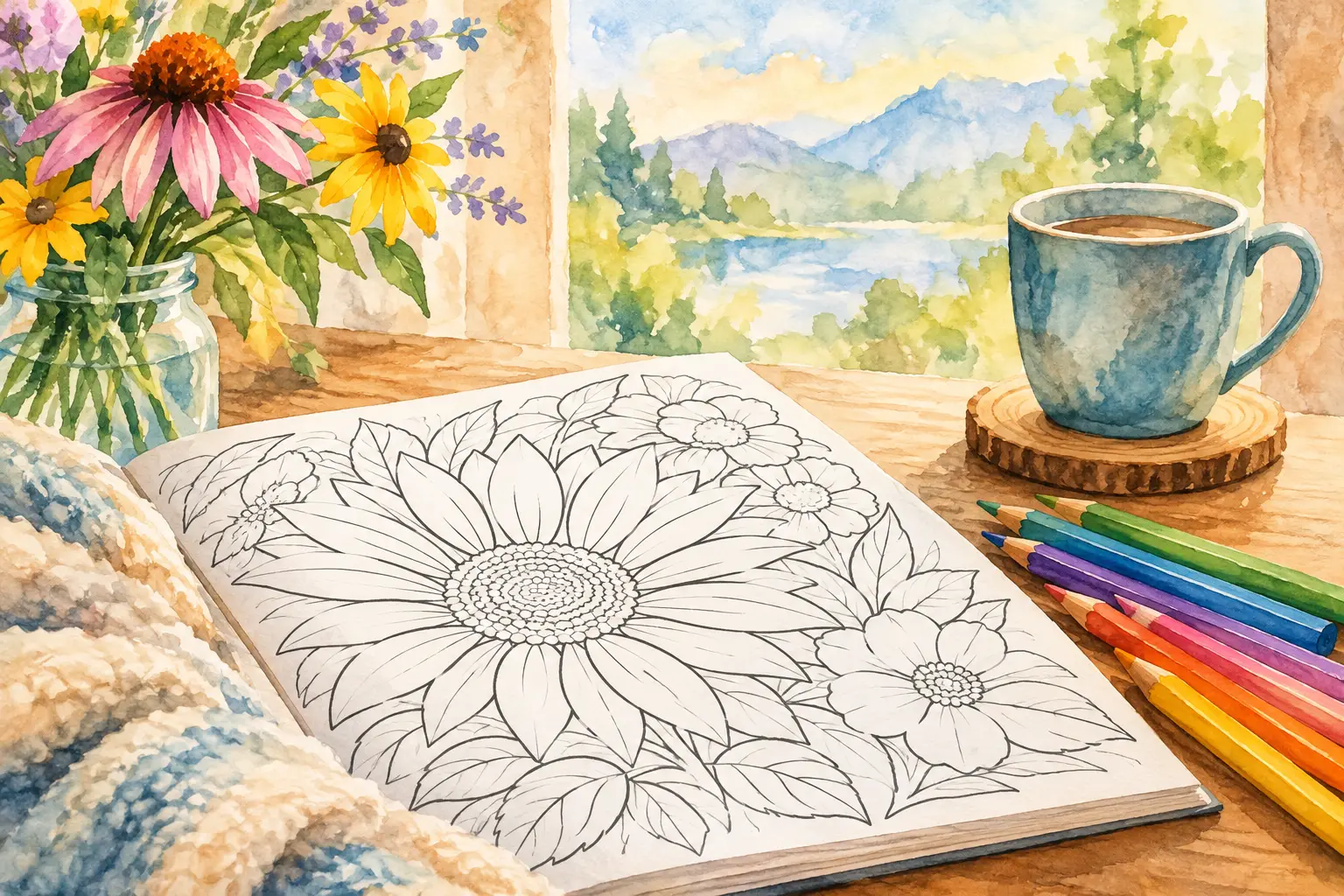
Large Print Coloring Review: Is It Right for You?
When your day has been full of small screens, small type, and too many competing demands, a coloring page with open, easy-to-see spaces can feel like a welcome change. This large print coloring review looks at what makes these books appealing, where they work best, and how to choose one that supports a quieter kind of creative time.
Large print coloring is not about making a perfect picture. It is about giving your eyes and hands a little more room to settle. With bold outlines, larger sections, and less visual crowding, the page feels more inviting from the start. For many people, that simple difference makes it easier to pick up a pencil and begin.
What Large Print Coloring Really Means
A large print coloring book usually features illustrations with thicker lines and more generous areas to color than highly detailed adult coloring books. The designs may still include flowers, leaves, birds, animals, gardens, or peaceful scenes, but they are arranged with breathing room rather than packed with tiny patterns.
That breathing room matters. A page full of miniature details can be satisfying when you have a long, uninterrupted afternoon and feel like concentrating closely. But it can also feel like another task when your mind is already busy. Large print designs offer a gentler entry point. You can color one petal, one wing, or one leafy branch without needing to plan a complicated palette or sharpen your focus for an hour.
The best books do not confuse large print with plain or childish. Thoughtful large-format designs can still feel lovely and grown-up. A simple floral page has room for soft shading, bright color, or a single-color approach, depending on your mood. The image remains expressive while the experience stays comfortable.
Large Print Coloring Review: The Everyday Benefits
The strongest reason to choose large print coloring is ease. Bigger shapes are easier to follow, especially in evening light or during a short break between responsibilities. There is less chance of losing your place, and fewer tiny corners to fill with a carefully sharpened pencil.
This format can also make coloring feel more approachable after time away from creative hobbies. You do not need special techniques, a large collection of supplies, or confidence in your artistic ability. A few colored pencils, crayons, or markers and a page that appeals to you are enough.
There is a pleasant sense of progress, too. Larger spaces often fill more quickly, so a page begins to look finished sooner. That can be especially rewarding for someone who wants a calming pause, not a multi-day project. A completed bloom or cheerful bird can become a small reminder that making time for yourself does not have to be complicated.
For retirees, caregivers, busy parents, and anyone who spends long hours on a computer, the comfort factor may be the biggest benefit. The activity asks for attention, but not strain. It gives the hands something simple to do while the mind steps away from notifications and unfinished lists.
Where the Format Has Limits
Large print is not automatically the best choice for every coloring mood. If you love dense mandalas, intricate architecture, or pages with dozens of tiny decorative elements, a large-format book may feel too open. Some colorists enjoy the slow precision of very detailed work and may miss that challenge.
Paper quality still matters as well. Open spaces can invite the use of markers, and markers may bleed through thinner paper. If you prefer markers, place a spare sheet of cardstock or paper behind the page before coloring. Single-sided pages are also helpful because they make it easier to remove and display a finished design without losing an image on the back.
Consider the binding and page size, too. A larger book gives you more room to rest your hand and enjoy sweeping color, but it may be less convenient to tuck into a bag. A smaller book is easy to carry, though the individual shapes may not feel quite as spacious. The right choice depends on whether you picture coloring at the kitchen table, on the porch, during travel, or in a favorite chair at the end of the day.
What to Look for Before Choosing a Book
Start with the subject matter that naturally helps you slow down. Floral designs are a gentle choice because they can be colored in any way you like – soft pink roses, vivid blue leaves, sunny yellow daisies, or colors found only in your imagination. Nature scenes and relaxed animal illustrations offer the same freedom, with familiar shapes that are easy to return to.
Then look closely at the line art. Clear, dark outlines are useful, but overly heavy lines can take over the page. Ideally, the lines guide the design without making it feel harsh. The spaces should vary enough to keep a page interesting, while remaining large enough that you do not need to work around constant tiny details.
A balanced collection also makes a difference. Repeating the same flower or animal on every page can become less restful over time. A book with varied compositions gives you choices: a simple single bloom for a brief break, a leafy arrangement when you want a little more time, or a sweet animal scene when you want something cheerful.
At AmBizi, the aim is to make that choice feel easy. Relaxing designs should invite quiet enjoyment, not create pressure to perform. The most appealing coloring book is often the one you will actually reach for on an ordinary Tuesday evening.
Choose Supplies That Match Your Pace
Colored pencils are a natural match for large print pages. They allow gentle layering and soft blends, and they are easy to put down and pick up again. Crayons can feel wonderfully simple and nostalgic, especially for broad areas. Markers create smooth, bold color quickly, though they call for a little more care with paper and bleed-through.
You do not need a full case of 100 colors to enjoy the experience. Try choosing three to five colors for a page, with one shade for leaves or backgrounds. A limited palette can make decisions easier and create a calm, cohesive look. On a tired day, even one color can be enough.
How to Make the Most of a Large Print Page
Settle into a place where you can be comfortable for ten minutes or an hour. A warm drink nearby, a clear corner of the table, and enough light are often all you need. There is no requirement to finish a page in one sitting.
Begin with the part that catches your eye. You might color the center of a flower first, or fill one large leaf simply because green feels right. Let the page develop gradually. If you leave some areas white, that is fine. White space can make a design feel fresh and light.
It also helps to release the idea that every page needs to be saved, framed, or shared. Some pages are just for the moment you spent with them. The value can be in the gentle repetition of color, the feeling of pencil on paper, and the small break from everything asking for your attention.
Is Large Print Coloring a Good Fit?
Large print coloring is a particularly good fit if you want a creative activity that feels clear, low-pressure, and easy to begin. It suits people who prefer open designs, enjoy flowers and nature, want more comfortable spaces to color, or simply want a screen-light way to reset after a full day.
It may be less satisfying if your favorite part of coloring is working through intricate details for long stretches. Even then, it does not have to be one format or the other. A detailed book can be enjoyable on a quiet weekend, while a large print page may be exactly what you need when your energy is low and you still want a little color in your day.
Keep one book where you can see it, along with a small cup of pencils. When there is an easy, welcoming page waiting, a few unhurried minutes can become a quiet place to land.