Coloring Supplies for a Calmer Creative Break
A coloring book can be a small invitation to pause, but the feeling often starts with what is beside it. The right coloring supplies do not need to be expensive, elaborate, or stored in a perfect craft room. They simply need to feel pleasant in your hands and easy to reach when you want a few quiet minutes for yourself.
For a floral page after a long afternoon, a nature scene with a cup of tea, or a peaceful animal design before bed, choose supplies that reduce decisions rather than create more of them. A simple set you enjoy using can help the mind settle into color, shape, and gentle repetition.
Start With Supplies That Feel Comfortable
There is no single best coloring tool. Some people love the soft glide of colored pencils, while others enjoy the clear, bright mark of a marker. What matters most is the experience you want from your creative break.
Colored pencils are often a lovely place to begin. They offer control without asking for precision, and they make it easy to build color slowly. A light first layer can feel soft and airy. A little more pressure can create deeper leaves, petals, skies, or fur. Pencils also suit moments when you want to stay relaxed and unhurried.
Markers create a different kind of ease. They fill larger spaces quickly and can bring cheerful color to a page with very little effort. If you enjoy a more immediate result, markers may make your coloring time feel especially satisfying. The trade-off is that some markers can bleed through paper, so it helps to place a spare sheet of cardstock or scrap paper behind the page.
Gel pens add a small touch of brightness. They are especially nice for tiny details, such as flower centers, stars, patterned accents, or a hint of sparkle on a wing. They are not necessary for every page, but one or two favorite pens can make a familiar palette feel fresh.
A Simple Coloring Supplies Kit Is Enough
A calming setup does not require dozens of tools. In fact, too many choices can make a creative pause feel like another task. Begin with a small collection, then notice what you naturally reach for.
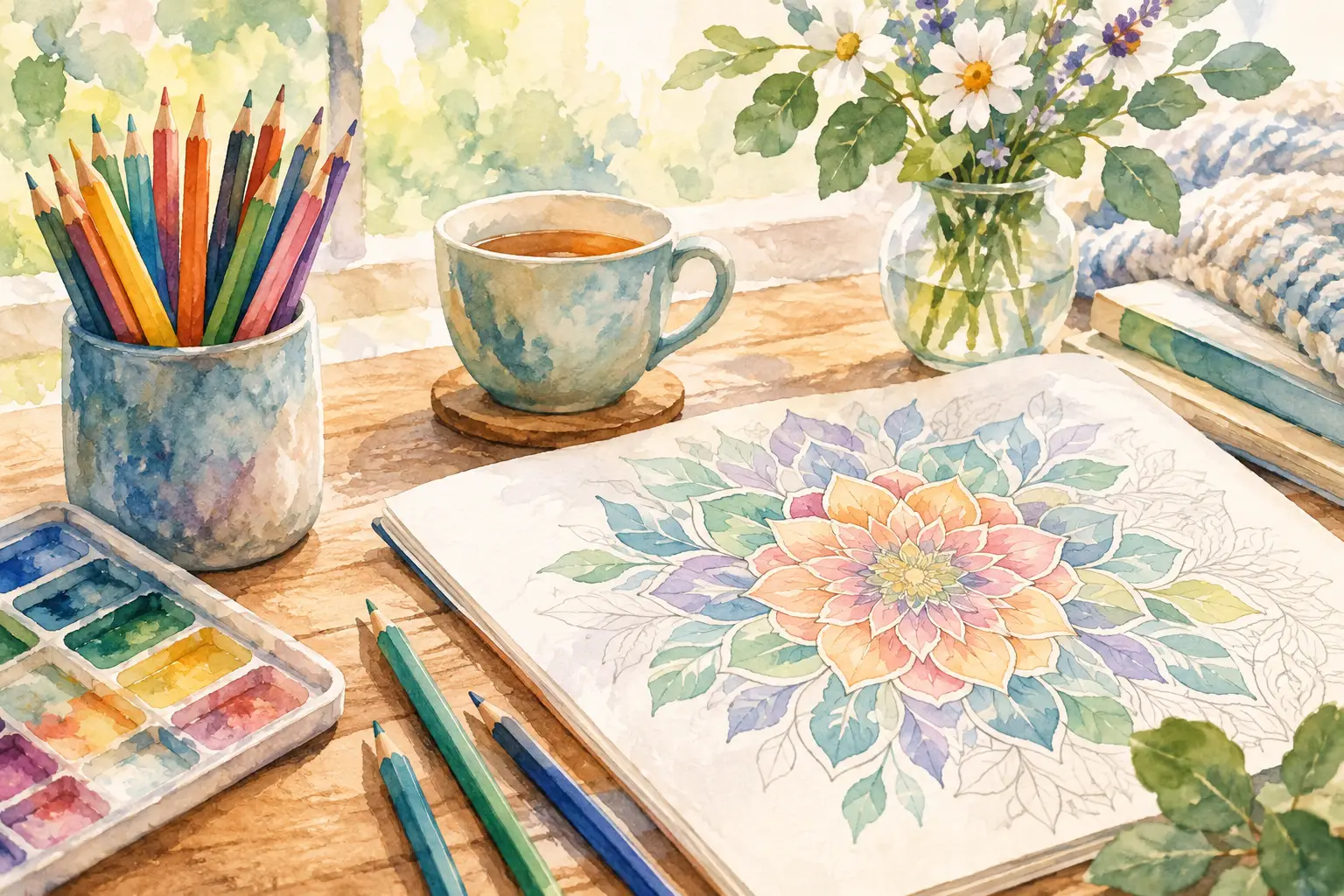
A useful starter kit might include colored pencils in a range of warm and cool shades, a small group of markers, a white gel pen for occasional highlights, a pencil sharpener, and a protective sheet for pages that may receive marker color. Keep these items together in a basket, pencil pouch, or small tray. When supplies have a home, it is easier to begin without searching through a drawer.
Choose colors that invite the mood you want. Soft greens, muted blues, lavender, peach, and warm browns can create a quiet, natural feeling. Brighter pinks, sunny yellows, and clear turquoise can feel more playful when your energy needs a lift. You do not need to follow the colors found in nature. A blue flower or a purple fox can be exactly right if it makes the page feel good to you.
Colored Pencils for Slow, Layered Color
Colored pencils are a gentle match for detailed coloring books, especially pages with petals, leaves, feathers, and small patterned spaces. Their pace can be part of their appeal. You can shade one area at a time, leave some sections light, or return to a page days later without losing the thread.
For an easy approach, select two or three related shades. Color the full area lightly with the palest shade, then add a deeper color near edges or where you want a little dimension. There is no need to make every leaf look realistic. Think of it as creating a pleasing rhythm across the page.
A sharp pencil works well for narrow details, but it does not have to stay perfectly sharp. A slightly rounded tip can make broader, softer color and may feel less fussy. If sharpening interrupts your rhythm, keep a simple sharpener nearby and continue when you are ready.
Pencils can also be forgiving. If you color outside a line, the page is still yours. A neighboring color, a few extra leaves, or a small pattern can turn an unexpected mark into part of the design.
Markers for Easy, Bold Color
Markers can make coloring feel especially simple when you have limited time. A single marker can fill a bloom, a bird, or a background shape in a few calm strokes. For people who prefer not to build layers, that clarity can be a relief.
Water-based markers are often a comfortable choice for casual coloring because they are easy to use and available in many colors. Fine-tip markers are helpful for intricate designs, while brush-tip markers can create a softer, more expressive look in larger areas. Alcohol markers tend to be more saturated and blend smoothly, but they are more likely to show through the page and can feel like a bigger investment.
Before using markers in a new book, test one on an unimportant area or on a page near the back. Paper varies, and the result may depend on how much ink you apply. A blotter sheet gives you room to enjoy bold color without worrying about the design on the other side.
Small Extras That Add Quiet Enjoyment
A few simple extras can make your coloring corner feel inviting without turning it into a project. Good lighting matters more than many people expect. A lamp with a warm, clear light can make colors easier to see and help your eyes feel more comfortable during an evening session.
A smooth surface is useful, too. A lap desk, side table, or favorite spot at the kitchen table can work beautifully. The goal is not a picture-perfect setup. It is a place where you can sit down, open a book, and begin.
If you like to add little finishing touches, keep a white gel pen or a metallic pen nearby. A few dots in a night sky or a fine outline on a leaf can bring a page to life. Use these details only if they feel enjoyable. A fully colored page needs nothing extra to feel complete.
Let the Page Set the Pace
The most helpful coloring supplies are the ones that make you want to return. That may be a small pencil set with softened, well-used tips. It may be five reliable markers in colors you love. It may be a favorite book resting beside your chair, ready for a peaceful ten minutes.
Try releasing the idea that every page should be finished in one sitting. Some days, one flower is enough. On other days, you may want to fill an entire garden with color. Both are meaningful forms of quiet enjoyment.
AmBizi coloring books are made for this kind of low-pressure creative time: a space to choose a color, follow a line, and let the rest of the day become a little less crowded.
How to Keep Your Supplies Easy to Use
The best routine is usually the smallest one. Put your most-used supplies where you can see them. Return pencils to their pouch after a session. Replace a favorite color when it runs low instead of waiting until your whole set needs attention.
You may also find it helpful to create a few ready-made palettes. Group several pencils or markers that look lovely together: soft garden colors, autumn leaves, coastal blues, or warm sunset shades. When you sit down to color, a small palette gives you a gentle starting point without asking you to plan every choice.
Let your supplies support the kind of break you need. Keep them simple, familiar, and within reach. Then when a quiet moment appears, you can open to any page, choose one color, and give yourself somewhere calm to begin.