Creative Hobbies That Help You Slow Down
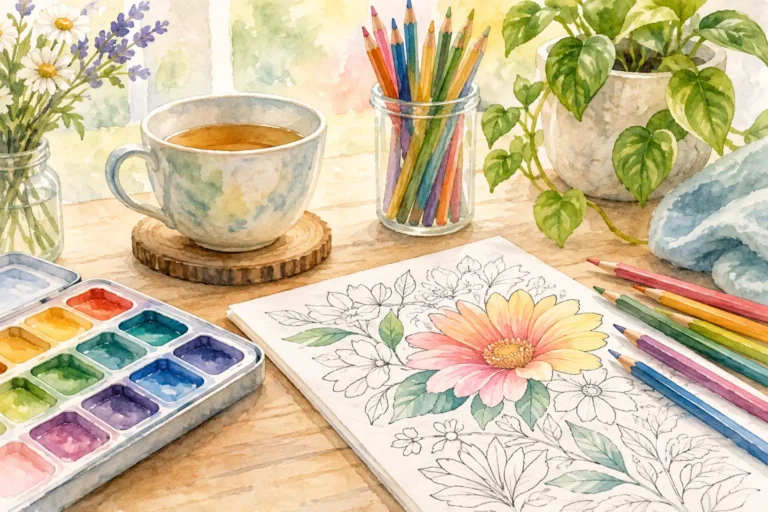
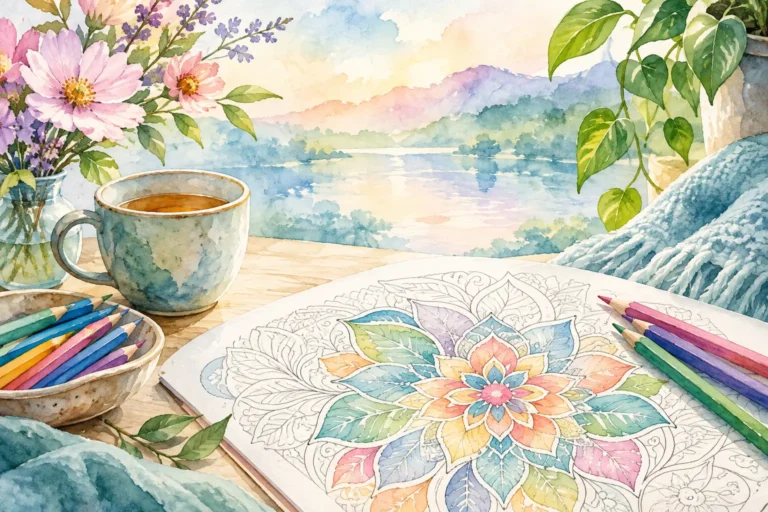
A quiet table, a cup of tea, and a few colored pencils can create a different kind of break. Creative hobbies give your hands something simple to do while your mind has permission to slow down. They are not about producing a perfect result or learning a complicated new skill. Often, the most comforting activity is the one you can begin without much preparation.
For busy adults, making room for creativity can feel unnecessary at first. There are messages to answer, errands to run, and plenty of tasks waiting for attention. Yet a small, screen-light creative pause can make an ordinary evening feel softer and more settled. The goal is not to add another item to your list. It is to choose a pleasant moment that belongs to you.
Why creative hobbies feel so restorative
Many daily routines ask us to react quickly. Phones buzz, schedules shift, and even leisure time can become noisy. A hands-on hobby asks for a gentler kind of attention. You choose a color, follow a line, arrange a few materials, or repeat a small movement. That steady focus can help slow the mind without demanding too much from it.
Creative time also gives you a break from outcomes. At work and at home, so much effort is measured by what gets finished. A hobby can be different. You might color only one flower, fold a few paper shapes, or spend ten minutes sketching leaves. The experience can be enough, even when nothing is completed.
This is especially helpful when your energy is low. High-skill projects can be rewarding, but they may come with pressure, supplies to organize, and a steep learning curve. Low-pressure creative hobbies offer another option: a welcoming activity that meets you where you are.
Creative hobbies do not need to be complicated
The best hobby is not always the most impressive one. It is the one you will genuinely return to when you need a quiet reset. For some people, that means working with color. For others, it means making something useful, tending to a small collection, or simply noticing details in nature.
Coloring for a calm, focused pause
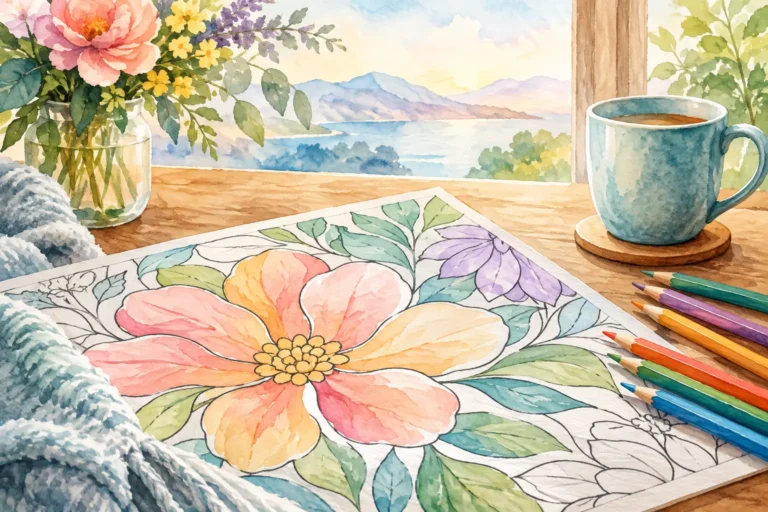
Coloring is easy to begin and easy to set aside. There is no blank page waiting for an idea, which can be a relief after a full day of decisions. A floral page, a garden scene, or a gentle animal design gives you a starting point while leaving room for personal choice.
You can use a handful of favorite shades or reach for whatever looks inviting. There is no rule that says leaves must be green or that every section needs to be filled. Some people enjoy rich, layered color; others prefer soft neutrals and a simple palette. Both approaches create a peaceful pocket of focus.
An adult coloring book is also wonderfully flexible. Ten minutes before bed can be enough. So can an unhurried hour on a rainy afternoon. Brands such as AmBizi create nature-inspired coloring books with this kind of easy, comforting creative time in mind.
Simple sketching and nature notes
Sketching does not require a full drawing lesson or a special notebook. Start by noticing one small thing: the curve of a leaf, the shape of a favorite mug, or the view from a window. Draw it slowly, without trying to make it look exact.
A nature notebook can make this even more enjoyable. Add a quick sketch of a bird you noticed, press a fallen leaf between pages, or write down the colors in the sky before sunset. This is less about creating polished artwork and more about paying attention to details that might otherwise pass by.
Collage with paper and found images
Collage is a good choice when you want to make something visual without drawing. Gather old magazines, wrapping paper, printed patterns, greeting cards, and paper scraps. Tear or cut out pieces that feel pleasant together, then arrange them on a page.
You might build a page around a season, a favorite color, a garden, or a mood you want more of at home. Because the materials already have texture and color, there is less pressure to create from scratch. The process can feel playful, tactile, and surprisingly absorbing.
Hand lettering and gentle journaling
Hand lettering can be as simple as writing a favorite word slowly and experimenting with its shape. Try rounded letters, tall letters, or a small border of vines and dots. A few minutes of repetition can be soothing, especially if your day has felt scattered.
Pair it with a short journal practice if that feels right. Instead of filling a page, write three small things: something pleasant you noticed, something you are looking forward to, and one thing you would like to leave behind for the evening. Keep the tone light. This is not a performance or a project to maintain perfectly.
Small crafts with an easy finish line
Some hobbies feel more satisfying when they lead to a small object. Making bookmarks, decorating gift tags, assembling simple paper garlands, or creating a seasonal card can offer that sense of completion without taking over your weekend.
Choose projects with a clear, modest finish line. If a craft requires dozens of steps, expensive equipment, or a large work area, it may become another obligation. A simple project is often more likely to bring quiet enjoyment because you can finish it before your attention runs out.
How to choose a hobby you will actually use
Start with the kind of rest you need. If your workday involves constant screens and decisions, choose something tactile and repetitive, such as coloring or collage. If your days are full of caregiving or household tasks, a hobby that lets you make choices just for yourself may feel especially welcome. If you miss being outdoors, bring nature into the activity through botanical designs, leaf sketches, or a small windowsill garden.
It also helps to be honest about time. A hobby does not need to fill an entire afternoon to count. In fact, an activity that fits into fifteen minutes may become part of your life more easily than one that requires a dedicated block of time. Leave your materials where they are easy to reach, rather than tucked away for a someday that may not arrive.
Cost matters, too. A new hobby can be exciting, but buying too much at the beginning can create pressure to justify the expense. Start with a few basic supplies and notice what you enjoy. A coloring book and pencils, a simple notebook, or a small stack of paper can be plenty.
Make the experience feel inviting
A creative hobby becomes easier to keep when it has a pleasant place in your routine. You do not need a separate studio or a perfectly organized craft room. A small basket by the sofa, a tray on the kitchen table, or a corner of a desk can be enough.
Try making the first step almost effortless. Keep pencils sharpened. Place your current coloring page inside the front cover. Set out a notebook with a pen nearby. When the materials are ready, it is easier to choose a few quiet minutes over another stretch of scrolling.
Let the atmosphere be simple as well. Soft lighting, a favorite drink, or a little music can make the time feel intentional, but none of these are required. The real comfort comes from allowing yourself to do one small thing at an unhurried pace.
Let creativity be imperfect
It is natural to compare your work to images online or to feel disappointed when a project does not turn out as expected. But creative hobbies are more lasting when they are not treated as proof of talent. A page can be unfinished. A sketch can be uneven. A handmade card can look handmade.
If you feel stuck, make the next choice smaller. Pick one color. Fill one shape. Cut one piece of paper. The point is not to force inspiration. It is to create a little room for it.
A gentle hobby can become a familiar place to return to after a long day or during a slow morning. Keep it close, keep it simple, and let each small creative moment bring a little more quiet enjoyment to your routine.