
How to Plan Creative Pauses That Feel Restful
A creative pause does not need an empty afternoon, a perfect workspace, or a long list of supplies. It can begin with ten quiet minutes at the kitchen table, a cup of tea nearby, and a page that asks nothing more than your attention. Learning how to plan creative pauses is less about adding another task to your day and more about making a little room to breathe.
For busy people, breaks can easily become more noise: checking messages, scrolling for a few minutes, or moving straight into the next responsibility. A gentle creative activity offers another option. Coloring a flower, choosing shades for a woodland scene, or simply sitting with a pencil in hand can help shift the pace of the day. There is no need to make something impressive. The value is in the quiet enjoyment of making something your own.
Why Creative Pauses Feel Different From Ordinary Breaks
Many breaks are passive, but they are not always restful. A few minutes on a phone can leave the mind jumping from one thought to the next. Creative pauses invite a softer kind of attention. Your hands have a simple job, your eyes settle on one page, and the next small choice is clear: perhaps blue or green, light pressure or deeper color.
This kind of focus can be especially welcome when your day feels crowded. Parents may find a pause after school drop-off or once the house is quiet. Professionals may prefer a few minutes between meetings. Caregivers might use a calm moment before dinner or at the end of the evening. The right time depends on your life, but the pause works best when it feels easy to begin.
A creative pause is not a reward you have to earn after finishing everything. It is a small way to care for your attention while life is still moving around you.
How to Plan Creative Pauses Around Real Life
Start by noticing the natural edges in your day. These are the moments when one activity ends and another has not quite begun: after breakfast, during a lunch break, when you return home, or before settling in for sleep. A pause placed at one of these edges is often easier to keep than one added to an already packed schedule.
Choose a realistic length. Five minutes can be enough to color part of a leaf or add a few details to a pattern. Fifteen or twenty minutes may feel right on a slower day. Planning for an hour when you only have ten minutes can make a pleasant habit feel like another unmet goal. Small and repeatable is usually more comforting than ambitious and occasional.
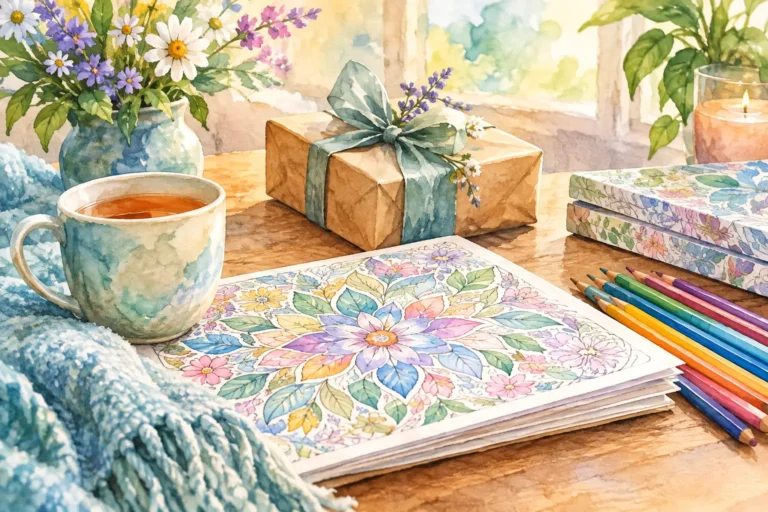
It also helps to decide what your pause will look like before the day gets busy. Keep a coloring book, a handful of colored pencils, and a sharpener in a basket or on a shelf where they are easy to reach. When supplies are tucked away or scattered across rooms, the effort of getting started can quietly take over the break itself.
Give Each Pause a Gentle Purpose
You do not need a formal goal, but a simple intention can make the experience feel more settled. Before you begin, ask yourself what would feel good right now. You might want to slow the mind after a demanding morning, create a calm transition before bedtime, or enjoy a little color after a stretch of routine tasks.
Let that intention guide the page you choose. A detailed floral design may feel absorbing when you have more time and want to settle in. A simple nature pattern may be better when your energy is low. Animal scenes can bring a touch of warmth and playfulness to an otherwise serious day. There is no universal best choice. Follow your mood instead of trying to follow rules.
Try to keep the purpose kind and uncomplicated. “I will finish this page perfectly” can create pressure. “I will color for ten quiet minutes” leaves room for ease. You may complete a page, or you may only color one small corner. Both count.
Match the Activity to Your Available Energy
A creative pause should fit the moment you are actually having. If your thoughts feel busy, choose an area with repeated shapes or open spaces. Repetition can be soothing because it gives the mind fewer decisions to make. If you feel restless, choose a page with a little more detail and let the small sections hold your attention.
On tired days, reduce the choices. Pick three colors and use only those. Work from a single pencil cup instead of opening every supply you own. A limited palette can make the page feel calm and cohesive, but more importantly, it removes the need to decide too much.
If you are feeling cheerful and energized, you may want bright shades or a more playful scene. If you want a quieter mood, soft greens, warm browns, muted pinks, and gentle blues can create a peaceful rhythm. There is no wrong palette. The page belongs to your moment.
Protect the Pause From Extra Noise
The most helpful creative pauses have a small boundary around them. This does not need to be strict. It may simply mean placing your phone face down, leaving it in another room, or turning off notifications for ten minutes. A screen-light break gives your attention a chance to rest from alerts, headlines, and constant updates.
Set up your space with comfort in mind. Sit where the light is pleasant. Keep a glass of water nearby. If the table is crowded, clear only enough room for your book and pencils. You do not need a picture-perfect creative corner to invite calm. A small clear space is enough.
It is also okay if the room is not silent. Some people enjoy soft background music, the sound of a fan, or the ordinary hum of a household. Others prefer stillness. Notice what helps you feel present rather than distracted, then let that be part of your routine.
Make Starting Easier Than Skipping
Habits often grow from a visible reminder. Leave your coloring book where you are likely to see it, perhaps beside your favorite chair or near the place where you drink your morning coffee. Seeing it can gently suggest a different kind of break before your hand reaches for a device.
You might also attach the pause to something you already do. Color for a few minutes after lunch. Choose a small section while the kettle warms. Spend ten minutes with a nature-inspired page after changing out of work clothes. Connecting the activity to an existing rhythm gives it a natural place in the day.
Some days, you will not use the time you planned. That is normal. A creative pause is meant to support your routine, not control it. If an evening gets busy, leave the page ready for tomorrow. Returning without guilt is part of making the practice feel sustainable.
Let Imperfection Be Part of the Rest
Coloring is often most relaxing when it is free from performance. You do not have to stay inside every line. You do not have to use realistic colors. You do not have to show anyone the result. A purple fox, a gold leaf, or a garden filled with unexpected shades can be exactly what the page needs.
When perfection starts to creep in, bring your attention back to the physical experience: the pencil moving across paper, the gradual change in the page, the feeling of one small area becoming complete. This is not about proving skill. It is about making space for yourself.
AmBizi coloring books are designed with this kind of low-pressure creativity in mind: inviting scenes, comforting themes, and pages that make it easy to sit down and begin. Whether you choose flowers, animals, or gentle nature designs, let the book be an open invitation rather than a project waiting to be finished.
Create a Rhythm You Can Return To
A weekly plan can help if your days tend to disappear before you have had a moment for yourself. Instead of scheduling every pause in detail, choose two or three likely windows during the week. Perhaps one is a quiet weekday evening, another is a slow Saturday morning, and another is a midday reset when work feels full.
Keep the plan flexible. A longer session may feel lovely on the weekend, while weekday pauses may be brief. Both have value. The consistency comes from returning to the activity, not from using the exact same amount of time every day.
Over time, your supplies, favorite pages, and familiar chair can become small signals to slow down. You may begin to notice that a few minutes with color helps create a gentler transition from one part of the day to the next.
The next time life gives you a narrow, ordinary opening, consider leaving it open. Pick up a pencil, choose one color, and let a single page hold your attention for a while. Quiet enjoyment does not have to be planned perfectly to be felt.