12 Creative Downtime Ideas Adults Can Enjoy
A free hour can disappear quickly into scrolling, errands, or one more task that does not really need to happen. Creative downtime ideas adults can return to offer something gentler: a small, hands-on pause that gives the mind one place to rest.
The goal is not to make something impressive. It is to choose an activity that feels easy to begin, pleasant to continue, and complete enough to leave you feeling settled. A few colored pencils, a notebook, natural light, or a kitchen table can be more than enough.
12 Creative Downtime Ideas for Adults
1. Color one page, not a whole book
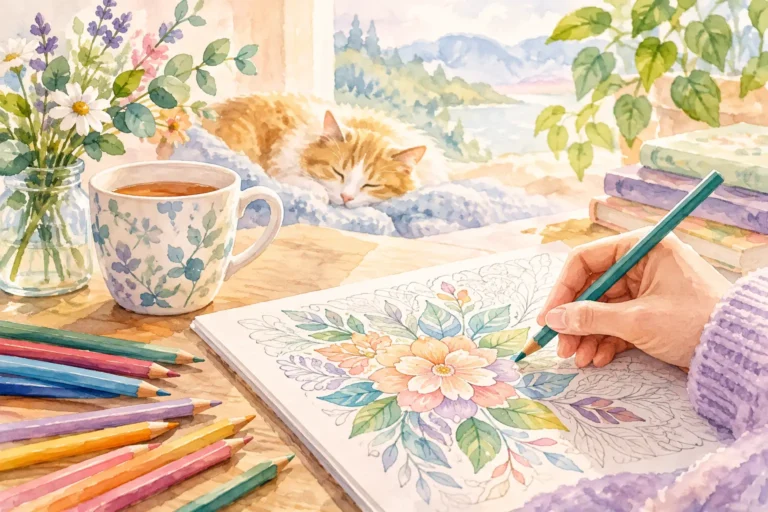
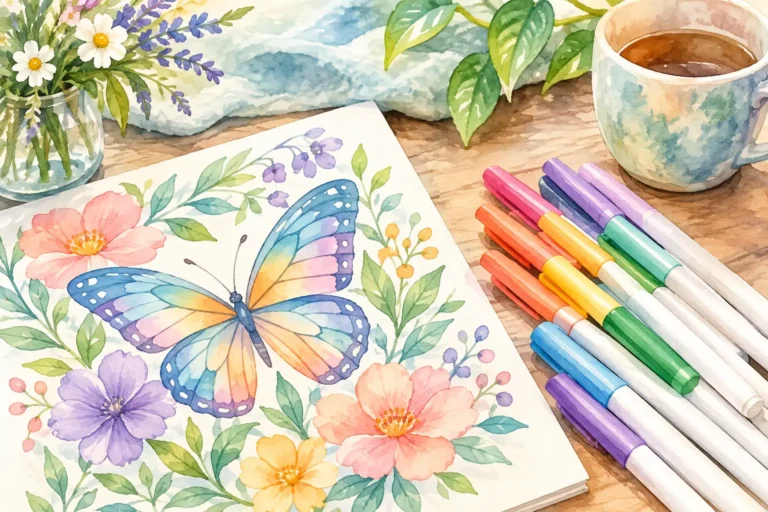
Adult coloring is especially inviting because there is no blank page to solve. Choose a floral pattern, a woodland scene, or a favorite animal design, then color only as much as feels good. Ten quiet minutes with a few colors can be enough to slow the mind.
There is no need to finish the page in one sitting. Leaving a corner for tomorrow gives you an easy way to return to a calming ritual. AmBizi coloring books are designed for this kind of low-pressure creative pause, with comforting themes that welcome you back whenever you have a little space.
2. Make a tiny color palette
Pick three to five colors that feel right for the day. Perhaps soft greens and warm browns, sunny yellow and coral, or deep blue with lavender. Swatch them in a notebook, color a small shape, or use the palette on part of a coloring page.
A limited palette takes away the pressure of choosing from every color you own. It also creates a pleasing sense of unity, even when your marks are simple and loose.
3. Press a few leaves or flowers
A walk becomes more memorable when you bring home one fallen leaf, a fern, or a small flower. Place your finds between sheets of plain paper inside a heavy book, then let time do the work. Once pressed, they can be saved in a journal, arranged on a card, or simply admired.
Be thoughtful about where you collect. Choose fallen pieces when possible, and leave flowers growing in public gardens and protected areas. The pleasure is in noticing what is already around you.
4. Keep a one-page nature journal
You do not need to be outdoors for hours to keep a nature journal. Sit near a window, step onto the porch, or visit a nearby bench. Draw the outline of a cloud, describe the weather in three words, or make a quick sketch of a bird you see.
This is not a field guide or a test of drawing ability. It is a simple way to pay attention. Over time, those small pages become a quiet record of changing seasons and ordinary beautiful moments.
5. Rearrange a small shelf with care
Creative downtime does not always involve paper or paint. Choose one contained space, such as a bedside table, a bookshelf section, or a windowsill. Clear it, wipe it down, and place back only the objects that feel useful or comforting.
A favorite book, a small plant, a candle, or a framed photo can create a calmer view without turning the afternoon into a major organizing project. Keep the boundary small. If the task starts to feel like a chore, stop when the space looks better than it did before.
6. Write a five-senses list
Set a timer for five minutes and write down what you can see, hear, feel, smell, and taste right now. The steam from tea, a soft blanket, traffic in the distance, or the texture of pencil paper all count.
This kind of writing has no right answer and needs no polished sentences. It can be especially welcome after a crowded day, when your attention has been pulled in too many directions.
7. Create a postcard-sized collage
Save interesting scraps from magazines, packaging, old calendars, or tissue paper. Cut or tear pieces into a small rectangle and arrange them on cardstock. You might build a garden of green textures, a warm sunset scene, or an abstract mix of colors.
Working small is the secret. A postcard-sized collage feels approachable and can be finished in one sitting. Glue it down when you are happy with it, or leave the pieces loose and change the arrangement as you go.
8. Try slow baking with a simple recipe
Baking can be a creative break when the recipe is familiar and forgiving. Stir cookie dough, slice fruit for a crisp, or decorate a few muffins with a light dusting of cinnamon. Focus on the small sensory details: the sound of mixing, the scent in the kitchen, the warmth of the oven.
This may not fit every evening. Cleanup and timing can make baking feel demanding when you are already tired. On those days, choose something even simpler, such as arranging fruit on a plate or making a cup of tea feel a little more special.
9. Make a handwritten list of small pleasures
Write down 20 things that bring you comfort or lightness. Include specific details: fresh sheets, a morning walk, peaches in summer, a mystery novel, rain on the window, or a song you have loved for years.
Keep the list somewhere easy to find. When downtime arrives and you cannot decide what to do, it gives you a gentle menu of possibilities instead of another decision to make.
10. Put together a seasonal table arrangement
Gather a few simple objects that reflect the season. In spring, that might be a small vase and a few branches. In autumn, try a bowl of acorns or leaves. Winter can call for pinecones, soft lights, or a favorite mug placed nearby.
The arrangement does not need to look styled for anyone else. Let it be a small visual reminder to notice the time of year and make your everyday surroundings feel more cared for.
11. Doodle repeating shapes
Fill a page with circles, leaves, waves, stars, squares, or simple petals. Repeat one shape until the page begins to feel full, then add a little color if you want to. Repetition can be wonderfully absorbing because it gives your hands something steady to do.
If drawing feels intimidating, start with dots and lines. A page of marks is still a page you made. The point is the quiet focus, not technical skill.
12. Create a personal evening ritual card
On an index card, write a short sequence for the end of a busy day. It might include putting your phone in another room, making tea, coloring for ten minutes, and reading two pages of a book. Keep it realistic enough for an ordinary weeknight.
A ritual card is not a strict routine. It is a kind suggestion to yourself when your energy is low. You can change it with the season or make several cards for different moods.
How to Make Creative Downtime Easier to Begin
The best creative downtime ideas for adults are usually the ones with the least setup. Keep a small basket with colored pencils, a sharpener, a notebook, scissors, and a few favorite supplies where you can see it. When materials are buried in a closet, even a pleasant activity can feel like another task.
It also helps to match the activity to your available energy. If you have five minutes, color a small section or make a quick list. If you have an open Saturday morning, press flowers, bake, or linger over a journal page. Creativity does not need a perfect block of time to offer quiet enjoyment.
Let your creative break be modest, personal, and easy to return to. One colored leaf, one handwritten sentence, or one neatly arranged corner can gently change the feeling of an afternoon.