
12 Best Books for Quiet Time and Gentle Focus
A quiet-time book should feel like an open door, not another item on a full to-do list. The best books for quiet time give your hands and mind something gentle to settle into, whether you have ten minutes before dinner or a slow Sunday afternoon to yourself. They ask very little of you, yet can make a small pocket of the day feel calmer and more your own.
For many people, the right book is not necessarily a novel that requires hours of uninterrupted reading. It may be a coloring book filled with flowers, a collection of short nature essays, a simple puzzle book, or a journal with room for a few honest lines. What matters most is the feeling it creates: less noise, less pressure, and a welcome reason to put the phone down.
What Makes a Book Good for Quiet Time?
Quiet time is personal. Some people want a creative activity that keeps their hands busy. Others want words that offer a softer place for their attention to land. The common thread is ease.
A good quiet-time book has a low barrier to entry. You should be able to open it anywhere, enjoy a page or chapter, and stop without losing your place. It should not make you feel behind, tested, or required to produce something impressive.
The best choice also depends on the energy you have that day. When your mind feels crowded, a detailed story may be harder to enjoy than a page of simple leaves waiting for color. When you want a little reflection, a thoughtful essay may feel more satisfying than a puzzle. Let your mood guide the book, rather than trying to make one kind of quiet time work for every moment.
The Best Books for Quiet Time at Home
Floral and nature coloring books
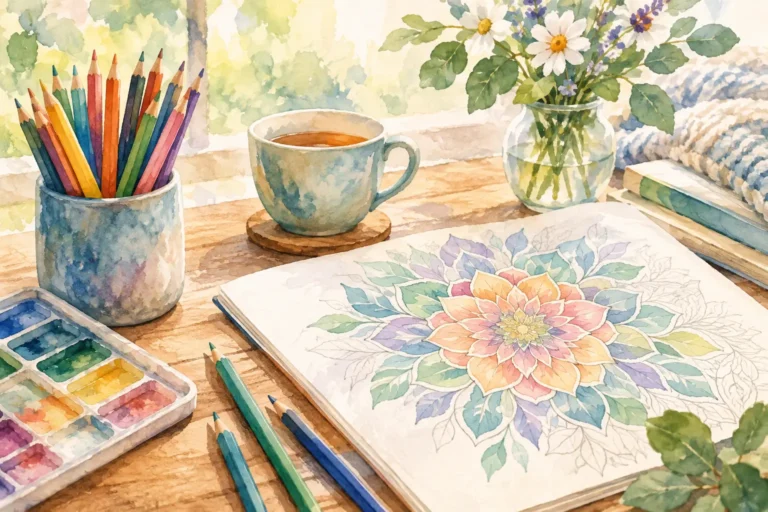
Coloring books are a natural fit for quiet time because they offer focus without a steep learning curve. There is no blank page to face and no need to know how to draw. You can choose a few colors, begin with one petal or one leaf, and let the page take shape at an unhurried pace.
Floral designs are especially inviting for a peaceful break. Repeating petals, garden details, vines, and soft natural scenes give the eyes something pleasing to follow. Animal and woodland-themed coloring books can create a similar sense of comfort, especially for anyone who enjoys birds, butterflies, forest creatures, or peaceful outdoor imagery.
Look for designs that feel approachable rather than overly packed with tiny details. Intricate pages can be enjoyable when you have time and patience, but larger, clearer spaces are often better after a busy day. AmBizi coloring books are designed with this kind of relaxed creative pause in mind: comforting themes, no artistic pressure, and room to enjoy color at your own pace.
Short story collections and gentle fiction
A long novel can be wonderful, but it is not always the easiest quiet-time companion. Short stories, novellas, and gentle fiction offer a more flexible rhythm. You can read one complete piece in a small window of time and leave with a sense of completion.
Choose stories with a warm setting, a steady pace, or an everyday focus. Domestic fiction, cozy mysteries, travel stories, and literary collections centered on ordinary moments can work well. The goal is not to avoid every serious subject. It is simply to choose reading that feels absorbing without leaving your thoughts racing afterward.
If you are easily pulled away by household noise or family needs, shorter chapters are useful. They make it easier to return to the book without having to remember a complicated plot from weeks ago.
Nature writing and seasonal books
Nature books can create a feeling of spaciousness even when you are sitting at the kitchen table. A collection of essays about gardens, birds, changing weather, walks, or rural places invites a slower kind of attention. These books are often easy to read in small portions, making them well suited to a morning coffee or an early evening pause.
Seasonal books can be particularly comforting because they encourage you to notice what is already around you. A few pages about spring blooms, summer rain, autumn leaves, or winter light can gently shift your focus away from a crowded schedule and toward the present moment.
Choose writing that feels observant and clear rather than overly academic. Quiet time does not need to become homework. The best passages leave you feeling refreshed, not as though you need to underline every sentence.
Puzzle and activity books
For days when reading feels like too much, a puzzle book can be the better choice. Word searches, crosswords, logic puzzles, number games, and spot-the-difference pages give the mind one simple task. That contained focus can be a welcome change from scrolling through many competing demands.
Puzzle books do come with a trade-off. A challenging crossword may feel satisfying when you want mental stimulation, but frustrating when you are already tired. Keep a few levels of difficulty nearby if you can. An easy word search may be exactly right for a late-night wind-down, while a more involved logic puzzle may suit a quiet weekend morning.
Journals with light prompts
A blank journal can feel freeing to one person and intimidating to another. Prompted journals offer a softer beginning. A question such as “What felt good today?” or “What would make tomorrow feel lighter?” gives you somewhere to start without asking for a full page of polished thoughts.
The most helpful quiet-time prompts are simple and open. They encourage noticing rather than fixing. You might write about a small comfort, a favorite memory, something you are looking forward to, or three details you saw outside. A few sentences are enough.
If prompts do not appeal to you, keep a plain notebook for lists of small joys, color ideas, favorite quotes, garden observations, or meals you would like to make. Quiet writing does not need to be deep to be meaningful.
How to Choose a Book for Your Kind of Rest
Before choosing a book, consider what your attention needs rather than what you think you should read. If you want to use your hands, choose coloring or puzzles. If you miss getting lost in a setting, reach for fiction. If you want a calmer perspective, try nature writing or a journal.
It also helps to think about time. A book with standalone pages or short chapters is easier to enjoy in brief breaks. A longer novel may be better reserved for a regular reading ritual, such as twenty minutes before bed. Neither is better. The right format is the one you will actually open.
Keep your quiet-time book visible and easy to reach. Place colored pencils in a small basket beside a coloring book, leave a short-story collection near your favorite chair, or tuck a journal into the bag you carry each day. When the materials are ready, it is easier to choose a peaceful pause over another round of screen time.
Create a Small Ritual Around the Page
You do not need a perfectly quiet house or a full hour to enjoy a book. A cup of tea, a comfortable chair, and one open page can be enough. Some people enjoy soft background music; others prefer the simple scratch of pencil on paper and the turn of a page.
Try to release the idea that quiet time must be productive. You do not have to finish the chapter, complete the design, or solve every clue. The value is in giving your attention one gentle place to rest.
Tonight, choose the book that feels easiest to begin. Open to one page, stay for as long as you can, and let that small stretch of quiet enjoyment belong only to you.