Which Markers Prevent Page Bleed in Coloring Books?
A beautiful page can lose some of its calm when color suddenly appears on the design behind it. If you are wondering which markers prevent page bleed, the gentle answer is that no ink marker is completely risk-free on every coloring book paper. Still, the right kind of marker, paired with a simple habit or two, can keep most pages clean and let your creative pause stay easy.
For adult coloring books, water-based markers with controlled ink flow are usually the safest place to start. Alcohol markers are the ones most likely to travel through paper, especially when you layer color or work slowly in one small area. The paper matters, too. A marker that behaves beautifully in one book may show through in another.
Which Markers Prevent Page Bleed Most Reliably?
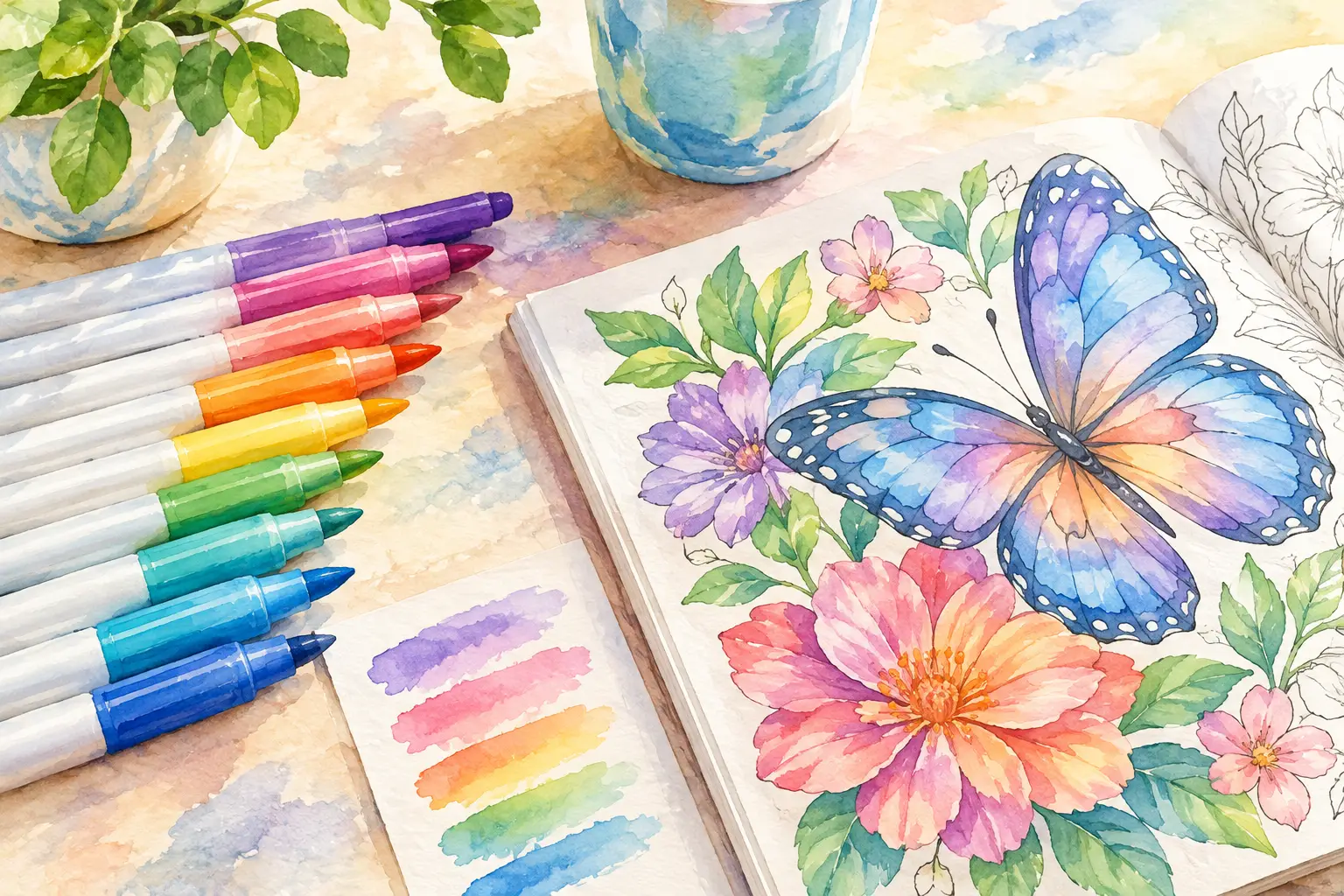
If protecting the reverse side of a page is your priority, fine-tip water-based markers are generally the best marker choice. Look for pens described as water-based, low-odor, washable, or made for coloring and journaling rather than permanent ink. A small bullet tip gives you more control and releases less ink at once than a broad chisel tip or a very juicy brush pen.
Water-based felt-tip markers are especially pleasant for floral details, leaves, small animals, and patterned backgrounds. They create a soft, even wash of color without requiring much pressure. But “water-based” does not automatically mean “no bleed.” If the paper is thin, if you press firmly, or if you color over the same spot repeatedly, even a gentle marker can reach the other side.
Markers labeled bleed-resistant can be helpful, although that label often refers to their performance on particular paper types. Coloring books vary widely in paper weight and finish, so it is best to treat any promise on a marker package as a useful clue, not a guarantee.
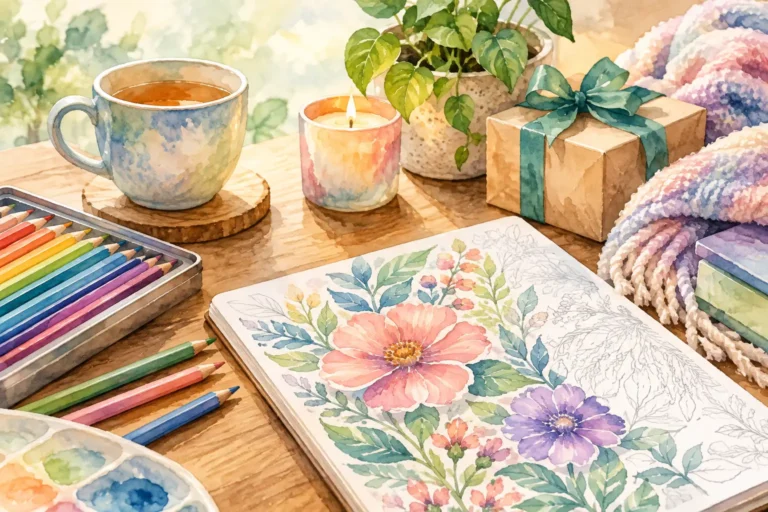
For the lowest chance of page bleed, colored pencils remain the more dependable option. They are not markers, of course, but they are worth keeping nearby for delicate pages, tiny details, and designs printed on both sides. Many colorists enjoy using pencils for the main page and adding a few marker accents where they want stronger color.
Markers That Commonly Bleed Through Pages
Alcohol-based markers are loved for their rich, smooth blending. They can make petals look luminous and give animal fur beautiful depth. Yet they are designed to saturate paper, which is exactly why they often bleed through coloring book pages. Even a quick stroke can show on the back, and layered shades can pass through quickly.
Permanent markers should also be used with care. Their ink is made to stay put on many surfaces, not to sit lightly on thin book paper. They may be useful for a small border or bold title, but they are rarely the relaxing choice for an entire coloring page.
Very wet brush markers can be a mixed experience. Some water-based brush pens work well on heavier paper, while others release enough ink to feather beyond the printed lines or leave a shadow on the reverse side. If you love the look of brush lettering or soft botanical color, test one shade before committing to a whole page.
High-saturation dual-tip markers deserve a test, too. Their fine end may be perfectly manageable, while the broad end puts down much more ink. Using the narrower tip and a light hand can make a real difference.
Page Bleed, Ghosting, and Feathering Are Different
These three paper problems can look similar at first, but they call for different solutions. Bleed-through means ink has traveled through the paper and marked the back of the page. It can affect the next design, particularly in double-sided books.
Ghosting is a faint shadow visible from the back, even though the ink has not fully passed through. It is common with markers and does not always mean the next page is ruined. Placing a protective sheet behind your working page will not stop ghosting, but it will protect the page underneath if bleed-through happens.
Feathering occurs when ink spreads outward on the same side of the page, softening the printed line or drifting into a nearby detail. This usually happens when paper is absorbent or when too much ink is applied. Fine-tip, water-based markers and lighter strokes are the calmest remedy.
The Coloring Book Paper Has the Final Say
A marker is only half of the equation. Thin, absorbent paper takes in ink quickly, while smoother, heavier paper gives it more time to stay near the surface. A page with detailed black printing may also hide slight ghosting better than a pale, open design.
Before you begin, look for a small, unobtrusive space to test. The inside back cover, a publisher’s note page, or a corner that will be cut away can work. If there is no suitable place, use a similar scrap of paper only as a rough guide. The paper inside the book is the test that truly counts.
It also helps to use a blotter page behind the sheet you are coloring. A piece of cardstock, a spare sheet of printer paper folded in half, or a thin plastic divider can catch any ink that makes it through. This small step removes a common worry, so you can focus on the simple rhythm of coloring instead.
A Simple Test Before You Color a Full Page
A one-minute test can save a favorite design. Choose a color you expect to use often, since darker shades and heavily pigmented colors may behave differently than pale ones.
- Make one light stroke, then look at the reverse side of the page.
- Add a second layer over part of that stroke and check again.
- Try a small filled-in shape using the pressure you normally use.
- Let it dry for a minute, since some ink spreads slightly as it settles.
If the back looks clean or only faintly shadowed, the marker is likely a comfortable choice for that book. If ink clearly comes through, switch to colored pencils, use the marker only on single-sided pages, or reserve it for small accents.
How to Use Markers With Less Bleed
Your technique can be as helpful as the marker itself. Work with a light touch rather than pressing hard. One smooth pass is usually safer than scrubbing back and forth until every white spot disappears. A little variation in color is not a mistake. It can give flowers, leaves, and quiet landscape scenes a softer, more natural feeling.
Try coloring in small sections and allow each area to dry before adding another layer. This is especially useful with water-based brush markers. If a page has large background areas, pencils or gel pens may be less stressful than saturating the whole space with marker ink.
Choose pages thoughtfully, too. If a coloring book has artwork on both sides, treat markers as an accent tool unless the paper has passed your test. Single-sided designs offer more freedom, because a little bleed-through will not interrupt another illustration. A protective sheet is still useful for keeping ink away from the next page.
Choosing the Right Tool for the Mood You Want
Markers offer quick, cheerful color. They are lovely when you want to sit down, choose a few shades, and see a page brighten without much effort. Fine-tip water-based markers are often the best fit for that kind of low-pressure creativity.
Colored pencils invite a slower pace and give you more control over shading. Gel pens add small points of shine and detail, though they need a moment to dry. There is no need to commit to one tool for every page. A peaceful coloring session can be as simple as pencils for the petals, a gentle marker for the leaves, and a gel pen for a few tiny highlights.
The best marker is the one that lets you enjoy the page without worrying about what is happening underneath it. Test first, keep a protective sheet close, and give yourself permission to use lighter layers. When the materials feel easy, it becomes simpler to slow the mind and enjoy the color arriving one small section at a time.