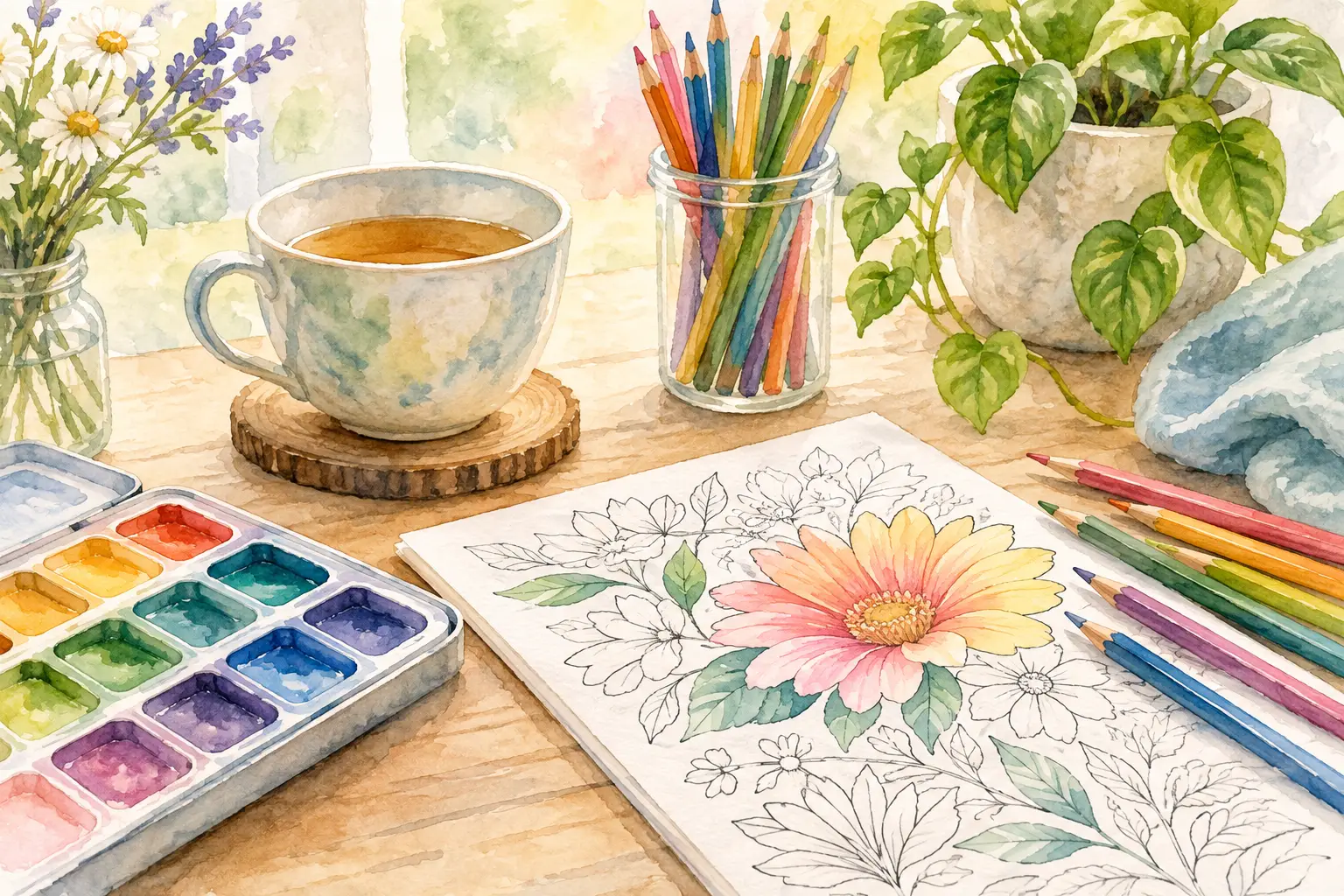
Beginner Coloring Supplies Guide for Calm Starts
A coloring book, a few colors, and twenty quiet minutes can be enough to shift the feel of an afternoon. You do not need a crowded art cart or advanced skills to begin. This beginner coloring supplies guide is designed for a softer approach: choose a few comfortable tools, make a small space for yourself, and let the page hold your attention for a while.
The best supplies are not necessarily the most expensive or the most numerous. They are the ones that feel easy to reach for when your mind is full and you want a screen-light pause. Start simple. You can always add more later if coloring becomes part of your regular routine.
Start With the Coloring Book You Want to Open
Your coloring book sets the tone for the whole experience. Before choosing pencils or markers, look at the designs themselves. Pages with themes you genuinely enjoy – flowers, leaves, birds, woodland scenes, or gentle animals – make it easier to settle in.
For a first book, look for designs with a mix of open areas and smaller details. Very intricate pages can be satisfying, but they may feel demanding when you only have a few minutes. Larger petals, simple leaves, and clear outlines offer an easy place to begin. A book that invites rather than challenges you is often the one you will use most.
Paper matters, too. Many coloring books are printed on one side of the page, which gives you more freedom if you prefer markers. If artwork is printed on both sides, colored pencils are usually the safer choice because they are less likely to show through. There is no wrong format. It simply helps to match your tool to the page.
Beginner Coloring Supplies Guide: Choose One Main Tool
You can create a beautiful, calming page with one type of coloring supply. Starting with everything at once can turn a quiet hobby into another decision to manage. Colored pencils, markers, and gel pens each bring a different feel to the page.
Colored pencils for a slow, gentle pace
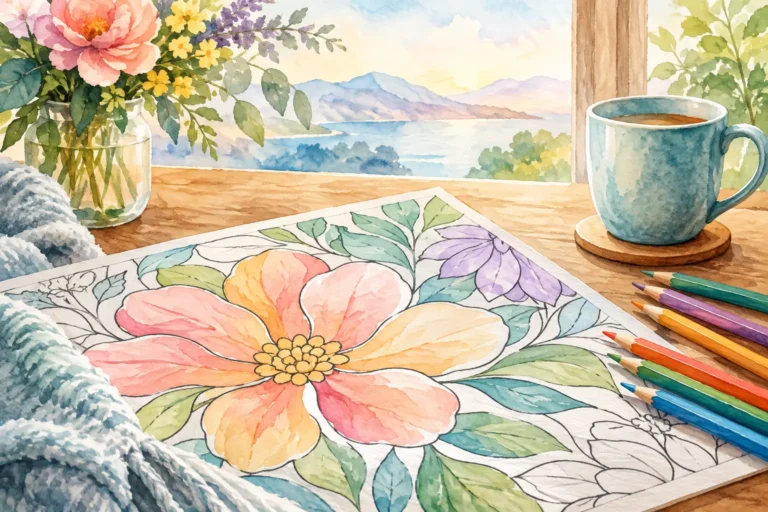
Colored pencils are often the most comfortable place to start. They are easy to control, quiet to use, and forgiving when a color goes slightly outside a line. You can color lightly for an airy look or add layers for richer shades. A modest set with a useful range of greens, blues, pinks, purples, yellows, and warm neutrals is plenty for floral and nature-inspired pages.
Look for pencils that feel smooth rather than scratchy. They do not need to be professional-grade, but very hard pencils can make coloring feel like work. A simple sharpener will keep the points neat for smaller spaces. If you enjoy blending, choose a few shades in the same color family, such as pale green, leaf green, and deep forest green.
Pencils are a particularly good choice if you like to color in short stretches. You can put them down and return later without worrying that ink will dry out or bleed through the paper.
Markers for clear, easy color
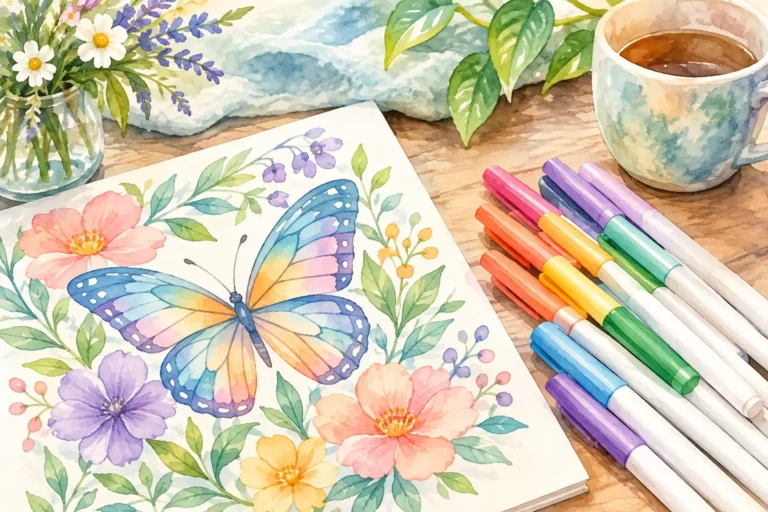
Markers offer a more immediate result. The color is bold, even, and satisfying from the first stroke. They can be lovely for larger shapes, broad petals, backgrounds, and pages with simple outlines. For many people, that smooth wash of color feels wonderfully uncomplicated.
The trade-off is bleed-through. Test a marker on a back page or a small, less visible area first. Place a sheet of scrap paper behind the page before you begin, even if the book is single-sided. Water-based markers tend to be gentler than alcohol-based markers, though results still depend on the paper.
A small set is enough. Choose colors that feel pleasant to you rather than trying to own every shade. Soft greens, warm pinks, sky blues, sunny yellows, and a few deeper accents can carry you through many pages.
Gel pens for bright details
Gel pens are best treated as a finishing touch, not a requirement. They can add a little sparkle to a butterfly wing, a bright center to a flower, or fine detail in a small patterned area. White gel pens can also create tiny highlights over darker colors.
They are fun, but they can smudge if you turn the page too soon. Let ink rest for a moment, especially if you are layering it over marker. If your goal is a simple, low-pressure start, save gel pens for later. Pencils alone are more than enough.
A Small Palette Makes Coloring Easier
A large box of colors can be exciting, but it can also create hesitation. When every shade is available, choosing one may take longer than the coloring itself. Try selecting five to eight colors before you begin a page.
For a floral page, you might choose two greens, a light pink, a deeper berry shade, a soft yellow, and a warm brown. For a woodland page, try moss green, deep green, golden yellow, rust, brown, and muted blue. These small palettes naturally make a page feel cohesive, even if you do not blend or shade.
You do not have to color realistically. Blue leaves, lavender rabbits, or peach-colored skies are all welcome. Coloring is a place for personal preference, not a test of accuracy. If a shade feels comforting, it belongs on the page.
Helpful Extras, Kept Simple
A few small items can make your coloring time more comfortable without turning it into a project. Keep scrap paper nearby to protect the next page from marker bleed. A basic sharpener is useful for pencils, and a soft eraser can lift light pencil marks if you change your mind.
Good lighting matters more than many people expect. Sit near a window during the day, or use a warm, clear lamp in the evening. When the page is easy to see, your shoulders are less likely to tense as you work through small details.
A shallow tray, zip pouch, or small basket can hold your supplies in one place. The goal is not perfect organization. It is reducing the little barriers between you and a peaceful creative break. When your book and favorite colors are already together, beginning feels easier.
Set Up a Coloring Space That Feels Like a Pause
Your coloring space does not need its own room. One end of the kitchen table, a favorite chair with a lap desk, or a cleared corner of a desk can work beautifully. What matters is that the space feels comfortable enough to return to.
Try placing your phone out of reach or face down for a short time. Bring a cup of tea, water, or whatever helps you settle. Some people prefer quiet; others enjoy soft instrumental music or the sound of rain nearby. Notice what helps you slow the mind without adding distraction.
There is also no need to finish a page in one sitting. Color one flower, one corner, or one small animal, then stop when you are ready. Leaving part of a page unfinished is not a failure. It is simply an invitation to return.
When to Add More Supplies
After a few pages, you may notice what you want more of. If you enjoy soft layers and small details, add a few more colored pencils in your favorite families. If you love bold, smooth areas, a larger set of water-based markers may be worthwhile. If tiny accents make you happy, choose a few gel pens in colors you reach for often.
Let your habits guide your purchases. There is no need to collect supplies for a version of coloring you think you should enjoy. The right tools are the ones that make you want to sit down again.
AmBizi coloring books are made for this kind of quiet enjoyment: approachable designs, gentle themes, and space to color at your own pace. Begin with what feels manageable, choose colors that please you, and allow the next page to be a small place where the day can soften.