
What Are Easy Coloring Patterns? A Calmer Start
A page filled with tiny, crowded details can feel like one more thing asking for your attention. Easy coloring patterns offer the opposite: a gentle place to begin, a few clear shapes to fill, and no pressure to make anything perfect. If you have wondered, what are easy coloring patterns, they are simple repeated designs that make coloring feel welcoming, restful, and easy to return to.
They can be as familiar as rows of leaves, rounded petals, soft waves, or scattered dots. Their purpose is not to test artistic skill. It is to give your hands a pleasant task while your mind has room to slow down.
What Are Easy Coloring Patterns, Exactly?
An easy coloring pattern is a design made from uncomplicated shapes repeated in a clear, comfortable arrangement. The repetition may be precise, like a line of circles, or more natural, like flowers drifting across a page. Either way, the eye quickly understands what it is looking at.
That sense of familiarity matters. When a pattern has a clear rhythm, you do not need to spend much energy deciding where to begin or what color should go next. You can choose one small area, start coloring, and let the page unfold at its own pace.
Easy patterns are often built with open spaces, smooth outlines, and details that are large enough to color without constant concentration. They may include small accents, but the main shapes remain simple. A beginner can enjoy them, and an experienced colorist can still make them feel personal through color choices, shading, or a favorite set of pencils.
The Qualities That Make a Pattern Feel Easy
Not every simple-looking page feels equally relaxing. Some designs have many narrow spaces or so much repetition that they become tiring. The easiest patterns balance visual interest with breathing room.
Look for designs with these qualities:
- Clear, recognizable shapes, such as flowers, leaves, hearts, feathers, circles, or gentle geometric forms.
- Comfortable-sized sections that do not demand a very sharp pencil tip or a perfectly steady hand.
- Repeating elements that create a soothing visual rhythm without making every part identical.
- Open areas and white space that keep the page from feeling crowded.
- Simple outlines with enough detail to be engaging, but not so much that coloring becomes a long task to manage.
The best choice also depends on your mood. On a busy day, broad leaves and large blossoms may feel especially comforting. When you want a little more focus, a page of repeating petals or small shells can offer a quiet, steady rhythm. Easy does not have to mean plain. It simply means the design meets you where you are.
Gentle Patterns to Try First
Floral repeats
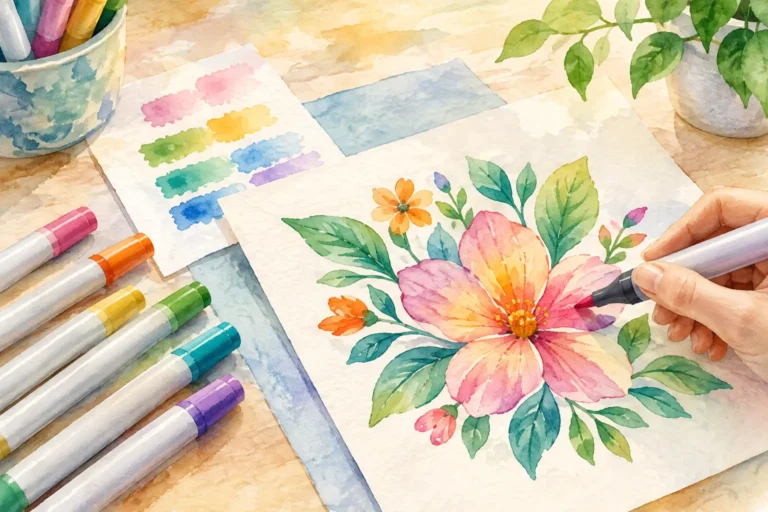
Floral patterns are a natural starting point because they feel familiar and forgiving. A page of daisies, tulips, wildflowers, or rounded petals gives you clear sections without rigid rules. You can use realistic greens and soft pinks, or choose any colors that feel good in the moment.
Flowers also allow for easy variation. Color each bloom the same for a calm, coordinated look, or change the colors as you go. Neither approach is better. The page can be orderly or playful, depending on what you need from your creative pause.
Leaves, vines, and garden shapes
Leaves are among the most approachable coloring patterns. Their curved outlines are easy to follow, and a simple green palette can make the process feel especially grounded. Vines that curl around a page add movement without requiring complicated decisions.
Nature-inspired pages often work well when you have only ten or fifteen minutes. Coloring one leaf cluster or a corner of a vine still feels complete. There is no need to finish the entire design in one sitting.
Dots, circles, and soft geometric shapes
Circles, arches, scallops, and rounded diamonds bring a gentle order to the page. These patterns can be colored in a repeating sequence, such as blue, green, blue, green, or with a more intuitive mix of shades.
Geometric patterns are a good fit when your thoughts feel scattered. Their structure gives your attention one simple place to rest. Still, choose rounded forms or wider spaces if sharp angles and tiny sections feel too demanding. A pattern should support your focus, not compete for it.
Simple animal motifs
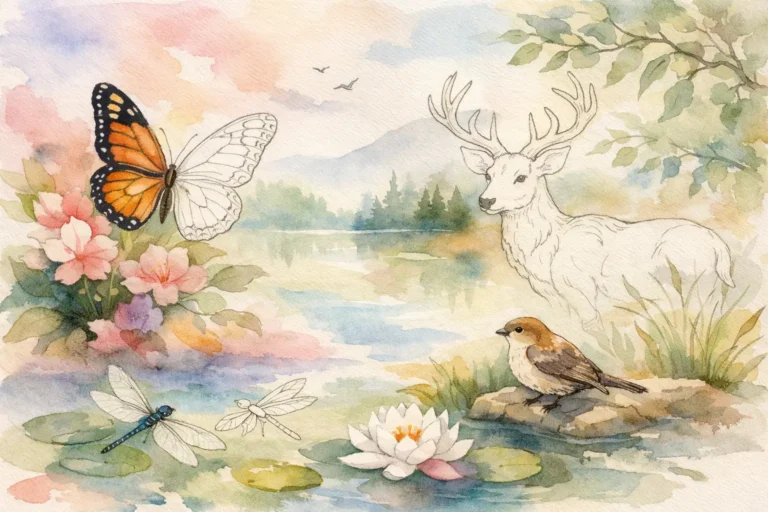
Animal-themed patterns can be easy when the shapes are open and the details stay light. Think of a page with resting cats, small birds among branches, butterflies, or peaceful woodland animals framed by leaves. These designs offer a little personality while keeping the coloring experience low-pressure.
If realistic animal colors feel limiting, let them go. A lavender fox or teal butterfly can bring a small sense of play to a quiet afternoon. Coloring is allowed to be imaginative, even when the pattern itself is simple.
Waves, clouds, and repeating natural textures
Soft waves, raindrop shapes, clouds, pebbles, and simple shells have an easy visual flow. They are especially pleasant for people who prefer patterns that feel less decorative and more spacious. A few related colors, such as ocean blues and sandy neutrals, can create a peaceful page without much planning.
These patterns are also kind to imperfect coloring. Slight variations in pressure or color often add to their natural look. You do not have to stay exactly inside every line for the page to feel satisfying.
How to Choose an Easy Coloring Pattern for Your Mood
Start by noticing how much attention you have to give. If you are tired, choose a page with larger sections and fewer elements. If you want to settle into a longer stretch of quiet enjoyment, select a repeating floral or geometric design with moderate detail.
It can help to consider the feeling you want at the end. For a light, cheerful break, choose butterflies, bright flowers, or playful circles. For a slower evening activity, leaves, woodland scenes, and soft botanical patterns may feel more fitting. There is no need to match a design to a particular skill level as much as to match it to your available energy.
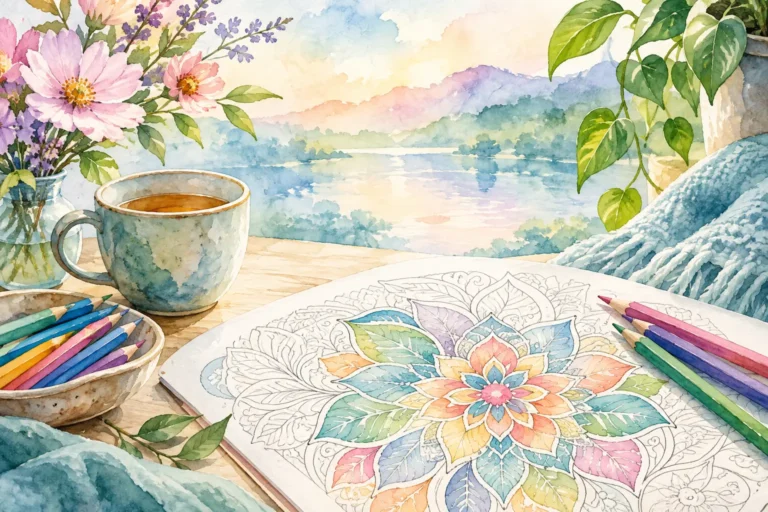
Paper and tools matter, too, but they do not need to be complicated. Colored pencils offer gentle control and are easy to put down and pick up again. Markers can create rich, even color, though they may feel less suitable for very small spaces. If you are unsure, begin with the tools already nearby. The easiest setup is the one that helps you start.
Make the Page Feel Even More Manageable
A simple pattern becomes more relaxing when you give yourself a small boundary. Instead of looking at the whole page, choose one flower, one row, or one corner. Finish that area, then decide whether you want to continue.
You can also limit your palette to three or four colors. Fewer choices can quiet the decision-making that sometimes gets in the way of a restful activity. A palette of sage, blue, and soft yellow may be all a leafy page needs. For florals, try two blossom colors and one green for the stems.
Try coloring without an outcome in mind. You do not need to frame the page, share it, or compare it with anyone else’s work. A little unevenness is part of a page made by hand. The value is in the unhurried time you give yourself while filling it in.
Why Easy Patterns Are Worth Keeping Close
Easy coloring patterns make creativity more available. They remove the feeling that you need special training, a free afternoon, or a finished masterpiece to enjoy a creative moment. A single colored petal can be enough to shift the pace of a crowded day.
That is why calming books often return to familiar subjects: garden flowers, gentle animals, leaves, and simple natural forms. They offer beauty without asking too much. At AmBizi, these kinds of welcoming designs are created for moments when you want less noise, more focus, and a quiet activity that feels good in your hands.
Keep a coloring book where you naturally pause: beside a favorite chair, near the kitchen table, or tucked into a bag for waiting rooms and travel. When the next small pocket of time appears, choose a simple pattern, pick one color, and let the first easy shape be enough.