Unwind and Create: The Therapeutic Art of Coloring for Relaxation
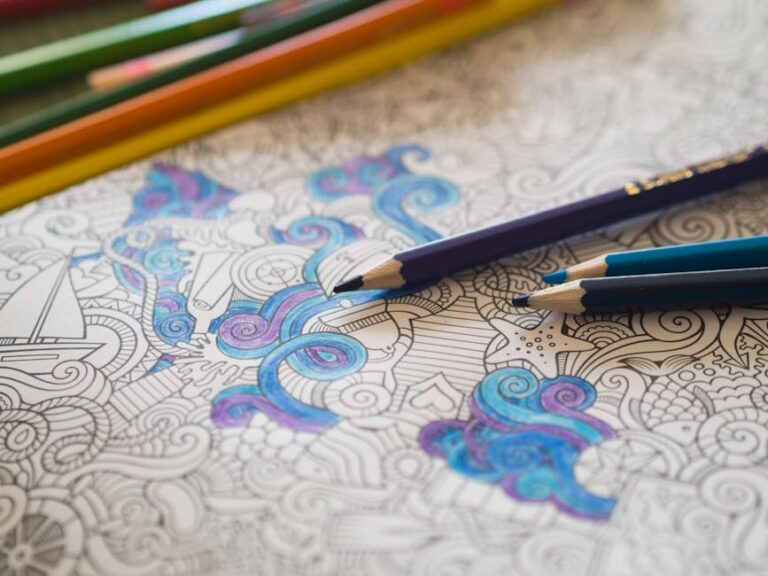
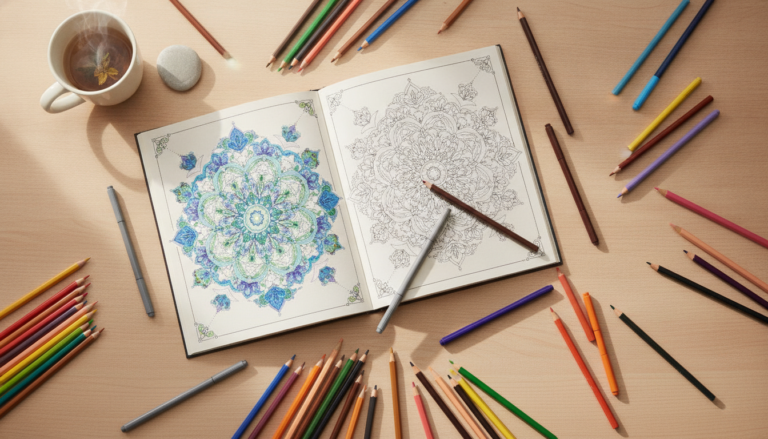
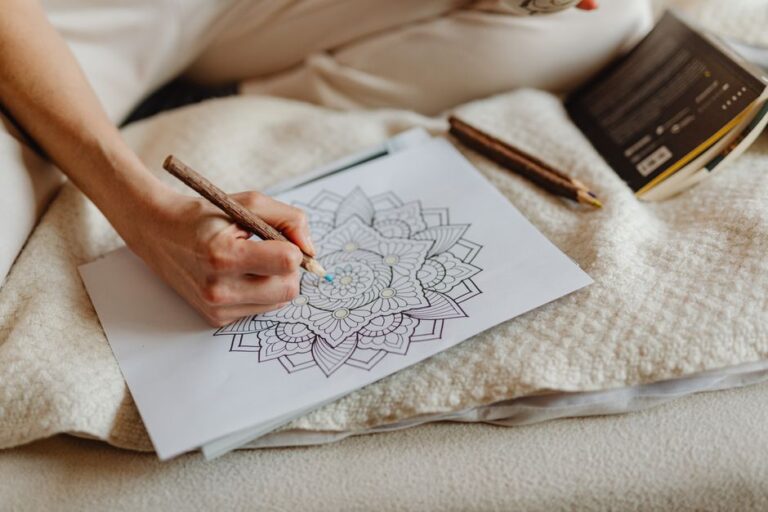
Coloring for relaxation is not just a child’s game. Adults use it to find calm and focus. You might choose a mandala, a detailed floral design, or a plain pattern. Each line you draw brings your attention closer to the present moment and calms the body.
Why coloring helps you relax
• Focus on the task: The act of coloring puts your mind on a small, repeated task. This helps stop worry and quiets a busy mind.
• Deep focus: The mix of small challenges, like staying inside the lines and picking colors, lets you sink into the moment. Time seems to pause, and stress fades.
• Soothing senses: The feel of a pencil or marker, watching the colors appear, and the repeated hand movement all send calm signals to your body.
• No pressure art: Coloring removes the idea of needing to be perfect. You make simple choices that lead to a sense of freedom and self-kindness.
What the evidence says
Researchers have looked at coloring along with other stress cuts. Their work shows that mindful coloring can lower anxiety and lift your mood when it is done often. While it is not a fix for deep mental troubles, it is a low-cost, simple tool to add to your care routine.
Types of coloring that calm the mind
• Mandalas and radial designs: These repeated shapes help you focus and calm your mind.
• Nature and botanical pages: Images of leaves and flowers bring gentle, soothing thoughts.
• Geometric patterns and tessellations: These shapes bring a clear order that can hide unwanted thoughts.
• Simple line art and doodle pages: These pages, with fewer details, can ease your mind quickly.
• Free-form coloring: This lets you color without a set design and gives a chance to act on your own ideas.
How to get started: a simple five-step routine
- Pick your item: Choose one page with a design and a tool you enjoy, like colored pencils for neat lines, markers for bright color, or water pencils for soft blends.
- Use a timer: Set it for 10–25 minutes. Short, steady sessions work better than rare long ones.
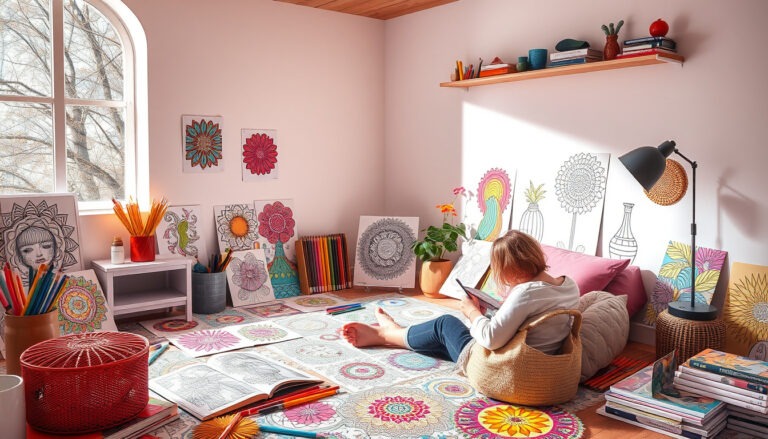
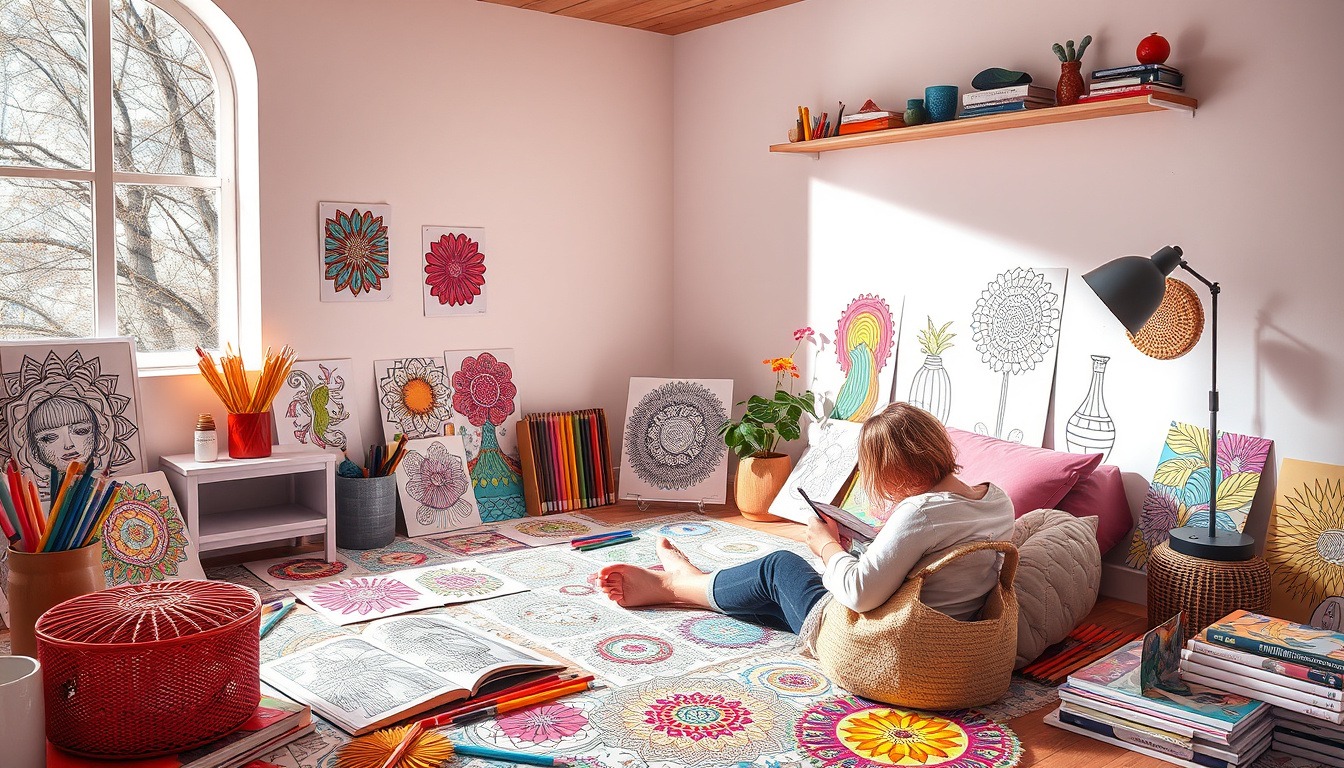
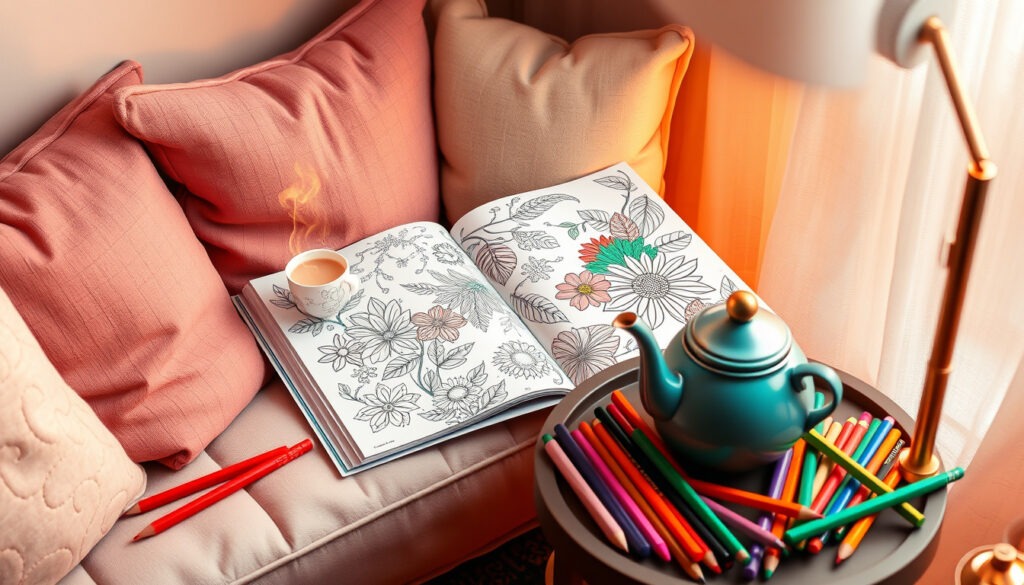
- Create a good space: Sit in a spot with clear light and a comfy chair. Have a cup of tea or water. Choose soft music or silence based on your mood.
- Begin with a pause: Take three slow, deep breaths. Watch your hand move and the page fill with color.
- Take a moment: When you finish, sit still for a bit. Notice if you feel more calm and clear.
Practical tips for deeper calm
• Accept mistakes: The work is for calm, not for a perfect art piece. Let go of harsh thoughts.
• Cut down your choices: Fewer color picks can help you decide more easily and keep the page smooth in look.
• Build layers: Simple shading with pencils can add a nice feel and work as a mindful act.
• Pair with slow breath: For each slow breath, make a mark or color a space. This links your body to a calm rhythm.
• Make it a little ritual: Do the same small steps every time, like lighting a candle, playing a short tune, or stretching. This tells your brain that it is time to rest.
• Pack a small kit: A tiny coloring pad and some pencils mean you can rest during a trip or break.

Supplies to consider
• Colored pencils: They blend well, are easy to manage, and start you off right.
• Fine-tip markers: They give bright lines, but use paper that stops ink from seeping through.
• Gel pens and metallic pens: They add strong highlights and fun notes.
• Blending tools: Use color blenders that mix colors softly.
• Heavy paper or an adult coloring book: Thick paper feels good and stops ink from bleeding out.
When to use coloring as part of self-care
• After a stressful meeting or day to shift your focus.
• As a wind-down act before sleep — 20–30 minutes of simple coloring helps your body relax.
• As a warm-up before creative work to ease worry about perfection.
• During breaks to pause without screen time.
Troubleshooting common blocks
• “I get bored or restless.” Try a page with more design or set a shorter timer for a quick break.
• “I worry my work is not good.” Remember the goal is calm, not high art. Stick to a no-judgment rule.
• “I do not have time.” Even 5–10 minutes can calm your mind. Keep a small set of supplies with you.
Coloring with others
When you color with others, be it in real life or online, you share a quiet time together. This group act lowers stress and builds a shared calm. You might set up a weekly coloring group or join an online circle to see what others do.
When to seek professional help
If you use coloring to cope yet find anxiety, sadness, or sleep troubles persist or grow worse, talk with a mental-health expert. Coloring can work well with other help, but it cannot fix deep issues alone.
Conclusion
Coloring for relaxation is a simple self-care act that brings focus, calm, and a quiet creativity. It is easy to begin and adapt as a small habit each day or as a quick break. Try a 10-minute session this evening. Pick a page, choose some colors, and see how filling in shapes can help you unwind and find a calm space in your mind.
Ready to try? Choose a coloring page and spend 10 minutes this evening with it. Note your thoughts before and after. If you feel better, share your experience with a friend or on social media to invite others to relax with coloring.
Be sure to sign up to our newsletter for free coloring pages!
Relax. Color. Create.
…Time for a creative pause…