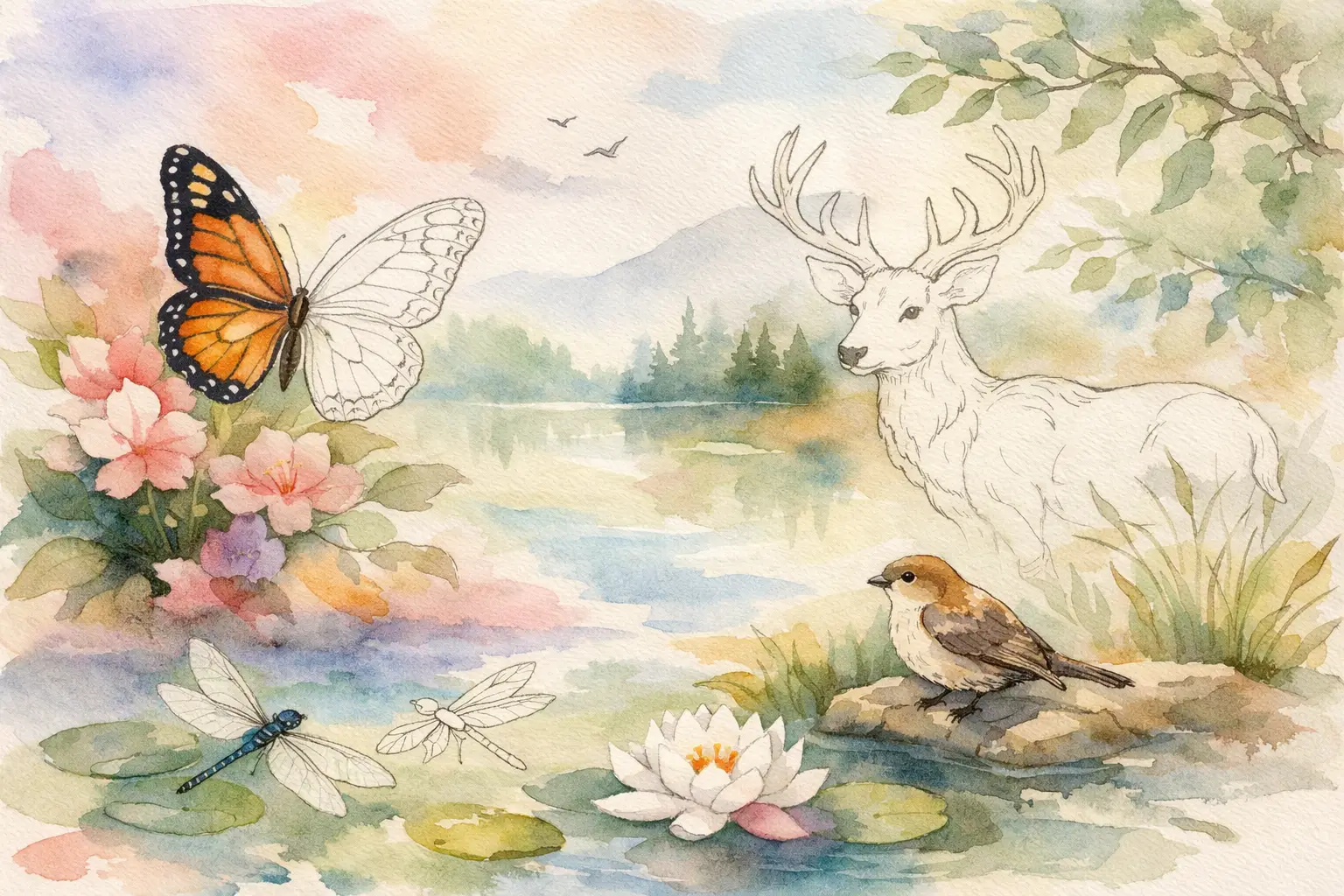
Wildlife Coloring Books for Adults Bring Calm
A fox resting beneath ferns. A heron standing still at the water’s edge. A bear tucked into a forest of leaves. Wildlife coloring books for adults offer more than a page to finish. They create a small, welcoming place to slow the mind, set aside the noise of the day, and enjoy color without needing to make anything perfect.
For many adults, wildlife imagery feels especially restful because it brings the outdoors closer. You do not need hiking boots, a free afternoon, or artistic experience. A few pencils, a comfortable chair, and one animal-filled page can become a gentle creative pause.
Why wildlife scenes feel so inviting
Wild animals carry a sense of quiet attention. A deer in tall grass, a sleeping owl, or a family of elephants can make a page feel peaceful before you even choose a color. Nature-inspired artwork gives the mind something simple to rest on: feathers, fur, leaves, branches, and open sky.
There is also room for imagination. A cardinal does not have to be red. A sea turtle can be shaded in soft blues, mossy greens, or colors found nowhere in nature. Unlike a detailed art project with a specific outcome, coloring lets you follow your own mood. Some days may call for warm autumn tones. On others, a gentle palette of gray, sage, and pale blue may feel better.
This freedom matters when your days are full of decisions. Coloring a wildlife page is a low-pressure choice. You can work for five minutes or an hour, color every detail or leave areas open, and return whenever you like.
Choosing wildlife coloring books for adults
The best book is not necessarily the one with the most intricate page. It is the one that feels pleasant to open. Before choosing, think about what kind of creative break you want.
Look for a mood, not a challenge
Some animal coloring books are packed with tiny patterns and highly detailed backgrounds. These can be satisfying if you enjoy long, focused sessions and sharp pencils. But they can also feel demanding when you want an easy evening activity.
If your goal is calm, look for designs with clear outlines, balanced detail, and enough open space to color comfortably. A page should invite you in rather than make you feel behind before you begin. Detailed feathers and leafy branches can be lovely, but the image should still have room to breathe.
Choose animals you naturally enjoy
Your favorite subject matters more than you might expect. Woodland animals can create a cozy, storybook feeling. Birds may feel light and uplifting. Ocean wildlife often suits cool, flowing color palettes, while safari scenes can bring warmth and bold contrast.
There is no need to choose the most educational or realistic theme. Pick the animals that make you pause when you see them. A book that feels personal is far more likely to become part of your regular quiet time.
Consider the paper and page layout
Colored pencils work well for most coloring books and are easy to use in the living room, at the kitchen table, or while traveling. Gel pens and markers can create richer color, though markers may show through lighter paper. If you prefer markers, test them on an unobtrusive area first or place a protective sheet behind the page.
Single-sided pages can be helpful if you want to remove and display a finished design. Double-sided books are often more compact and may offer more pages, but they ask for a little more care with heavier supplies. Neither option is better for everyone. It simply depends on how you like to color.
Make the first page easy to begin
A fresh coloring book can feel surprisingly precious. It is easy to flip through beautiful pages, worry about choosing colors, and then put the book away untouched. The simplest answer is to begin imperfectly.
Choose a page that feels friendly, not necessarily your favorite. Start with one small area: the eye of a fox, a cluster of leaves, the edge of a wing. Once the first color is down, the page becomes yours. You do not have to plan every shade in advance.
It can help to limit your palette at first. Try two greens, one brown, a warm yellow, and a soft gray for a woodland scene. For ocean animals, begin with two blues, a turquoise, and a sandy neutral. A smaller selection keeps the process calm and gives the page a naturally coordinated look.
If you enjoy experimenting, make a tiny color key in the margin or on a scrap sheet. This is not a rulebook. It is simply a gentle way to remember a combination you like.
Create a coloring pause that fits real life
You do not need a full evening or a perfectly organized creative corner. Wildlife coloring works best when it is easy to reach for. Keep your book and a small set of favorite pencils in a basket, on a shelf, or beside the chair where you already like to sit.
A short routine can make the experience feel even more settling. Put your phone out of reach, make a warm drink, and choose one page without overthinking it. Let the first few minutes be about settling in rather than finishing anything.
For busy parents, caregivers, and professionals, a ten-minute coloring pause may be enough. The goal is not productivity. It is a little space between one task and the next. On slower days, you can stay longer and enjoy the gradual layering of color.
Let unfinished pages be part of the process
A partly colored owl or unfinished meadow is not a failure. It is an invitation waiting for you. Returning to the same page can be comforting because there is no need to decide where to start. You can simply pick up the next leaf, feather, or patch of fur.
This is one reason coloring books are such a kind creative companion. They do not ask for a large block of time. They are ready in small pieces, whenever you are.
Color wildlife your own way
Realistic color can be satisfying, especially if you enjoy studying animal markings. A rabbit can have soft browns and creams; a monarch butterfly can glow with orange and black. Yet realistic color is only one option.
Try a midnight-blue fox, a lavender owl, or a turtle surrounded by coral-pink water. Choose colors based on the feeling you want the page to hold. Earthy shades can feel grounded and warm. Bright tropical colors can feel cheerful. Soft pastels may create a lighter, quieter mood.
You can also vary the pressure of your pencil. Light layers create a delicate look, while firmer pressure deepens shadows and brings out texture. There is no need for complicated techniques. Even one darker edge and one lighter center can make a leaf, feather, or animal face feel gently dimensional.
A simple creative ritual worth keeping
Wildlife coloring books for adults are most enjoyable when they stay uncomplicated. They are not a test of talent, a project to complete quickly, or another thing to do well. They are a chance to spend a little time with color, nature-inspired images, and your own quiet attention.
AmBizi creates coloring books with that softer kind of creativity in mind: approachable pages that invite calm, focus, and quiet enjoyment. Whether you are drawn to woodland creatures, graceful birds, or animals beneath the sea, the right book can become a familiar part of your wind-down routine.
Tonight, choose one small corner of a page and one color that feels good. Let the rest wait. The peaceful part is already beginning.