How to Enjoy Coloring Alone and Feel Rested
A coloring page does not ask you to explain yourself, keep up a conversation, or make something worthy of display. It simply gives your hands a place to go when your mind has been carrying too much. Learning how to enjoy coloring alone starts with letting that simplicity be enough.
For many people, alone time can feel strangely difficult at first. A quiet room may invite thoughts about unfinished tasks, unanswered messages, or everything waiting for tomorrow. Coloring offers a gentle middle ground. You are not doing nothing, but you are also not asking much of yourself. With each small section of a flower, leaf, or animal design, the day can begin to feel a little less crowded.
Let coloring be a pause, not a project
The quickest way to drain the enjoyment from coloring is to turn it into another thing to complete perfectly. You do not need to finish a page in one sitting. You do not need a carefully planned palette. You do not need to color inside every line with absolute precision.
Try approaching the page as a place to rest your attention. Choose one small area, such as a petal or a patterned wing, and begin there. If you color for ten minutes and close the book, that still counts. A short creative pause can feel more nourishing than waiting for the rare afternoon when you have hours to spare.
There is also no rule that says every page must be saved, framed, or shared. Some pages may become favorites. Others may simply hold the quiet mood of one evening. Both have value.
Create a small corner that feels inviting
You do not need a dedicated craft room to enjoy coloring alone. A corner of the kitchen table, a favorite chair, or a clear spot beside your bed can become a comforting place to settle in. What matters most is reducing the small bits of friction that make it easy to put the activity off.
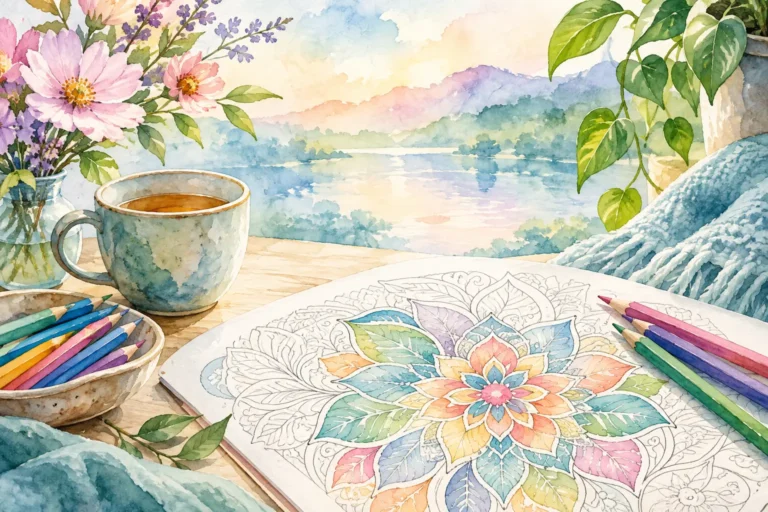
Keep your coloring book and a few pencils, crayons, or markers together in a basket or pouch. When supplies are already within reach, you can begin before your mind talks you out of taking a break. A smooth surface and decent light help, but the goal is comfort, not a picture-perfect setup.
Consider the atmosphere, too. You may prefer the hush of an early morning before the house wakes up. Perhaps late afternoon works better, with a warm drink nearby and your phone in another room. Some people enjoy soft instrumental music, while others find that silence helps them slow the mind. It depends on what makes you feel least rushed.
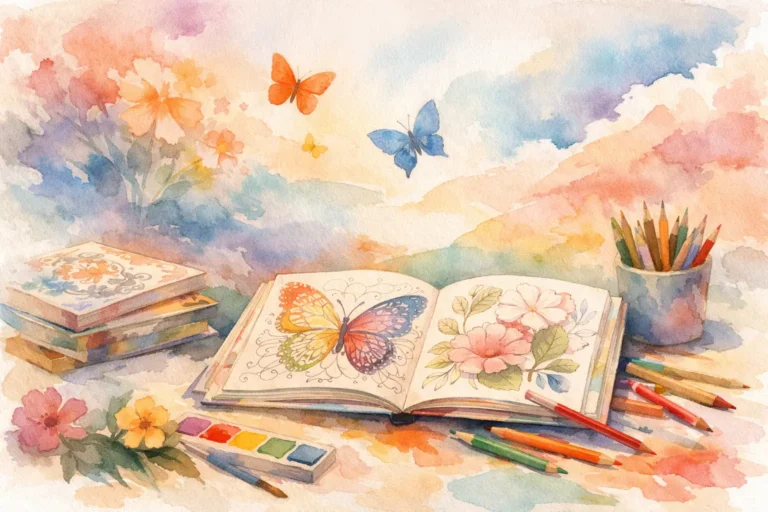
A floral page can feel especially fitting for this kind of pause. Repeating petals and leaves give the eye an easy path to follow, while nature-inspired designs offer a little visual distance from schedules, screens, and daily demands.
Choose supplies that feel easy in your hands
You do not need a large collection of supplies to begin. In fact, too many choices can turn a peaceful activity into a decision-making exercise. Start with what you have and notice what you enjoy using.
Colored pencils are often a calming choice because they allow for soft layers and gentle control. Crayons can feel simple and familiar. Markers create bolder color with less effort, though they may show through lighter paper. There is no best option for everyone. The right supply is the one that makes you want to sit down again.
If selecting colors feels overwhelming, make the decision smaller. Pick three shades you like and repeat them across the page. Use colors you notice outside your window. Try one color family, such as greens and blues, for a cool and quiet look. Or choose bright, cheerful colors simply because they lift your mood.
You do not have to make flowers realistic or animals true to life. A purple rabbit, a golden leaf, or a blue rose can be exactly right. Coloring alone gives you the freedom to follow your own taste without needing to explain it.
Start with one simple choice
Before you begin, choose just one thing: the first color, the first section, or the amount of time you want to spend. Small choices keep the moment light. Once your pencil is moving, the next step often becomes clear on its own.
Make room for your wandering thoughts
Coloring can be peaceful, but it does not always make your thoughts disappear. You may begin a page and suddenly remember a bill to pay, a call to return, or something you wish you had said. This does not mean you are doing it wrong.
When your mind wanders, gently return to the page. Notice the edge of the shape you are filling. Notice the pressure of the pencil and the change in color as it covers the paper. There is no need to force calm. Simply giving your attention a small, pleasant task can invite it back over time.
It can help to keep a notepad nearby if thoughts about tomorrow feel too persistent. Write down the task in a few words, then return to your page. This reassures your mind that the thought has not been lost, without asking you to act on it right away.
The same is true for emotions. Some days, coloring may feel bright and playful. On other days, you may reach for muted colors and slower movements. Let the page meet you where you are. Quiet enjoyment does not have to look the same every time.
Put screens a little farther away
A phone within reach can turn a calm moment into a series of tiny interruptions. One glance at a notification can quickly become ten minutes of scrolling, comparing, responding, and absorbing more than you intended.
Try placing your phone across the room, turning it face down, or setting it to a focus mode before you open your coloring book. You do not need to make a dramatic rule about screens. Even a brief screen-light break can change the feeling of an evening.
Coloring asks for a different kind of attention. It is tactile, unhurried, and pleasantly repetitive. Your hands are occupied, but your nervous system is not being asked to react to new information every few seconds. For busy professionals, parents, caregivers, and anyone carrying a full mental list, that difference can feel like a welcome exhale.
Release the urge to make it impressive
Coloring alone can bring up an unexpected question: What if it does not look good? The answer is that it does not have to. A coloring book is not an audition for artistic skill. It is a low-pressure way to spend time with yourself.
If you notice yourself judging a section, pause before trying to fix it. A darker patch, an uneven blend, or a color choice you would not repeat is part of the page now. You can keep going, turn the page, or leave it unfinished. The purpose is not flawless results. The purpose is the feeling of being absorbed in something kind and manageable.
This is one reason detailed designs can be so comforting. They offer enough structure to guide you, but enough freedom to make the page your own. You are never facing a blank page, yet you are still creating something personal.
Build a ritual you can return to
The most enjoyable coloring habit is usually the one that fits naturally into your life. Rather than promising yourself an hour every night, attach coloring to a moment that already exists. You might color for a few minutes after dinner, before bed, during a quiet weekend morning, or while waiting for laundry to finish.
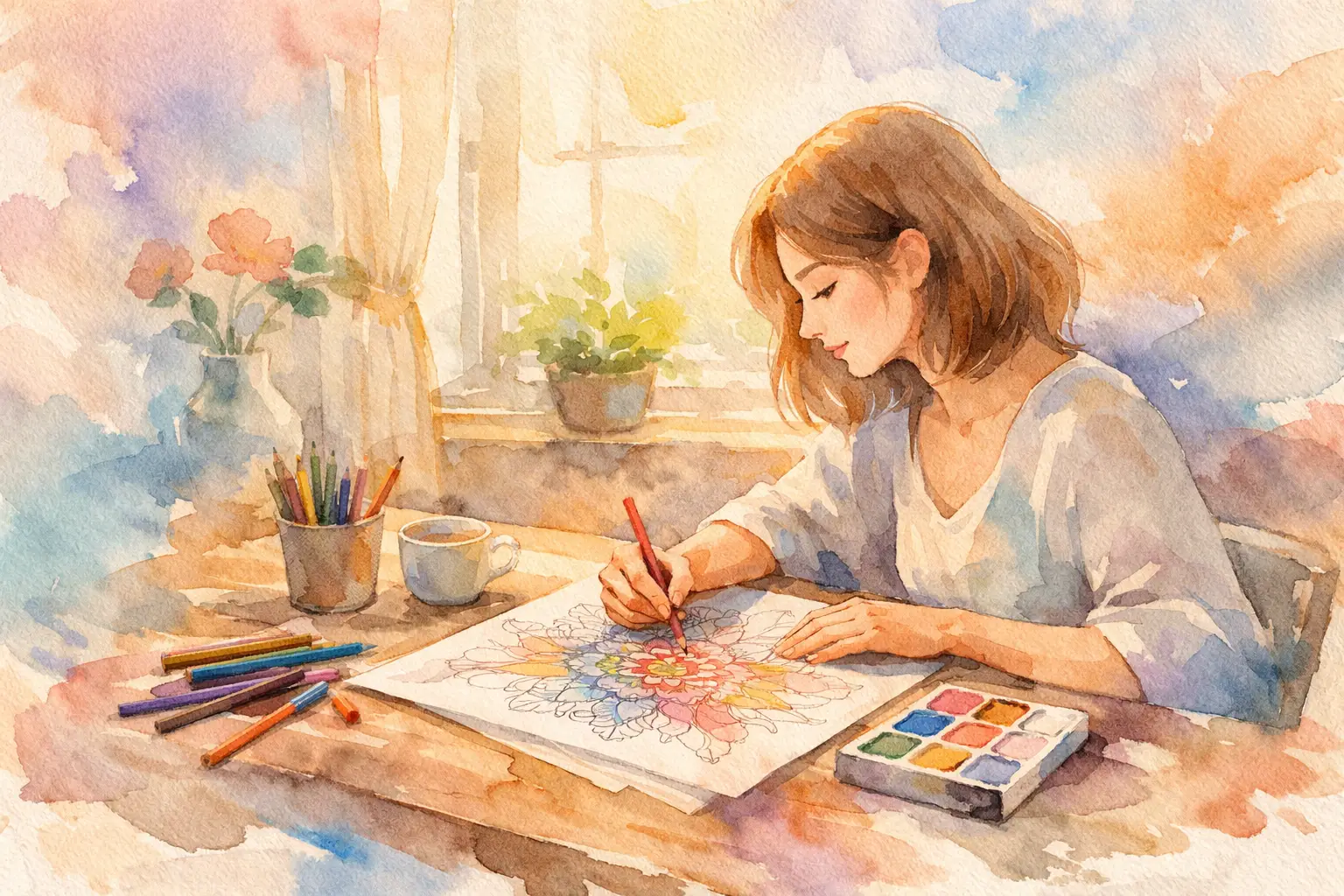
A simple ritual can make the activity feel more welcoming. Pour tea, choose a page, set out a few colors, and let that be your signal that the day can soften for a while. AmBizi coloring books are made for these small moments – easy creative pauses that ask for no special skill and no perfect outcome.
Some sessions will be longer than others. Some weeks you may not open your book at all. That is okay. The value of a comforting activity is not measured by streaks or productivity. It is measured by whether it is there when you want a gentler place to put your attention.
How to enjoy coloring alone in your own way
There is no ideal mood you need to reach before you begin. You can color when you feel calm, restless, tired, cheerful, or a little scattered. You can use every color in the box or stay with two familiar shades. You can finish one page over several evenings or move on halfway through.
The quiet pleasure comes from permission: permission to be offline for a little while, to make small choices, and to enjoy color without needing a reason. Open to the page that catches your eye, choose the pencil that feels right, and let your hands carry you through one gentle shape at a time.