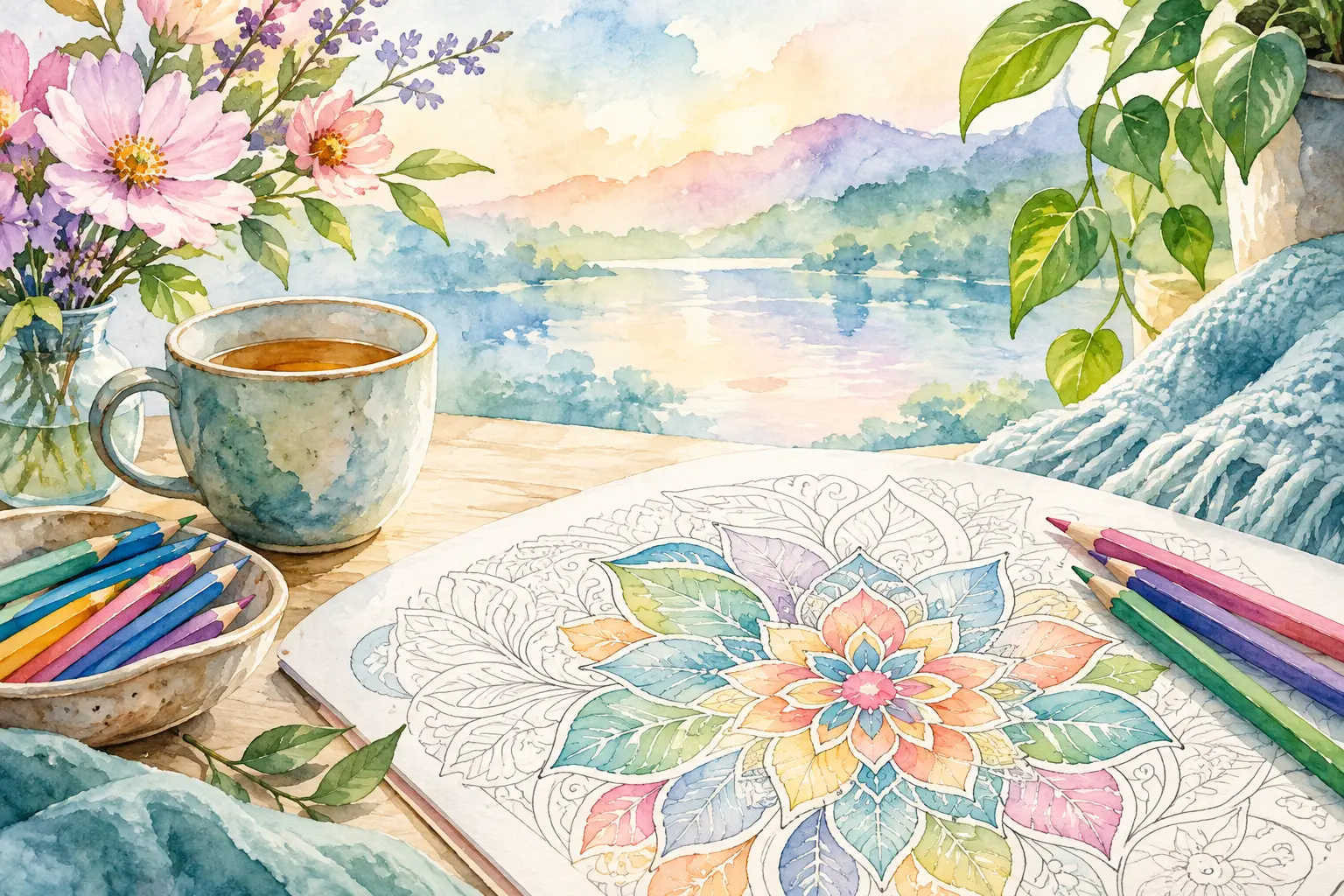
Coloring Page Styles for Calm Creative Breaks
A coloring page can feel like a small place to rest. The best coloring page styles do not ask you to prove anything, finish quickly, or make every detail perfect. They simply give your hands something gentle to do while your mind has room to slow down.
That feeling can come from many different kinds of pages. A loose floral arrangement may feel airy and open. A page of woodland animals may offer warmth and companionship. A repeating pattern can create a pleasant rhythm when your day has felt scattered. Choosing a style is less about your skill level and more about what kind of pause you need.
Why Coloring Page Styles Change the Experience
The subject of a coloring page matters, but so does the way it is drawn. Fine, detailed lines create a different experience than bold, roomy shapes. A full-page garden feels different from one large bloom with space around it. Neither is better. Each style supports a different mood, amount of time, and level of focus.
When life feels busy, an intricate page can sometimes feel like one more thing to complete. On another day, those small details may be exactly what helps you settle in. The most comforting choice is usually the page that meets you where you are, rather than the page you think you should be able to finish.
It also helps to remember that a coloring session does not need to last an hour. A few quiet minutes with a favorite pencil and one small section of a page can be enough to create a softer transition between the demands of the day and your evening at home.
Open and Simple Designs for Easy Starts
Pages with larger spaces and clear outlines are often the easiest place to begin. Think of broad petals, friendly animals, simple leaves, mushrooms, or a peaceful landscape with open sky. These designs offer a low-pressure way to color because there is room to move without worrying about tiny edges.
Simple pages are especially welcoming when your attention feels divided. You can choose two or three colors, settle into an uncomplicated area, and enjoy seeing the page change quickly. There is no need to plan a complicated palette. Soft greens, warm browns, gentle pinks, and a familiar favorite color can be more than enough.
Open designs also work well for short breaks. If you have ten minutes before dinner, after school pickup, or before bed, you can add color to a leaf or flower and still feel that you have made a pleasing little moment for yourself.
Floral Pages With Breathing Room
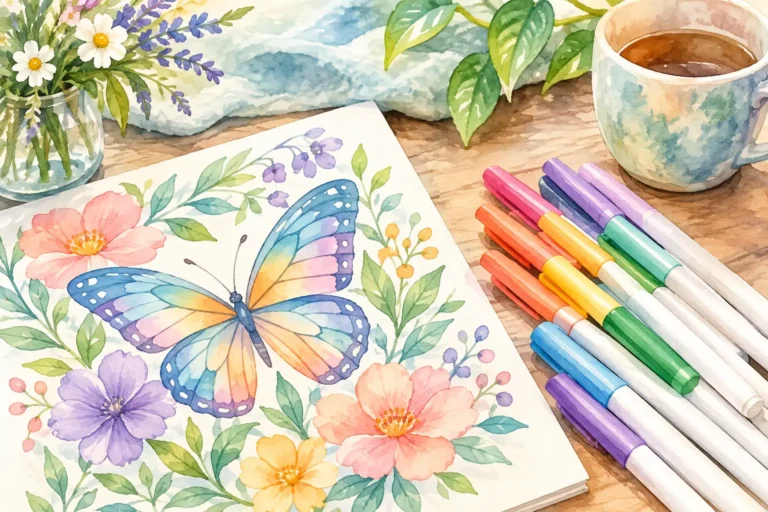
Floral coloring pages remain a favorite because they can feel both cheerful and restful. A page with a single bouquet, oversized blossoms, or scattered wildflowers lets color take center stage without crowding the eye.
For a calm look, try staying within one color family. Pale blues, lavenders, and sage greens can create a cool, quiet page. Peaches, soft yellows, and rosy pinks bring a little warmth. You do not need to copy nature exactly. A blue daisy or a pink leaf can be part of the fun.
Detailed Patterns for Focused Quiet
When you want to settle into a longer creative pause, detailed coloring page styles can be deeply satisfying. Repeating petals, layered leaves, patterned feathers, and decorative backgrounds invite steady attention. There is often a simple rhythm to filling one small shape after another.
The trade-off is time. Detailed pages may take several sessions, and that is perfectly fine. Leaving a page unfinished does not take away from the enjoyment it gave you. In fact, returning to the same design over a few evenings can become a comforting ritual.
If small sections feel overwhelming at first, choose one area rather than looking at the entire page. Start with the center of a flower, the edge of a wing, or one corner pattern. As that area fills with color, the rest of the page begins to feel more approachable.
Botanical Patterns and Repeating Motifs
Botanical patterns offer detail without needing a complicated scene. Vines, leaves, ferns, and small flowers repeat in ways that feel natural rather than rigid. They are a lovely choice when you want a page that holds your attention but still feels soft and familiar.
Repeating motifs also make color decisions easier. Once you choose a few shades for one group of leaves or petals, you can carry those choices through the page. This creates a cohesive result with very little planning.
You can keep the pattern calm by using just a handful of colors, or make it brighter by changing shades as you go. It depends on whether you are looking for quiet consistency or a more playful creative lift.
Animal Styles That Feel Warm and Personal
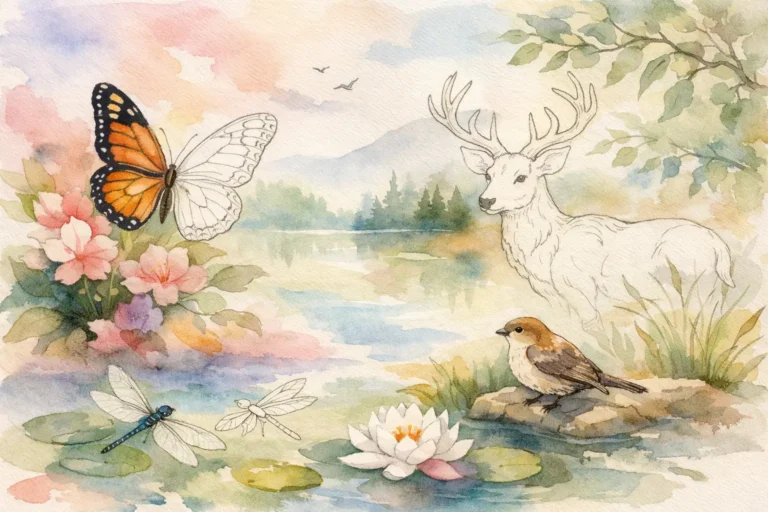
Animal-themed pages bring a sense of gentle charm to coloring time. A sleeping cat, a pair of birds on a branch, a curious fox, or a garden full of butterflies can make a page feel inviting before you color a single line.
Some animal designs are realistic, with fur, feathers, and natural settings. Others are more whimsical, with rounded features, flowers, or cozy decorative details. Realistic pages may appeal when you enjoy observing small natural touches. Whimsical pages can be a lighter choice when you simply want to smile and relax.
For many people, animals are easiest to color when the page includes a little surrounding nature. Leaves, grass, branches, and flowers offer simple spaces between more detailed areas. They also give you an easy way to build a calm palette around the animal itself.
Scenic Pages for a Change of Pace
Scenes can create the feeling of stepping somewhere else for a while. A cottage garden, forest path, lakeside view, or quiet meadow gives you more to explore than a single object or pattern. These pages can be especially appealing when you want a longer, unhurried project.
Because a scene contains several elements, it helps to color from back to front. Begin with the sky, distant hills, or a broad background shape. Then move toward trees, flowers, and smaller foreground details. This is not a rule, but it can make a busy page feel easier to enter.
Scenic pages often look lovely with softer colors. A limited palette can help the page feel peaceful even when there are many details. Try a few greens, one or two earth tones, and a gentle accent color for flowers or a door. Let the scene stay simple if that is what feels good.
Choosing a Style for Your Mood and Time
Before opening a coloring book, take a small moment to notice what you need. If you are tired, larger shapes and familiar subjects may feel most comforting. If your thoughts are racing, a detailed pattern can offer a steady point of focus. If you feel restless, a cheerful animal or bright floral page may bring a welcome shift.
Your tools can guide the choice, too. Colored pencils pair beautifully with pages that have fine lines and layered details. Markers often feel especially satisfying on larger, open sections, though it is wise to place a sheet of paper behind the page in case of bleed-through. Crayons can make simple, bold designs feel soft and nostalgic.
There is no need to save a beautiful page for the right occasion. The right occasion may simply be a quiet Tuesday afternoon, a cup of tea nearby, and the wish to spend a little less time looking at a screen.
Let the Page Be Enough
A finished page can be lovely, but it is not the only reward. Some days you may color one flower and put the book away. Some days you may choose unexpected colors, go outside the lines, or leave the background blank. The page belongs to your moment, not to a standard.
At AmBizi, the gentlest designs are made for that kind of quiet enjoyment: approachable pages that invite calm without asking for perfection. Choose the style that feels easiest to begin, make one small mark of color, and let that simple act create a little more room in your day.