Slow Living Creative Trends Worth Keeping
The appeal of slow living creative trends is not that they ask us to make something impressive. It is that they make room for a different kind of moment: one with fewer alerts, fewer decisions, and a little more attention on what is right in front of us. A page to color, a small notebook, a basket of yarn, or a pressed flower can become a welcome pause in a busy day.
For many people, creativity feels more comforting when it is not tied to a goal. There is no need to post the result, turn it into a side project, or improve at a fast pace. The pleasure is in choosing a color, noticing a pattern, and giving the mind a softer place to rest.
Why Slow Living Creative Trends Feel Different
Many trends move quickly. They ask for new supplies, polished results, and constant inspiration. Slow living takes a quieter approach. It favors familiar materials, simple routines, and activities that can be picked up for ten minutes or enjoyed for an unhurried afternoon.
This shift matters because creative downtime can easily become another item on a full to-do list. When every hobby comes with pressure to learn, share, or sell, it stops feeling like a break. Slow creativity leaves space for imperfect lines, unfinished pages, and changing moods.
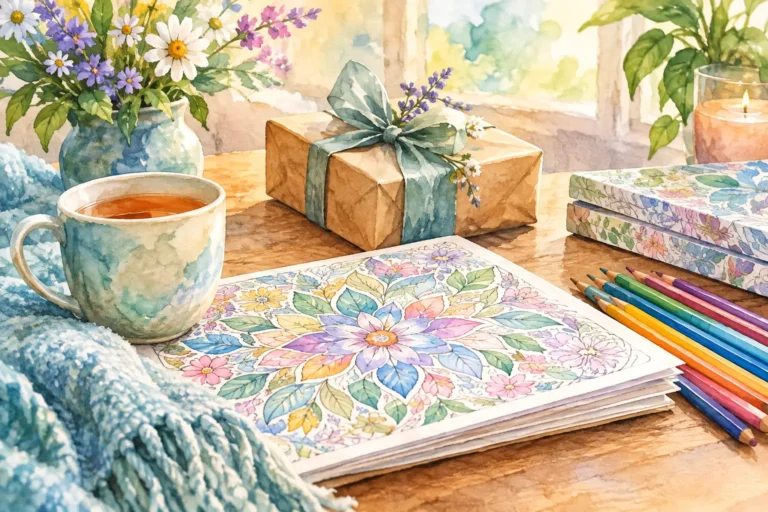
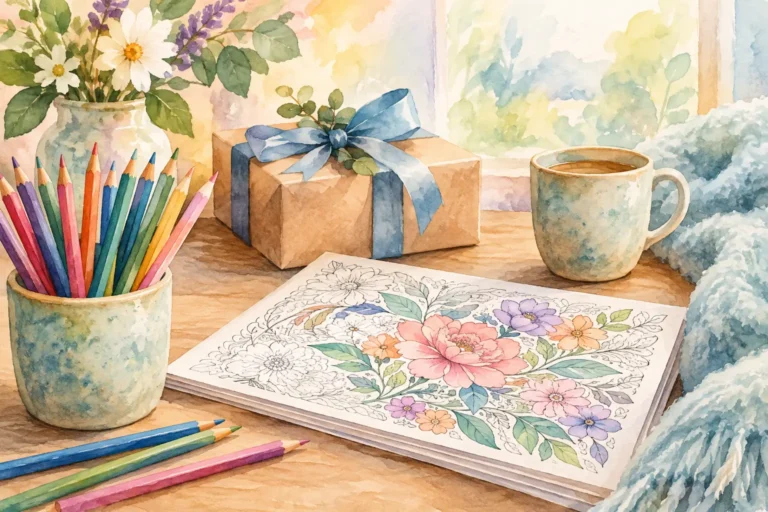
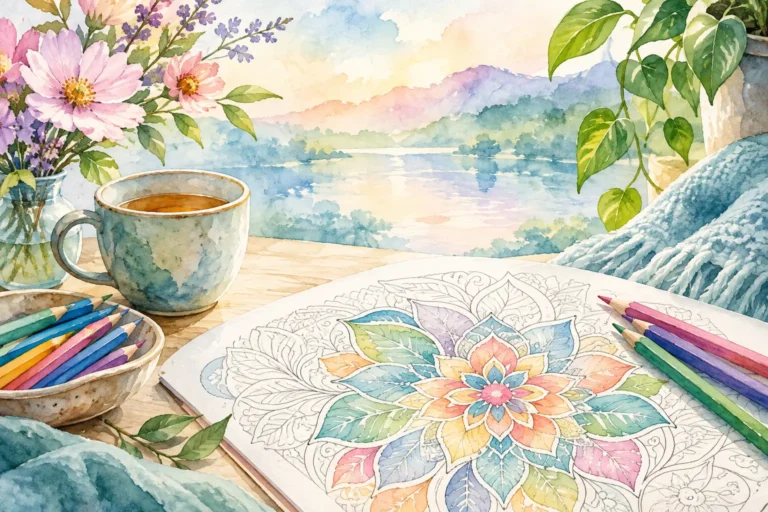
It also brings the senses back into the experience. Paper has texture. Colored pencils make a gentle sound. A cup of tea cools nearby while a nature scene slowly takes shape. These small details can help slow the mind in a way that scrolling rarely does.
The Return to Tactile, Screen-Light Hobbies
One of the clearest slow living creative trends is a return to hands-on activities that do not depend on a screen. Adult coloring, simple drawing, journaling, collage, hand lettering, puzzles, and beginner-friendly crafts all offer a gentle alternative to digital downtime.
The point is not to avoid technology completely. Phones and computers are useful parts of life. But an evening that includes a screen-light activity can feel noticeably different from an evening spent moving from message to video to headline. A printed page asks for just enough attention to create focus without demanding too much.
Coloring books fit especially well into this rhythm. They offer a ready-made starting point, which is helpful when mental energy is low. You do not have to decide what to draw or worry about a blank page. You can simply choose a design that feels inviting and begin.
Nature-inspired pages, gentle florals, and friendly animal scenes are popular for a reason. They create a small visual world that feels calm without being empty. Repeating petals, leaves, feathers, and soft outlines give the hands something satisfying to do while the mind settles into a steadier pace.
Low-Pressure Creativity Is Part of the Appeal
Slow creativity is not about becoming more disciplined or productive. It is about making an activity easy enough to return to. A complicated project may be rewarding when you have time and energy, but it can also sit unfinished for months. There is nothing wrong with that. Still, many people are looking for creative rituals that fit real life as it is.
A coloring page can be completed in one sitting, or enjoyed a little at a time. A journal can hold one sentence instead of three pages. A simple craft can use what is already in the drawer. These lower expectations are not a lesser version of creativity. They are what make creativity feel available on ordinary days.
Creative Rituals That Support a Slower Day
A slow living practice works best when it feels natural, not forced. You do not need to redesign your schedule. Instead, notice the small openings that already exist: the quiet before the household wakes up, the half hour after dinner, a weekend morning, or the few minutes before bed.
Try keeping one creative activity visible and easy to reach. Place a coloring book and a small set of pencils on a side table. Leave a notebook near your favorite chair. Keep scissors, paper, and a glue stick together in a simple box. When supplies are buried away, starting can feel like a task. When they are ready, the invitation is much gentler.
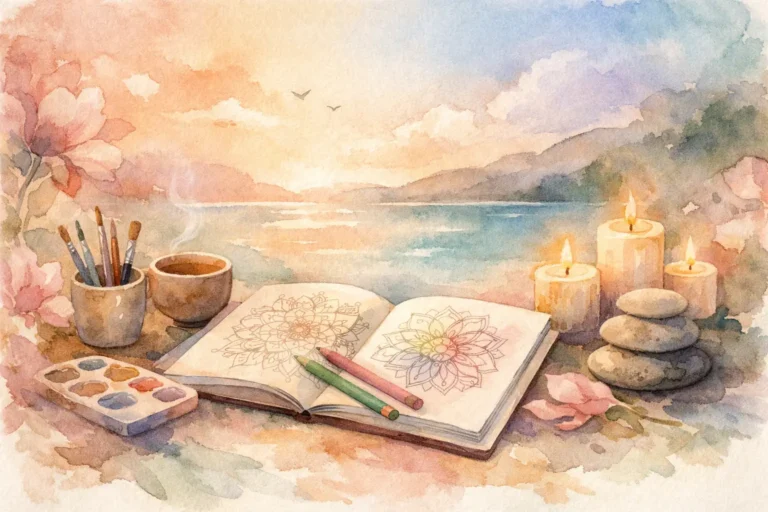
The setting can be simple, too. A comfortable chair, soft light, and a clear surface are often enough. Some people enjoy quiet music or a familiar podcast in the background. Others prefer silence. It depends on what helps you feel present rather than pulled in several directions.
There is also value in stopping before you are tired of it. You do not need to finish the page, use every color, or make the most of every spare minute. Leaving a little room to return tomorrow can turn a one-time activity into a comforting rhythm.
Slow Living Creative Trends Are Moving Away From Perfection
Perfectly styled hobby spaces and flawless finished pieces can be pleasant to look at, but they can create distance for someone who simply wants a calm break. The more welcoming direction is creativity that looks lived in: a few favorite pencils, a page with colors that do not match exactly, a notebook with crossed-out thoughts.
This is where personal taste matters more than rules. You may prefer soft greens and warm browns one day, then bright pinks the next. You may color inside every line or let shades overlap. You may choose a detailed botanical page when you want to focus, or a simpler animal design when you need ease.
There is no single right way to make a creative pause restorative. Some people feel refreshed by repetition, while others want variety. Some want fifteen quiet minutes; others want a long, rainy afternoon with a table full of supplies. The common thread is permission to enjoy the process without measuring it.
Choosing Supplies With Ease in Mind
More supplies do not always create more enjoyment. In fact, too many choices can make a simple activity feel unexpectedly complicated. Begin with a few materials that feel good to use and are easy to put away.
For coloring, a small selection of colored pencils or markers may be all you need. If markers feel too bold or permanent, pencils offer a softer pace and make it easy to layer shades gradually. If you want an activity that travels well, choose a compact book and a small pencil case rather than a large collection.
Printed creative books are especially useful because they remove the setup of planning a project. AmBizi coloring books are designed around this kind of quiet enjoyment, with inviting nature, floral, and animal-inspired pages that make it easier to begin without pressure.
Let Creativity Be a Place to Land
The best slow living habits do not need to look dramatic from the outside. They are often small choices repeated with care: setting down the phone, opening to a fresh page, and letting your hands do one simple thing for a while.
A creative pause will not make every day quiet. Schedules remain full, responsibilities remain real, and some seasons leave very little room. But even a brief moment with color, paper, and a design you enjoy can offer a softer transition between everything that needs your attention.
Tonight, choose the page that feels easiest to begin. Let the colors be imperfect, let the time be short if it needs to be, and give yourself the simple pleasure of making something just for the quiet of it.