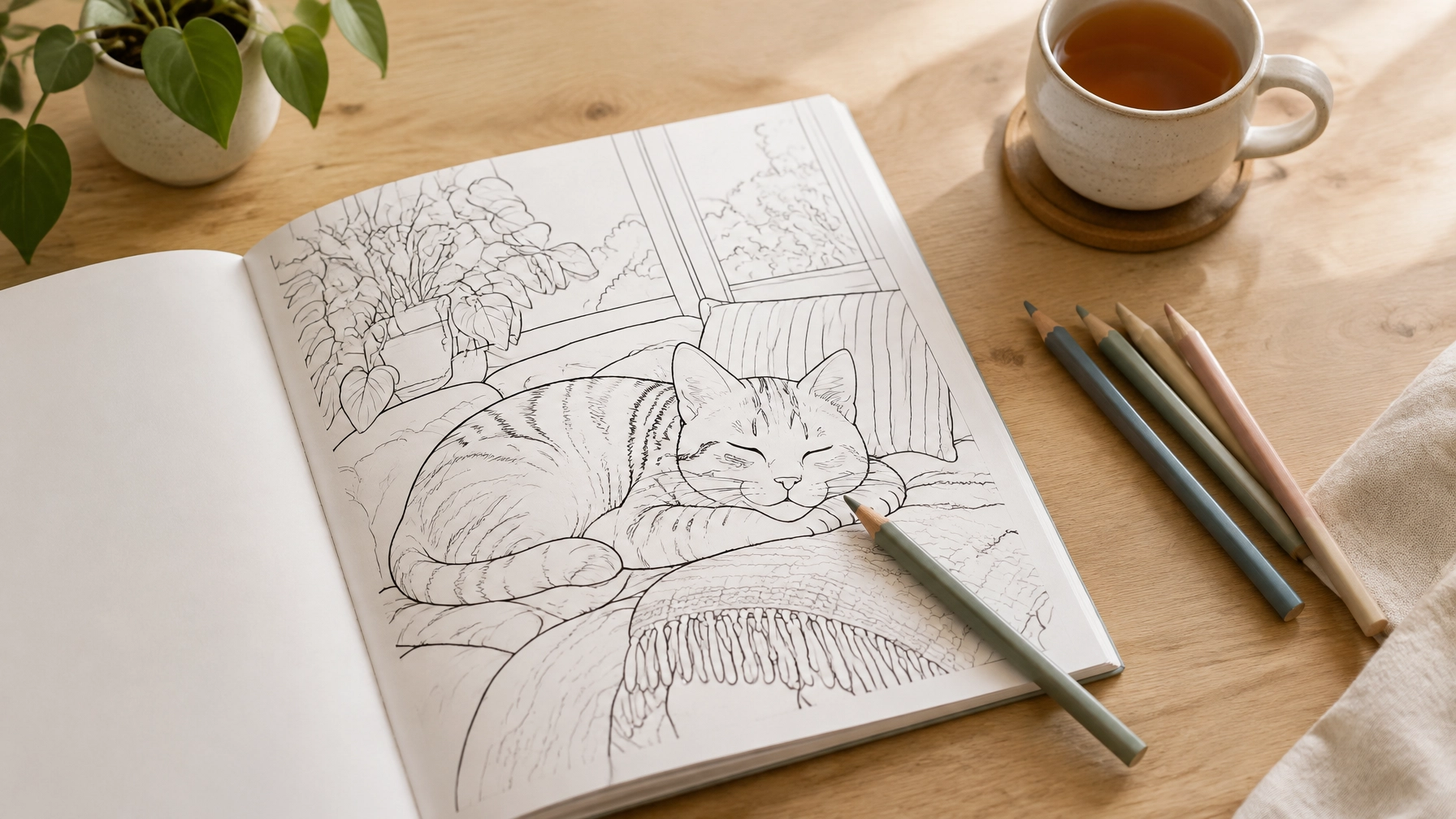
Cozy Coloring Book: How to Choose One You Will Actually Finish
To choose a cozy coloring book you’ll actually finish, match its level of detail to the time and energy you really have, then pick a subject you’d enjoy seeing again and again. Before buying, look through the interior previews, not just the cover, and ask yourself: would I happily color at least three or four of these pages?
That small check can help you find a book that feels inviting on an ordinary evening, not just appealing in the moment you order it.
How do you choose a cozy coloring book you’ll actually finish?
The best book for finishing is one that feels easy to start on a regular day.
Think about when you’re most likely to color. If you usually have ten minutes before bed, a page with big, clear shapes may suit you better than an intricate scene that asks for sustained attention. If you enjoy settling in for a long evening, more layered designs might feel absorbing rather than demanding.
The right choice isn’t necessarily the shortest book or the simplest art. It’s the one whose pages feel like a pleasant invitation, whether you color a little at a time or stay with one picture for longer.
How much detail fits the time you really have?
Choose for the energy you tend to have, not the energy you hope to have.
For a short session, look for cozy coloring pages with larger spaces, clear outlines, and a main subject that’s easy to approach. You might color a cat, a few leaves, or one section of a scene and leave the rest for later. This can make simple coloring books for adults a comfortable fit for beginners, or for anyone who prefers an easygoing page.
For a longer session, consider whether you enjoy filling in smaller shapes and returning to a picture over several sittings. Preview images can help you see how dense the lines are. Look for space between details and outlines that are easy to follow; if the page looks crowded at the size shown, it may feel even busier when you’re coloring.

For example, Fairy Architecture: Whimsical Edition includes 40 single-sided designs ranging from gently detailed to intricate. If you like a mix of page styles, that range may give you options for different moods. If you want each page to feel similarly open and approachable, check several previews before deciding.
Which subject will you want to see again?
A familiar favorite can make it easier to open the book again.
A book cover can be lovely, but the subject inside should be something you genuinely enjoy. Ask yourself which scenes you’d look forward to coloring more than once: relaxed pets, garden moments, woodland details, or a little storybook fantasy.
A dedicated theme can be a better fit than a broad collection if one subject already makes you smile. Relaxing Cats To Color has 34 full-page cat illustrations, while Gnomes: A Day in the Life follows a cast of gnomes through everyday activities. Both books have single-sided pages and an 8.5 × 11-inch format.

Notice how you feel as you browse. If several sample pages make you want to choose colors, that’s a promising sign. If you only like the cover, pause and look for another preview before you decide.
What should you check about pages, paper, and size?
A preview tells you what the cover can’t: how the book will feel to use.
Check the book description for the details that affect your coloring routine:
- Single-sided printing: Each design is printed on one side, with a blank reverse. This can help reduce the chance of marking the next illustration, but it doesn’t guarantee that ink won’t show through the paper. Place a spare sheet behind the page when using markers.
- Page size: An 8.5 × 11-inch format gives you a large surface to work on. It’s comfortable on a table or desk, though it may feel bulky if you like to color while traveling.
- Paper information: If a listing doesn’t specify paper weight, don’t assume it will suit every tool. Colored pencils are a sensible place to start; test markers on a sample or less important page first, and use a backing sheet.
- Page count: Check how many illustrations are included, not just the total number of printed pages. A book may include blank reverse sides or extra pages as well as its designs.
If you’re comparing large print coloring books for adults, inspect the actual previews rather than relying only on the label. The size of the book, clarity of the lines, and amount of open space all affect how comfortable a page feels to color.
What are the warning signs you might abandon a book?
If the pages feel like homework before you begin, trust that feeling.
A few clues may suggest a book won’t suit your usual routine:
- Most sample pages are filled with tiny spaces, though you prefer broad, relaxed coloring.
- The subject is appealing in theory, but you wouldn’t choose to color the actual scenes.
- You’re buying for the cover without checking any interior pages.
- The only pages you like seem to require more time or concentration than you usually have.
If you spot one of these signs, it doesn’t mean detailed coloring isn’t for you. It simply gives you useful information about what might keep the book on your shelf. For short, low-effort sessions, this guide to bold and easy coloring designs has more on choosing simpler lines.

What’s a simple rule for choosing your next book?
Pick a book with at least three or four preview pages you’d happily color.
That’s a practical way to move beyond the cover and consider the book as a whole. Choose a few sample pages and imagine coloring them in the time you actually have: ten minutes with a handful of pencils, or a longer, quieter session. If most still feel inviting, you’re more likely to find pages you want to return to.
For more help exploring themes and formats, read our cozy coloring guide. It offers a broader look at cozy coloring; this page-by-page check can help you make the final choice.
Frequently asked questions
What makes a coloring book easier to finish?
Choose a book with designs that fit your available time and preferred level of detail. A subject you enjoy and clear interior previews can also make it easier to come back to.
Are simple coloring books for adults a good choice for beginners?
They can be, especially if you prefer larger spaces and less intricate linework. You don’t need special talent or experience to enjoy a coloring page.
Are single-sided coloring pages better for markers?
Single-sided pages leave a blank reverse, which can help protect the next illustration. Markers may still show through, so check the paper details and place a spare sheet behind the page.
How can I try a page before choosing a book?
Browse the Ambizi coloring book collection and look through the previews for individual titles. You can also find free printable coloring pages and sign up for the Ambizi newsletter at ambizi.com.
A good book doesn’t need to become another project to complete. Choose a few pages you’re glad to see, then make room for a small creative pause: Relax • Color • Create.