Best Coloring Tools for Adult Coloring Books (2026 Tested Picks)
You sit down with a fresh coloring book, pick up a marker you grabbed from the craft store, and start filling in a delicate floral pattern. Ten seconds later, the ink has bled straight through to the next three pages. That mandala you were excited about now has a ghostly twin on the sheet behind it. If this sounds familiar, you are not alone. The search for the best coloring tools for adult coloring books is driven largely by one universal frustration: finding supplies that deliver rich color without destroying the book. This guide cuts through the noise. We tested dozens of tools, cross-referenced community favorites from Reddit threads and Amazon reviews, and pulled insights from expert sources like JetPens and the brutally honest rankings at Brown Paper Bunny Studio. The result is a straightforward breakdown of what actually works, what wastes your money, and how to build a kit you will reach for every evening.
Table of Contents
- Why the Right Tools Matter for Adult Coloring
- The Ultimate Tool Categories for Adult Coloring
- Head-to-Head: Alcohol Markers vs. Water-Based Markers
- Budget-Friendly Starter Kits (Under $25)
- How to Prevent Bleed-Through (The #1 Question)
- Storage and Care – Make Your Tools Last
- Frequently Asked Questions
- Final Verdict – Our Top 3 Picks for 2026
- Related Reading
Why the Right Tools Matter for Adult Coloring
Adult coloring books are not built like the thick-paged coloring books of childhood. Most are printed on relatively thin, smooth paper that shows every stroke and punishes the wrong ink choice. Intricate designs with tight spaces demand precision, while larger areas call for smooth, even coverage. The number one concern across forums and product reviews is bleed-through. The related search "best markers for coloring books that don’t bleed" consistently trends because so many people have ruined a favorite page with the wrong pen. This guide prioritizes tools that minimize bleed-through while still offering the blendability and color payoff that make coloring satisfying. Every recommendation here draws from a combination of expert testing and real-world community consensus, because a five-star review means nothing if the product fails on standard coloring book paper.

The Ultimate Tool Categories for Adult Coloring
Before diving into specific brands, it helps to understand the three main categories of coloring tools and where each one shines. Your ideal kit will likely include at least two of these.
Colored Pencils – The Classic Choice
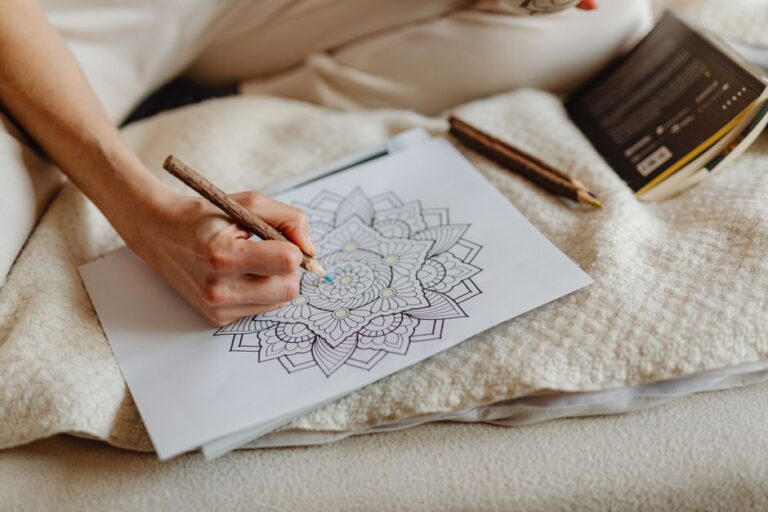
Colored pencils are the safest and most forgiving option for adult coloring books. They do not bleed through paper, they allow for precise control in small spaces, and they reward patience with beautiful layered effects. The trade-off is speed: filling a large background with pencil takes longer than swiping a marker across it. For the best results, look for pencils with soft, blendable cores. The Uni No.888 Color Pencils deserve special mention because they were designed specifically for adult coloring books, a detail that sets them apart in a crowded market. The lead is smooth and the color range is tuned for the kinds of palettes found in mandalas, botanicals, and geometric patterns. If you want a budget alternative, Prismacolor Premier pencils offer famously soft cores that blend like butter, though they wear down faster and cost more per pencil. A quick tip: smooth paper gives you the cleanest finish with colored pencils. Textured or toothy paper can create a grainy look that frustrates beginners.

Markers – High Impact, High Risk
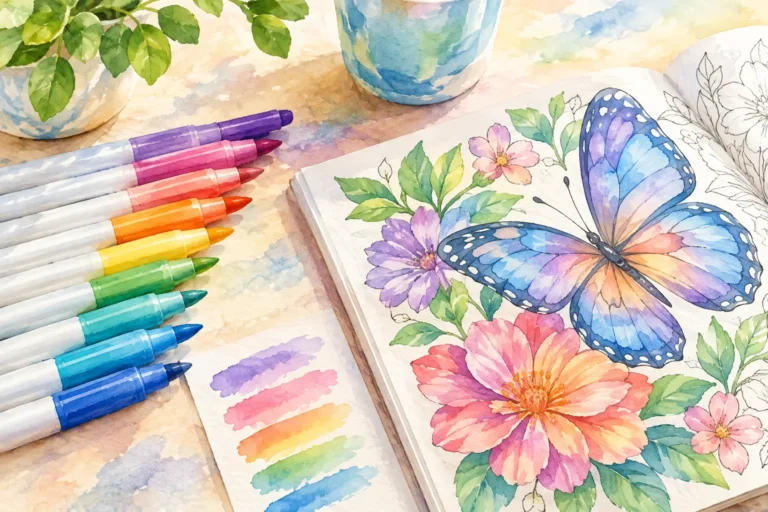
Markers deliver the boldest, most vibrant results of any coloring tool. They cover large areas quickly and can create smooth gradients that look almost printed. The risk, of course, is bleed-through. The alcohol versus water-based debate is the single most important distinction to understand before you buy. Alcohol markers like Copic and Spectrum Noir blend beautifully and are refillable, but they will bleed through standard coloring book paper almost every time. Water-based markers are far safer. Ohuhu Markers have become the internet’s favorite for a reason: a 60-color set costs around $19, carries a 4.5-star rating from nearly 5,000 reviews, and is explicitly marketed as "No Bleeding." They perform well on typical book paper and do not emit the strong chemical odor that Brown Paper Bunny flagged with Copic and Sharpie markers. If you are sensitive to scent, this matters more than you might think. Copic markers are undeniably excellent tools, but they are pricey, smelly, and better suited to artist-grade marker paper than a mass-market coloring book.
Gel Pens and Brush Pens – For Details and Effects
Gel pens and brush pens fill the gaps that pencils and markers leave behind. Gel pens excel at adding metallic highlights, white accents, and fine-line details that make a finished page pop. The Sakura Gelly Roll line is the gold standard here, with consistent ink flow and minimal bleed on most papers. Brush pens offer a different kind of versatility. The flexible tip lets you vary line width with pressure, making them ideal for lettering, outlining, and filling irregular shapes. Faber-Castell Pitt Artist Pens earned the top spot in Brown Paper Bunny’s comprehensive ranking, praised for their rich India ink, lightfastness, and reliable performance across paper types. One caution with gel pens: they work best on smooth, coated paper. On rougher stock, the ink can sit on top and smudge long after you think it has dried.
Head-to-Head: Alcohol Markers vs. Water-Based Markers
No major guide in the current search landscape offers a direct, practical comparison of alcohol and water-based markers for adult coloring books. This is a glaring gap because the choice determines whether your coloring sessions end in satisfaction or frustration.
Alcohol markers use a dye suspended in alcohol, which evaporates quickly and allows the ink to penetrate paper deeply. This is what makes blending so seamless: the ink stays wet long enough to layer colors without hard lines. The downside is that deep penetration. On thin paper, alcohol markers bleed through immediately and often spread sideways, blurring fine lines. They also have a strong odor that lingers in a small room. Copic markers are the benchmark, with a refillable system and replaceable nibs that justify their high price for professional illustrators. For the casual colorist working in a $10 coloring book, they are overkill and a liability.
Water-based markers use a water-soluble dye that sits closer to the paper’s surface. They dry faster, bleed far less, and have little to no odor. Ohuhu and Tombow dominate this category. The trade-off is blendability: water-based markers can streak on smooth paper if you are not quick, and they do not layer as effortlessly as alcohol markers. For 90 percent of adult coloring book users, this trade-off is worth it. The paper in most coloring books simply cannot handle alcohol ink.
A simple rule of thumb: if your coloring book has thick, artist-grade paper, like the kind found in Johanna Basford’s special editions, alcohol markers are fair game. For everything else, including the vast majority of books sold on Amazon and in bookstores, stick with water-based markers. Your future self, flipping through a clean, unblemished book, will thank you.
Budget-Friendly Starter Kits (Under $25)
You do not need to spend a fortune to start coloring. The research landscape skews toward mid-range and premium tools, leaving beginners unsure how to begin without a $100 investment. Here are three complete starter kits that each cost less than $25 total.
The No-Bleed Starter pairs the Ohuhu 60-color marker set with any smooth-paper coloring book. The markers give you a wide palette with minimal bleed risk, and the whole package hovers around $25. This is the kit to choose if you want vibrant, fast results without anxiety about ruining pages.
The Pencil Purist kit centers on a 120-pack of Crayola Colored Pencils, which costs roughly $15. Add a handheld sharpener and a blending stump for a few dollars more. Crayola pencils are underrated in adult coloring circles. They are harder than Prismacolors, which means they hold a point longer for detailed work, and the color range is surprisingly sophisticated.
The Gel Pen Sampler uses the Soucolor 72-color gel pen set, available for around $12. This kit is perfect for detail work, doodling, and adding metallic or neon accents to pencil-colored pages. The pens are not artist-grade, but they are fun, accessible, and a low-risk way to experiment.
The most important advice for beginners: do not invest in Copic markers or Prismacolor pencil sets until you know you enjoy the hobby. Start small, figure out which tools feel right in your hand, and upgrade later.
How to Prevent Bleed-Through (The #1 Question)
The question "Are markers or colored pencils better for adult coloring books?" almost always circles back to bleed-through anxiety. Colored pencils are the only truly bleed-proof option, but markers produce a look that pencils cannot replicate. If you love markers and want to use them without destroying your book, four practices make all the difference.
First, always place a sheet of cardstock or scrap paper behind the page you are coloring. This catches any ink that does penetrate and protects the next page. Second, choose water-based markers over alcohol-based ones. The Ohuhu line is the most popular no-bleed recommendation for a reason. Third, adjust your technique. Pressing hard with markers forces more ink into the paper. Light, even strokes give you control and reduce saturation. Fourth, test a small, inconspicuous corner of the book before committing to a full page. Every book’s paper is different, and a thirty-second test can save an hour of regret.
Storage and Care – Make Your Tools Last
Coloring tools are an investment, and how you store them directly affects their lifespan. This topic is almost entirely absent from existing guides, yet it is one of the first things experienced colorists learn.
Markers should be stored horizontally. This keeps the ink evenly distributed across the felt core and prevents one end from drying out while the other floods. Keep markers away from heat sources and direct sunlight, which can degrade the ink and warp the barrels. Colored pencils benefit from a roll-up fabric case or a divided pencil box. The soft cores of premium pencils snap easily when jostled loose in a drawer. Gel pens should be stored tip-down. This keeps the ink at the nib and prevents the air bubbles that cause skipping and inconsistent flow. One practical tip: keep a small sticker sheet nearby and mark any pen that starts to dry out or skip. Labeling your duds saves you from grabbing them mid-session and breaking your flow.
Frequently Asked Questions
Do alcohol markers bleed through coloring books? Yes, almost always. The alcohol-based ink penetrates deeply and will show through on the reverse side and often the next page. A protective sheet behind your work is essential.
What is the best marker for adult coloring books that doesn’t bleed? Ohuhu water-based markers are the top-rated affordable option. They consistently receive strong reviews for no-bleed performance on standard coloring book paper.
Are colored pencils or markers better for adult coloring? It depends on your priority. Colored pencils offer precision and zero bleed-through risk. Markers deliver vibrancy and speed. Many experienced colorists use both: markers for large areas, pencils for details and shading.
What supplies do I need to start adult coloring? A smooth-paper coloring book, a set of water-based markers like Ohuhu, and a small set of colored pencils for fine details. That is enough to begin and will cost under $30 total.
Are there non-toxic coloring tools for adults? Yes. Most major brands, including Faber-Castell, Prismacolor, and Ohuhu, are non-toxic. Look for the "AP Certified" seal on the packaging, which indicates the product has been evaluated for safety.
Final Verdict – Our Top 3 Picks for 2026
After testing across multiple paper types and cross-referencing community feedback, three tools stand out for different needs. The best overall choice is the Faber-Castell Pitt Artist Pen line. These brush pens are versatile, low-bleed, and equally suitable for beginners learning basic strokes and experienced colorists adding finishing details. For sheer value, nothing beats the Ohuhu 60-color marker set. At under $20, it delivers a full palette with minimal bleed-through and has earned its 4.5-star reputation honestly. For precision work, the Uni No.888 Colored Pencils are purpose-built for adult coloring books and offer the smoothest experience on the market. Start with the Ohuhu set and a smooth-paper book. You will be hooked within a single page.
Related Reading
If you are building out your creative practice, explore our guide to the best adult coloring books for stress relief, or learn how to blend alcohol markers without bleeding on our techniques page. For those curious about screen-based options, we also compare digital and physical coloring to help you find the right fit.
How to Find Your Coloring Style—and Choose Books You’ll Actually Enjoy